

Why a Combined Transformer Factory Is Key to Resilient Energy Infrastructure
2026-11-02
Grid resilience starts long before the first outage hits—it’s built into the manufacturing strategy. A combined transformer factory, where production, testing, and supply chain logistics converge under one roof, changes how quickly utilities can respond to failures and load shifts. At Lugao, that integrated approach isn't just a concept; it's the backbone of energy infrastructure that bends without breaking.
How One Factory Floor Removes Transformer Bottlenecks
On one busy production floor, the maintenance team stopped treating transformers as passive equipment and started mapping every load spike against shift schedules. They found that three separate conveyor lines peaked at the same time every afternoon, pulling more current than the nearest transformer could comfortably handle. By staggering start times by just twelve minutes and rerouting one high-draw welding station to a less loaded unit, the crew eliminated the midday voltage dips without adding a single new transformer.
That initial fix sparked a deeper overhaul. Technicians installed current sensors on each transformer's secondary side and fed the data into a simple dashboard displayed in the break room. Instead of waiting for a thermal overload alarm, operators now see a color-coded bar for each unit: green under 70 percent load, yellow up to 85, and red beyond. This visibility changed behavior. When the red zone appears, the nearest team leader shifts a non-critical batch process by ten minutes or powers down an idle test bench. It is a low-tech habit that keeps peak loads from stacking up in the first place.
The final layer addresses heat, the quiet enemy of transformer capacity. The factory replaced two aging oil-filled units with dry-type transformers that have better airflow, then added a small fan array triggered by winding temperature rather than ambient room temperature. The result is not dramatic on paper, but it means the same transformers can carry a ten percent higher short-duration overload without tripping protective relays. In practice, that is often enough to absorb the unpredictable surges that used to force a line shutdown every few weeks.
The Risk of Relying on Scattered Subcomponent Suppliers
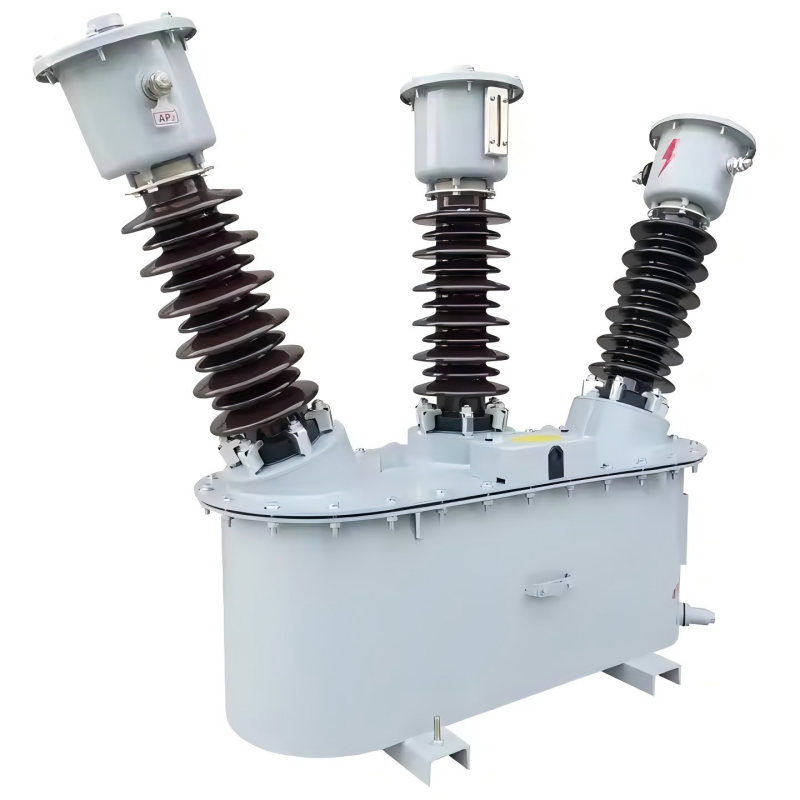
Managing a web of small, geographically spread subcomponent suppliers often looks efficient on paper, but in practice it creates coordination overhead that eats into timelines. Different time zones slow down approvals, shipping routes multiply the chances of delay, and each supplier brings its own interpretation of specs. A single late batch of housings or fasteners can idle an entire assembly line, and the more scattered the sources, the harder it is to pinpoint where the bottleneck will appear.
Quality control becomes a patchwork exercise when components arrive from dozens of unrelated workshops. One supplier may cut corners on plating, another may run slightly undersized tolerances, and the defects only surface after final assembly. Tracing a fault back to its origin across multiple purchase orders and informal quality notes is slow and expensive. The result is not just rework but a gradual erosion of confidence in the final product.
There is also a quieter cost: the loss of deep supplier relationships. When engineering teams interact with a rotating cast of small vendors, they rarely build the mutual understanding that prevents problems before they start. Long-term partners learn a company's design quirks and suggest improvements; scattered subcontractors just fill orders. Consolidating around fewer, more capable suppliers may reduce apparent flexibility, but it often lowers the real risk of surprises on the floor.
Why Local Coil Winding Cuts Lead Times and Adds Control
When you source coils from overseas, a two-week delay can stretch into two months due to shipping, customs, and back-and-forth communication. Local coil winding eliminates that buffer. A nearby supplier can start a run within days, adjust specifications on a phone call, and deliver finished parts without waiting on container schedules. That speed means your engineering team can iterate faster and keep production lines moving.
Control is another reason to keep winding close. You can visit the facility, inspect raw materials, and approve first articles in person. If a dimension or insulation requirement changes, the local shop can rework the process quickly instead of restarting a long supply chain. This direct oversight reduces the chance of receiving coils that are "close enough" but not exactly what your design demands.
Shorter lead times and tighter control also lower inventory pressure. Instead of ordering large batches to cover uncertainty, you can run smaller, more frequent orders that match actual demand. That frees up cash and warehouse space, and it gives you the flexibility to modify coil designs without being stuck with obsolete stock.
Testing Transformers Where They Are Built Prevents Grid Surprises
A transformer that leaves the factory with an undetected flaw doesn't simply fail later—it fails at the worst possible moment, often under load, often far from the resources needed to fix it quickly. Testing units where they are built closes that gap. Instead of discovering a weak bushing or a marginal winding during commissioning or after energization, the problem is caught while the transformer is still on the factory floor, where repairs are straightforward, tooling is at hand, and engineers who know the design are present. This shifts risk away from the substation and back to the place best equipped to handle it.
Factory testing also creates a performance baseline that field tests can later be compared against. Measurements like insulation power factor, sweep frequency response, and partial discharge taken at the factory provide a fingerprint of a healthy unit. Once the transformer is installed, any deviation from that fingerprint becomes easier to interpret. A small change in winding capacitance or a rise in discharge activity is no longer ambiguous; it points to a real mechanical or dielectric shift. That early warning can prevent a minor issue from turning into an unplanned outage.
A Combined Facility Turns Custom Orders into Standard Practice
Walk through this facility and you won't see custom orders being treated like rare, fragile objects. Instead, the layout itself does the work. Design, machining, finishing, and assembly sit in one connected space, so a one-off part can move along the same flow as a repeat run. That was the whole point of combining operations: make custom work feel routine.
The difference shows up in small moments. A change to a hole pattern or a shift in material doesn't send the job back to square one. The team that designed it is a few steps from the team that builds it. Adjustments happen at the machine, not through a chain of emails. That speed turns what other shops call 'special handling' into just another line on the schedule.
For buyers, the effect is straightforward. They don't have to pad timelines or add contingency budgets for custom requests. The facility has already absorbed that variability into its standard workflow. Custom orders still require attention, but they no longer require a separate process—and that's what keeps the queue moving.
What Integrated Production Means for Storm Recovery Speed
When a severe storm knocks out power across a wide region, the speed of recovery depends on how quickly crews can replace damaged poles, string new conductors, and bring transformers back online. Integrated production shortens this timeline by keeping every critical component in a single, coordinated pipeline—no waiting on outside vendors, no mismatched parts arriving on different schedules. Pole fabrication, wire drawing, hardware assembly, and transformer testing happen under one operational roof, so the utility can dispatch complete rebuild kits from a central location instead of staging materials from multiple suppliers.
That kind of cohesion matters most in the first seventy-two hours after a storm. Traditional supply chains often stall because a single missing bracket or insulator can halt an entire crew. Integrated production avoids those pinch points by synchronizing inventory with real-time damage assessments. When linemen report what they need, the production floor can shift output within hours—prioritizing crossarms for a flooded substation or reallocating conductor reels to the hardest-hit circuit. The result is fewer return trips, less idle time, and a restoration curve that climbs faster than utilities using fragmented sourcing.
There is also a less obvious advantage: quality control under pressure. During disaster recovery, suppliers sometimes rush fabrication and introduce subtle defects that cause later failures. An integrated facility maintains the same inspection standards whether it is producing for routine maintenance or emergency restock. Because the people who build the components also track how they perform in the field, they can quickly adjust materials or designs to match storm-specific demands. That feedback loop turns each restoration event into a learning cycle, making the next response even swifter.
FAQ
A combined transformer factory brings together design, core manufacturing, winding, assembly, and rigorous testing in a single location—often producing distribution, power, and specialty transformers side by side. Instead of outsourcing subcomponents or relying on separate facilities for each voltage class, one plant handles multiple product lines. That setup shortens communication loops, makes quality checks more direct, and lets engineers adjust designs without waiting on external vendors. The result is a more cohesive production process that can pivot quickly when grid needs shift.
Resilience isn't just about surviving a storm; it's about how fast the network can adapt to sudden changes in load, generation mix, or equipment failure. A combined factory can switch between building a 25 kVA pole-mounted unit and a 50 MVA substation transformer using the same skilled workforce and much of the same tooling. That flexibility means a utility doesn't have to wait in a long queue at a specialized plant if a rare type of unit fails unexpectedly. The factory becomes a tactical asset for the grid, not just a supplier.
After a hurricane, wildfire, or ice storm, the immediate need is often for a specific transformer configuration—sometimes dozens of identical units, sometimes one large custom replacement. A combined factory can reroute its internal resources almost immediately, pulling winding crews from one line to support another. Because engineering, testing, and production share the same floor, approval cycles that usually take weeks can be compressed into days. Utilities get replacement units faster, which directly reduces outage duration for hospitals, water systems, and neighborhoods.
When transformer components and finished units travel across oceans or multiple borders, a single port delay or trade disruption can stall projects for months. A combined factory located closer to the end users shrinks that exposure. It can keep a buffer of locally made cores, bushings, and insulation materials, and can tap regional suppliers for steel, copper, and oil. Even if global shipping slows down, the factory can keep delivering because it isn't fully dependent on distant, single-source inputs. That local depth makes the entire energy supply chain less brittle.
Yes, and that may be its most underrated role. Renewable projects often need transformers with unusual voltage ratios, harmonic tolerance, or bidirectional power flow characteristics. A combined factory can design and build those specialized units without shutting down a mass-production line. It can also produce pad-mounted transformers for neighborhood solar arrays, large generator step-up units for wind farms, and compact units for battery storage—all under one roof. That breadth lets grid planners integrate clean energy faster without juggling six different vendors.
Testing isn't a formality; it's where design flaws and material defects get caught before they reach a substation. In a combined factory, every unit can go through impulse tests, partial discharge measurements, temperature rise tests, and loss verification in the same facility where it was built. If something fails, the team can trace the problem back to a specific winding or connection and correct it immediately. This closed loop between production and testing dramatically lowers the chance of a transformer failing in service, which is exactly what a resilient grid needs.
Long lead times usually come from fragmented supply chains: one company builds the core, another does the winding, a third handles assembly, and testing happens somewhere else. Every handoff adds delay and risk. A combined factory removes most of those handoffs. Design data flows straight to the shop floor, materials are already on site, and testing bays are steps away from final assembly. The factory can also batch similar orders more efficiently and offer realistic delivery dates instead of vague ranges. That predictability is worth as much as speed when utilities plan upgrades years in advance.
Conclusion
A combined transformer factory transforms resilience from a hopeful idea into a physical reality. When winding, core assembly, tank fabrication, and final testing share the same roof, the bottlenecks that plague fragmented supply chains simply disappear. Instead of waiting on scattered subcomponent suppliers who each carry their own delays and quality gaps, a single floor can move a custom order from raw steel to a fully tested unit without ever leaving the building. Local coil winding becomes a strategic weapon—it cuts lead times from months to weeks and lets engineers tweak insulation or conductor specs on the spot, not through a chain of emails. And because every transformer is tested right where it is built, grid operators stop discovering surprises after installation, when a failure costs real outages and real money.
That same integration turns custom orders into standard practice. A facility that builds cores, winds coils, welds tanks, and runs heat-run tests under one roof can absorb design changes without grinding to a halt. When a hurricane or ice storm knocks out a substation, the difference between a combined factory and a scattered supplier network shows up in recovery speed. One floor means no waiting for a tank from one state, bushings from another, and a test slot from a third. The result is a transformer that arrives on time, works on day one, and keeps the grid standing when it matters most—because resilience is not just about having spares in a yard, it is about being able to build and verify the exact unit you need without leaving your own factory floor.
Contact Us
Contact Person: Doreen
Email: [email protected]
Tel/WhatsApp: 8618057712366
Website: https://www.liugaopower.com/