

Wholesale Tricresyl Phosphate: A Complete Sourcing Guide for Industrial Applications
2026-09-13
Sourcing tricresyl phosphate at industrial scale is rarely just about a competitive quote—it's about purity, supply stability, and a partner who understands the fine line between flame retardancy, anti-wear performance, and regulatory pressure. Too many procurement teams only notice that gap when a batch fails or a line stops. This guide strips away the noise around wholesale tricresyl phosphate, giving you a practical sourcing roadmap built for real industrial applications, with Fortune as a supplier that consistently closes the gap between specification and delivery.
What Industrial Buyers Often Overlook When Sourcing Wholesale Tricresyl Phosphate
Bulk procurement of tricresyl phosphate often focuses on price per kilogram and delivery lead times, but the real risks sit in the details that don't show up on a standard spec sheet. One commonly missed factor is isomer composition. TCP is not a single molecule; it's a mix of ortho, meta, and para cresyl isomers, and the ortho isomer carries neurotoxicity concerns that many industrial applications cannot tolerate. A supplier might offer a low-cost TCP that passes a general purity test but still contains ortho-cresyl phosphate levels above safe industrial thresholds, especially for hydraulic fluids, lubricants, or plasticizers used in prolonged human contact scenarios. Buyers who only request "99% TCP" without specifying isomer distribution can end up with a product that fails downstream safety audits or worker exposure limits.
Another overlooked area is trace metal and acid residue contamination from the manufacturing process. TCP synthesis often involves phosphorus oxychloride and cresol feedstocks, leaving behind chlorides, free phenols, or catalyst metals if neutralization and washing steps are not rigorous. These impurities don't always affect immediate physical properties like viscosity or flash point, but they can corrode metal parts in hydraulic systems, degrade polymers in PVC compounds, or cause discoloration over time. A thorough buyer should ask for chloride content, acid number, and metals by ICP, not just the standard ASTM color and density. Suppliers rarely volunteer these numbers unless pressed, and the difference between a 10 ppm chloride lot and a 200 ppm lot can be the difference between a five-year service life and a warranty claim.
Supply chain transparency is the third blind spot. TCP depends on cresol feedstocks, which can come from coal tar, petroleum refining, or synthetic routes. The origin affects not only cost but also consistency of isomer ratios and trace impurities. A buyer who locks in a low price from a broker without verifying the actual manufacturer may discover batch-to-batch variation that wreaks havoc on formulation stability. Requesting a certificate of analysis that includes the batch's isomer profile, residual phenol, and chloride level, along with the manufacturing site location, gives you leverage to reject non-conforming lots before they reach your production line. This upfront diligence costs a few emails, but it prevents the expensive downstream failures that rarely show up in a supplier's marketing brochure.
TCP Purity Grades and Technical Specs That Actually Matter for Your Process
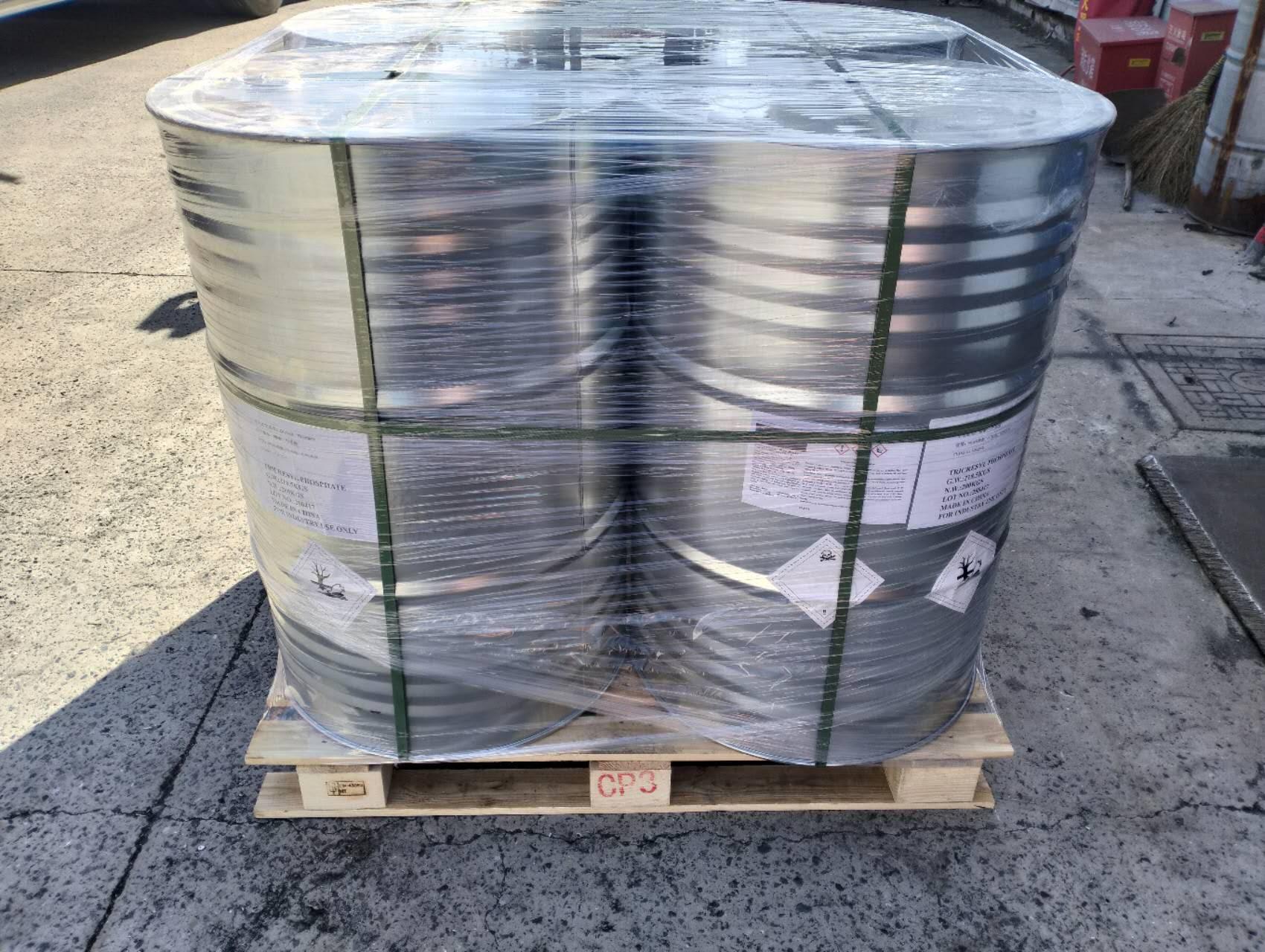
A high purity percentage on a certificate rarely tells you how a TCP lot will behave in your line. What trips up most processes are the impurities that don't show up in the headline number—residual chloride or sulfate from synthesis, free lime that forms during calcination, or trace magnesium that shifts the Ca/P ratio just enough to alter sintering. Check those secondary specs before comparing grades, because two lots both labelled 98% can behave very differently under heat.
Crystal phase matters more than total purity for many applications. β-TCP begins converting to α-TCP around 1125°C, and that transition changes resorption rate, mechanical strength, and how the powder compacts. If your furnace runs above that threshold even briefly, you need a lot with stabilising additives or a confirmed α-phase target. Ask for quantitative XRD data, not a vague “phase pure” statement.
Powder handling characteristics often decide whether a batch flows, fills a die, and sinters uniformly. For dry pressing, a specific surface area in the 20–40 m²/g range and a median particle size between 2 and 10 microns typically give a workable balance between green strength and shrinkage control. Ignore these and you’ll fight cracking, warping, or density gradients regardless of the purity stamped on the bag.
Supplier Reliability Checks Beyond the Basic ISO Paperwork
A certificate on the wall doesn't guarantee the next shipment arrives on time. When digging into supplier reliability, skip the standard quality manual and ask for live production data from the past six months. How often did their line actually hit the promised output? What was the real defect rate on your specific product family, not the aggregated number they show auditors? A truly dependable partner will walk you through their bottleneck logs and corrective action reports without hesitation, because those records reveal how they handle pressure, not just how they prepare for a recertification visit.
Another angle worth probing is their sub-tier dependency. Many suppliers pass an audit but rely on fragile second- or third-tier vendors for critical components. Ask for a map of their own supply chain and the last three disruptions they managed. Did they catch a raw material delay early enough to avoid stopping your line, or did you only find out when the truck was late? Reliable suppliers track upstream lead times weekly, maintain buffer stock for long-lead items, and can show you contingency plans that were actually tested, not copied from a template.
Finally, watch their communication rhythm during routine orders, not just during a crisis. Do they confirm order changes within hours or days? Do they flag a potential two-week slip while there's still time to adjust, or do they stay silent hoping it resolves? Grab a sample of their internal escalation emails if they'll share them, and compare how quickly issues moved from the shop floor to your account manager. The best suppliers treat transparency as a daily habit, not a fire drill, and that's the difference between a paper partner and one you can build a long-term program around.
Bulk Storage, Handling, and Compliance: Avoiding Expensive Surprises
A single overlooked valve or an outdated gasket can turn a routine transfer into a costly cleanup. Bulk storage systems often hide their weaknesses until pressure, corrosion, or thermal cycling exposes them. One facility learned this after a polymer tank's relief setting was left unchanged from a previous product—what followed was a split seam and six figures in environmental remediation. The lesson isn't just about equipment; it's about assuming that what worked yesterday will keep working today.
Regulatory audits rarely arrive with friendly timing. A missing training log or an unsigned inspection sheet can trigger fines far larger than the fix itself. Some operators treat compliance as a binder on a shelf, dusted off only before an audit. But the real risk comes from the gap between written procedures and daily practice. For example, a handler who skips the grounding clip once might get away with it—until the static discharge ignites a dust cloud. That kind of surprise doesn't show up on a spreadsheet until it's too late.
The most effective operations treat compliance as an ongoing conversation rather than a periodic scramble. Small, consistent actions—checking relief paths, updating material compatibility charts, training new hires on real scenarios instead of slides—build resilience. Installing simple sensors for temperature or level can pay for themselves by preventing a single overflow. When storage and handling systems are designed with future changes in mind, you stop chasing problems and start catching them early.
Phosphate Ester Alternatives: When TCP Isn't the Only Answer
Tricresyl phosphate has long held a default position in formulations where boundary lubrication and anti-wear performance matter most. Yet relying on TCP alone can create problems: neurotoxicity concerns tied to ortho-cresol isomers, tightening regulatory pressure, and supply volatility all push formulators to look elsewhere. The good news is that the toolbox is deeper than many assume. Aryl phosphates like isopropylated triphenyl phosphate or tert-butylphenyl phosphate offer similar film-forming behavior without the same toxicological baggage, while butylated triphenyl phosphate brings improved hydrolytic stability in high-moisture systems.
Where greater thermal stability or lower volatility is the goal, alkyl diaryl phosphates and even sulfur-phosphorus combinations can step in. Some formulators pair a phosphate ester with a small amount of zinc dialkyldithiophosphate or an ashless dithiophosphate to hit the same wear scar targets while trimming TCP content. In other cases, non-phosphorus options like overbased calcium sulfonates or borate esters deliver the needed extreme-pressure protection, particularly in greases and metalworking fluids. The key is matching the alternative to the specific failure mode—whether it's adhesive wear, micropitting, or corrosion—rather than assuming one molecule must do everything.
Contract Strategies That Balance Price, Volume, and Supply Security
A workable contract rarely relies on a single fixed price or a take-or-pay clause. Instead, buyers and suppliers can use an indexed formula with a floor and a ceiling tied to a published benchmark. This allows the unit price to move within a band, so neither side is fully exposed when raw material costs swing. The volume component is handled through an annual band rather than a precise number; the buyer commits to a minimum that covers the supplier's fixed costs, while the supplier guarantees capacity for an agreed-upon upside. Pairing these two elements keeps the commercial conversation focused on actual performance rather than renegotiation every quarter.
Supply security often gets treated as a legal obligation, but it works better as a shared incentive. A dual-sourcing clause with a standby capacity fee gives the buyer a pre-negotiated option to pull from a second facility if the primary source underperforms or faces an outage. The primary supplier is not punished for every disruption outside its control, but it knows the buyer has a credible alternative, which discourages chronic short shipments. Meanwhile, the standby fee compensates the secondary source for holding idle capacity, so the buyer avoids the panic pricing that comes with last-minute spot buys.
Volume flexibility can be built through quarterly reset mechanisms instead of one static annual minimum. The contract specifies a base quantity that covers the supplier's planned production run, plus an incremental band with stepped pricing as volumes increase. If the buyer's demand drops, it can fall back to the base without triggering default, and if demand spikes, both parties capture additional value. This tiered structure discourages inflated forecasts because there is no bonus for overcommitting, and it gives the supplier enough forward visibility to plan labor and raw materials without overextending.
FAQ
You'll want to confirm the isomer distribution, especially the meta and para content, because that shifts viscosity and plasticizing efficiency. Look for low acidity and moisture, since residual acid can corrode downstream equipment and affect long-term polymer stability. A clear, pale liquid with a refractive index around 1.55 and density near 1.16 g/cm³ is a good starting point, but always request a certificate of analysis for the exact batch.
It earns its place in demanding PVC compounds, hydraulic fluids, and flame-retardant cable sheathing. The phosphate ester structure gives built-in fire resistance, so it reduces the need for additional flame retardants. It also holds up better under high-temperature processing, which is why it's used in automotive interiors and industrial hoses where low volatility and good solvency matter more than raw cost.
Ask for documentation beyond the COA: REACH or TSCA compliance statements, ISO 9001 certification, and a recent third-party test report. A supplier that can walk you through their distillation and neutralization steps is usually more credible than one that only quotes a price. Request a small pre-shipment sample and compare its acid number, color, and isomer profile against the promised spec before committing to containers.
TCP is often treated as a neurotoxic risk due to ortho-cresyl phosphate content, so verify that the ortho isomer is tightly controlled, ideally below 0.1%. Use impermeable gloves and local exhaust ventilation when heated, because vapor exposure is the bigger concern. Different regions treat it differently: some classify industrial grades as reprotoxic, while others focus only on the ortho isomer. Always align your safety data sheet with the specific grade you purchase.
TCP brings a balance of lower volatility and better compatibility with PVC and nitrile rubber. Triphenyl phosphate is more volatile and can bloom to the surface over time, while TCP stays put in flexible PVC and provides higher plasticizing efficiency at lower dosage. The downside is that TCP's viscosity is higher, so your mixing and extrusion setup needs to handle that, but for long-life wire and cable applications the trade-off usually pays off.
Production is concentrated in Asia, particularly China and India, but European and North American distributors often hold inventory with additional certifications. If you need REACH-compliant material for an EU plant, buying from a local distributor may cost more but saves you from re-testing. From Asian producers, pay attention to packaging and shipping documentation; drums are common, but ISO tanks are available for very large volumes and can reduce per-kilogram freight cost.
Yes, the most frequent issue is isomer drift between batches, which changes viscosity enough to disrupt extrusion settings. Make sure the contract specifies the exact isomer range, not just "tricresyl phosphate." Also watch for under-filled drums or inconsistent lot numbering, which can complicate your internal traceability. Schedule a pre-shipment inspection at the supplier's warehouse and agree on a third-party lab for dispute resolution before the first order.
Conclusion
Many industrial buyers treat tricresyl phosphate as a simple commodity, but the reality is far more nuanced. Beyond standard price-per-kilogram comparisons, the specific isomer profile and acidity level often determine whether a batch will perform reliably in extreme-pressure lubricants, flame-retardant hydraulic fluids, or PVC plasticizers. A low-acid, meta/para-rich TCP grade tends to offer better thermal stability and lower corrosion risk, while ortho-rich material may raise toxicity concerns that complicate handling and regulatory compliance. Overlooking these technical details can lead to process interruptions and costly rework. Similarly, supplier qualification should go well beyond a framed ISO certificate. Request batch-level traceability documentation, ask about their feedstock sources for cresol, and probe their actual capacity during peak demand. A supplier’s willingness to share detailed test reports and discuss production constraints often says more about reliability than any audit summary.
Storage and handling introduce another layer of hidden costs. Tricresyl phosphate is viscous and hygroscopic; moisture uptake can accelerate hydrolysis, forming acidic byproducts that attack tank linings and downstream equipment. Confirm that your receiving terminals have heated, nitrogen-blanketed storage and that your team has a clear protocol for drum and tote transfer. On the regulatory side, export control classifications and TSCA or REACH registration status vary significantly by supplier region, and assuming compliance can expose you to fines or shipment delays. When TCP’s toxicity profile or viscosity becomes a constraint, phosphate ester alternatives such as isopropylated or tert-butylated triphenyl phosphates may offer similar flame retardancy with lower ortho-isomer content, though each substitute shifts cost and performance trade-offs. Finally, build contracts around split volumes and indexed pricing tied to key raw materials rather than locking in a single annual price. Include flexible delivery windows and a secondary approved supplier for at least 20–30% of volume to buffer against force majeure or sudden demand spikes. This kind of layered approach keeps supply secure without overcommitting capital.
Contact Us
Contact Person: WANG SIHAI
Email: [email protected]
Tel/WhatsApp: +86-13815295628
Website: https://www.fortunechemtech.com/index_en.html