

Which Automated Guided Vehicle Is Best for Your Business?
2026-08-30
The 'best' automated guided vehicle isn't the one with the highest payload or the longest battery life—it's the one that disappears into your workflow and quietly fixes your biggest bottleneck. But with so many AGVs on the market, from compact tunnelers that slip under carts to counterbalance units that stack pallets at dock height, narrowing the field takes more than a quick product comparison. In this post, we'll walk through the key types of AGVs, the questions you should ask before investing, and how HANGCHA's lineup addresses real-world material handling challenges without overcomplicating the decision.
Why 'One Size Fits All' Doesn't Work for AGVs
AGVs get lumped into a single category far too often, but the reality on a shop floor tells a different story. A compact unit that shuttles small parts through a clean electronics plant has almost nothing in common with a heavy-duty vehicle hauling coils of steel across an outdoor yard. Load weight, turning radius, floor condition, and even ceiling height all shift the design requirements so dramatically that trying to force one chassis or one control system onto every job quickly becomes a liability.
Route planning and navigation reveal the same flaw. Facilities with narrow aisles and frequent pedestrian traffic need tight maneuverability and responsive obstacle handling, while a sprawling warehouse might prioritize long straight runs and high throughput. If you assume a single sensor package or fleet management approach will handle both, you end up overpaying for capability in some areas and under-delivering in others. The mismatch shows up as slower cycles, repeated interventions, or safety stops that no amount of tuning fully resolves.
Integration requirements add another layer. Some operations rely on existing WMS or ERP systems and need highly customizable interfaces, while others simply need a standalone loop with minimal IT involvement. A vendor-neutral, modular approach—where the vehicle, navigation, and software can be mixed and matched—tends to adapt far better than any rigid, uniform solution. That flexibility is what keeps AGVs productive as workflows evolve, rather than locking a facility into a single assumption made at purchase time.
Mapping Your Workflow Before You Buy
Most people start shopping before they've actually written down how work moves through their day. That leads to buying tools for an imagined process instead of the one you actually have. Grab a notebook or open a blank doc and trace the real sequence: what triggers a task, who touches it, where it gets stuck, and what you need to hand off. Be specific about the gaps—not 'I need better organization,' but 'invoices sit in email for three days before I enter them.'
Once you can see the whole path, mark the places where friction repeats. Those are your actual requirements. A tool only earns its cost if it removes one of those specific bottlenecks. If a feature doesn't connect to a step you've already mapped, it's probably a distraction. This also stops the common trap of buying overlapping apps that each solve half a problem while creating a new handoff.
Then list what must stay the same. Maybe your team refuses to leave email, or a client sends files through a shared drive. A purchased system that demands a completely new habit often fails within a month. Use your map to test any shortlisted option: walk a real task through it before entering payment details. If the workflow breaks at the same points, leave it on the shelf.
The Real Differences Between Towing, Forklift, and Unit Load AGVs
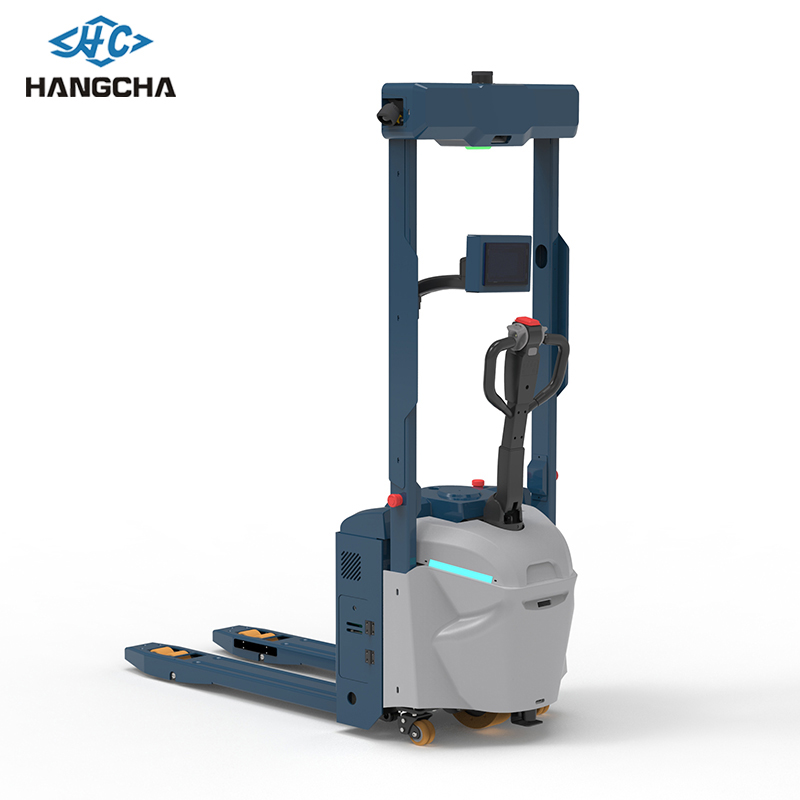
Many warehouses treat AGVs as a single category, but the towing, forklift, and unit load designs each solve fundamentally different movement problems. A towing AGV pulls carts or trailers behind it, making it ideal for long horizontal runs where you need to move multiple loads at once or stage materials in sequence. A forklift AGV is essentially a driverless forklift, capable of lifting pallets from floor level or racks and placing them at varying heights. A unit load AGV carries the load directly on its own deck, often with a conveyor or lift mechanism, and works best when the load stays on the vehicle from pickup to drop-off without needing to be raised or stacked.
The choice between them usually comes down to how your loads are handled and where they live. If you have pallets sitting on the floor or in low racks, a forklift AGV gives you vertical reach, but it’s slower and more complex because of the lift and positioning requirements. A unit load AGV is simpler and faster for point-to-point transport of a single pallet or container, provided the load is already at the right height for the vehicle to slide under or accept. Towing AGVs shine in lean manufacturing or order picking setups where a train of carts can be dropped off at multiple stations, cutting down on the number of vehicles needed per loop.
The real differences surface when you look at infrastructure and payload flexibility. Towing AGVs often need more floor space for train turning radius but can handle a wide variety of cart types with a simple hitch. Unit load AGVs are usually the most predictable in terms of cycle time, but their deck design locks you into a specific load footprint or transfer mechanism. Forklift AGVs, while the most versatile for vertical storage, demand the highest investment in safety sensors, floor flatness, and rack alignment to operate reliably without a human driver. None of these is universally better; the right pick depends on your facility’s existing material flow, load heights, and how much you’re willing to standardize the environment around the vehicle.
Navigation Tech: Lasers, Vision, or Magnetic Tape?
Warehouse floors tell a story these days. Some robots trace invisible magnetic tape strips embedded in the concrete, a method that has kept assembly lines moving for decades. It's cheap and predictable, but altering a route means tearing up the floor. That's why newer installations often skip the tape entirely.
Lasers brought a different kind of certainty. A LiDAR unit sweeps the room, matches the pattern against a stored map, and the vehicle knows its position within a few millimeters. The trade-off is cost and sensitivity—dusty or highly dynamic spaces can confuse the sensor. Vision-based systems have improved rapidly, using cameras and neural networks to read the environment almost like a human driver. They require no fixed infrastructure, but lighting and texture variations still challenge them.
Choosing between them is rarely about what's most advanced; it's about what the facility can tolerate. Magnetic tape remains unbeatable for predictable, low-traffic routes. Lasers shine in high-accuracy, controlled indoor environments. Vision is catching up fast, especially where flexibility and easy reconfiguration matter more than millimeter precision.
Hidden Costs That Sneak Up After Deployment
You ship the release, celebrate the green build, and then the invoices start rolling in. Cloud storage that looked negligible during testing balloons once real user data piles up. Log aggregation tools quietly switch from free tiers to per-gigabyte pricing. Every background job, retry queue, and monitoring agent adds a few dollars a day until the monthly bill no longer matches the initial estimate.
Then there are the unplanned support hours. A misconfigured firewall rule only surfaces when a handful of customers can't sync. The on-call engineer spends a weekend tracing timeouts back to a database connection pool that worked fine with ten concurrent users but collapses under three hundred. These aren't failures you can foresee in a staging environment; they emerge only under real traffic patterns and real user behavior.
Maintenance creep is the slowest leak. Dependencies need security patches. Feature flags left on for too long accumulate technical debt. The tidy microservice you launched becomes five services, each with its own deployment pipeline, health checks, and secrets to rotate. None of this appears in the original scope, but all of it draws from the same budget you once considered fixed.
When a Custom AGV Makes More Sense Than Off-the-Shelf
A standard automated guided vehicle does its best work in a predictable setting: wide aisles, uniform pallets, and straightforward pick-and-drop points. But the moment a facility introduces a non-standard load — say a long steel beam or a fragile glass panel — the math changes. Custom AGVs can be engineered around the exact dimensions and weight distribution, using bespoke fixtures and lifting mechanisms that an off-the-shelf unit simply cannot accommodate without expensive modifications.
Layout is another trigger. Older plants often have transitions, low clearances, or floor surfaces that were never designed for wheeled automation. A custom builder can adjust wheelbase, drive configuration, and chassis height to match the real environment, rather than forcing the facility to adapt. This is especially important in cleanrooms, cold storage, or explosive atmospheres where standard components may fail or create safety risks.
Integration also plays a role. If your warehouse management system, ERP, or production line uses a proprietary communication protocol, retrofitting an off-the-shelf AGV can involve more coding and middleware than building a custom vehicle with native compatibility. Over a five-year lifecycle, the custom option frequently wins on uptime and maintenance cost because every subsystem was selected for the specific duty cycle, not for a broad average.
FAQ
You'll typically see three main classes: underride AGVs that slide beneath carts or shelves, tow vehicles that pull trains of carts, and unit-load carriers that move pallets or rolls directly. Some facilities also use forklift-style AGVs for stack racking. The right pick depends on whether you're moving raw materials, finished goods, or work-in-process items.
Magnetic tape is cheap and reliable but inflexible when routes change often. Laser reflectors offer more freedom but need a clear line of sight and regular reflector maintenance. Vision or natural-feature navigation eliminates fixed infrastructure, but it costs more upfront and demands good lighting and stable floor patterns. If you reconfigure floor layouts more than twice a year, skip the tape.
Look beyond average load weight. Account for the heaviest single item plus any pallet, rack, or container weight. Add a safety margin of 15 to 20 percent so the vehicle doesn't run at maximum strain constantly. Also check whether your load has an uneven center of gravity, which can mean you need a sturdier chassis rather than just a higher-rated motor.
They affect uptime more than most people expect. Lithium-ion batteries charge faster, last longer, and handle opportunity charging well, but they cost more initially. Lead-acid is cheaper but needs longer charge cycles and a dedicated battery room. If your operation runs two or three shifts, lithium with automatic opportunity charging usually pays off within two years.
Most modern AGVs can, but integration effort varies widely. Some manufacturers offer plug-and-play connectors for major WMS and ERP platforms. Others require custom middleware or API work. Before buying, ask for a reference customer with your exact software stack, not just a similar one. Also confirm whether the AGV can handle real-time task changes instead of only fixed routes.
Look for multiple redundant safety layers: laser scanners or safety-rated LiDAR, physical emergency stop buttons, audio and visual warnings, and slow-speed creep in tight zones. If your facility has foot traffic, insist on certified safety controllers that meet ISO 3691-4. Avoid any model that relies on a single sensor to detect people.
Start with labor cost per hour, including overtime and turnover-related training. Then add damage reduction from fewer manual collisions and lower energy costs versus forklifts. Factor in maintenance contracts, software license fees, and floor modifications. A well-scoped AGV project in a two-shift operation often breaks even in 18 to 30 months, but it can be much longer if routes are unstable.
Leasing works well for seasonal peaks, pilot programs, or facilities that might relocate within three years. It keeps capital free and often includes maintenance. However, if you have stable demand and will use the AGV for more than five years, buying usually costs less overall. Watch for lease terms that limit software updates or route changes.
Conclusion
Choosing the right automated guided vehicle starts with accepting that no single model fits every warehouse or factory floor. Before you even compare towing units, forklift hybrids, or unit load carriers, you need to map how materials actually move through your space—where the bottlenecks are, how high loads need to be stacked, and what floor conditions look like. A vehicle that excels in a wide-open distribution center might be useless in a cramped manufacturing aisle. Navigation technology deepens this divide: laser-based systems offer precision but demand a relatively stable environment, while vision-guided AGVs handle dynamic layouts better but add complexity. Magnetic tape remains cheap and reliable, yet it limits flexibility if your workflow shifts often. Ignoring these operational quirks leads directly to the hidden costs that surface after deployment—extra infrastructure changes, software integration fees, and ongoing maintenance for sensors or batteries that weren't part of the initial quote.
Then there's the question of whether an off-the-shelf model truly saves money. Standard towing AGVs work well for repetitive horizontal transport, but if you need to interface with existing racking at unusual heights or move oddly shaped loads, a custom unit load carrier often pays for itself by reducing manual touchpoints and damage. Similarly, forklift AGVs are powerful but require more safety zones and floor reinforcement than many buyers anticipate. The real difference isn't just price—it's how quickly the vehicle adapts when your product mix or throughput changes. A cheap standard AGV that forces you to redesign your layout or hire extra staff to shuffle loads around it is far more expensive than a purpose-built solution that slots into your current process. The best choice emerges only after you've watched your workflow long enough to know what you're actually automating, not what a brochure says you need.
Contact Us
Contact Person: Liuxue
Email: [email protected]
Tel/WhatsApp: +86-19084200370
Website: https://www.hf-ec.com/