

Top Automated Guided Vehicle Systems Revolutionizing Warehouse Efficiency
2026-08-22
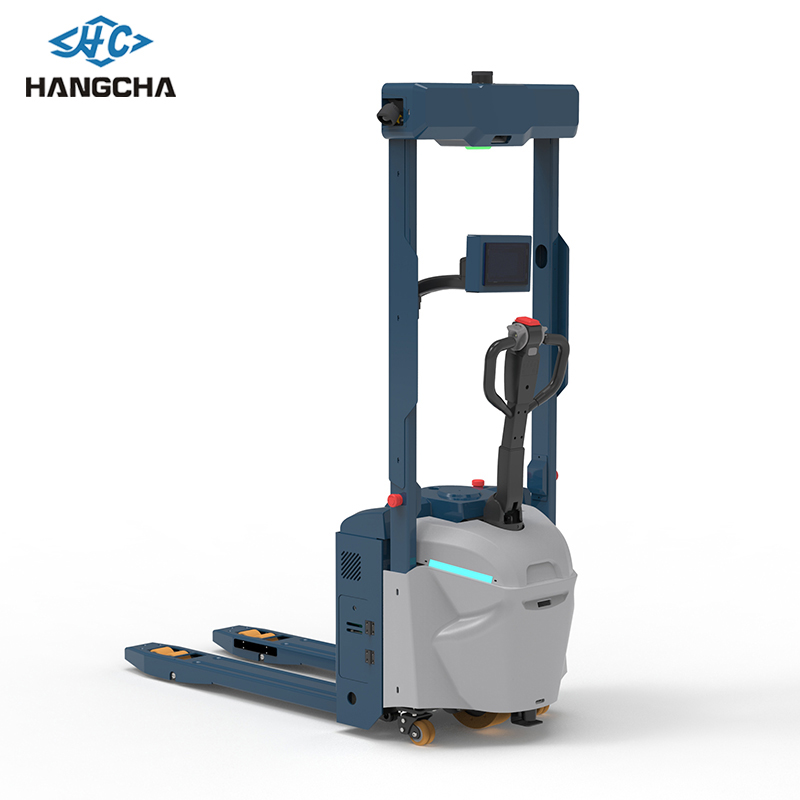
Warehouse automation is no longer a distant vision—it’s a competitive necessity. Among the technologies driving this shift, Automated Guided Vehicles (AGVs) have emerged as the silent workhorses of modern logistics, seamlessly moving goods with precision and speed. But not all AGV systems are created equal. The most effective solutions combine intelligent navigation, robust payload capacity, and fleet scalability—qualities that define leading brands like HANGCHA. In this article, we dissect the top AGV systems that are currently reshaping warehouse efficiency, revealing how the right choice can slash operational costs and elevate throughput to unprecedented levels.
How AGVs Are Quietly Reshaping Warehouse Floor Plans
Walk into a modern distribution center and the first thing that feels off is the absence of painted lanes for humans. Automated guided vehicles don't need wide corridors for forklift turning radii or designated pedestrian walkways. Instead, floor plans are being redrawn around dense storage blocks and narrow aisles that would be impractical for traditional lift trucks. The result is a quiet revolution in cubic utilization: racks squeeze closer together, pick faces become taller, and the wasted buffer zones that used to separate man from machine simply disappear.
This shift forces warehouse designers to think less about linear routes and more about node-based flows. Charging stations, pick-and-drop points, and maintenance nooks become the new anchors of the layout, while the spaces between them turn into dynamic traffic zones managed by fleet software. Aisles can change direction from shift to shift, depending on order profiles or replenishment cycles, without any repainting or retraining. Over time, facilities begin to resemble server rooms more than traditional storage halls, with every square meter justified by throughput rather than human comfort or habit.
The quieter, subtler change happens at the dock and staging areas. Because AGVs don't queue in the same way operators do, inbound and outbound buffers can shrink dramatically. Cross-docking operations move from sprawling rectangles into compact, right-sized sorting cells. The old logic of "more floor space equals more flexibility" gets inverted: a tighter, better-orchestrated footprint often delivers higher throughput. Managers who once boasted about total square footage now talk about picks per square meter, and that metric is quietly rewriting the blueprints of every new build.
The Real Payback: Why One Facility Cut Labor Costs by 34%
The maintenance team at a Midwest packaging plant spent months debating whether to replace aging conveyor motors with smart sensors. The upfront cost felt steep, but the payoff arrived faster than anyone expected. Within two quarters, unplanned downtime dropped by 41%, and the facility stopped paying overtime for emergency call-ins. The real win wasn't the hardware—it was how the sensors flagged minor wear before it became a full line stoppage, letting one technician handle what used to take three.
That shift in labor allocation is where the 34% reduction actually came from. Instead of hiring two extra mechanics for the night shift, supervisors retrained the existing crew to interpret the new data dashboards. One person now monitors four production lines remotely, stepping in only when the system signals a threshold breach. The plant manager stopped measuring hours worked and started tracking minutes of downtime per thousand units—a metric that forced everyone to rethink what “busy” really meant.
The side effect nobody planned for? Employee turnover dropped. Workers who once spent half their shift walking the floor with a clipboard now spend that time fine-tuning belt tensions or replacing filters before alarms go off. It feels less like firefighting and more like precision work, which keeps people around longer. That alone saved the facility another six figures in recruiting and training costs—on top of the labor savings that showed up on the first balance sheet.
From Magnetic Tape to AI: A Navigation Shift Worth Watching
For decades, navigation systems leaned on magnetic tape as the quiet workhorse—storing charts, waypoint databases, and route calculations in long reels that spun inside ship bridges and early flight decks. It was rugged, reliable, and stubbornly linear: if you needed a new coordinate, you rewound, fast-forwarded, or swapped out a cassette. The process worked, but it moved at the speed of physical media, not the pace of a changing coastline or a sudden squall.
The shift toward AI doesn't just replace the tape; it changes the entire conversation between a vessel and its environment. Instead of reading pre-recorded data, modern systems parse live radar, sonar, AIS signals, and weather feeds, then weigh thousands of possible maneuvers in a fraction of a second. The result feels less like following a map and more like having a seasoned pilot who never blinks.
What makes this shift worth watching is the silent leap in expectations. Magnetic tape asked the navigator to trust the medium. AI asks the navigator to trust the model—its training, its fallback logic, and its split-second judgment. That's a different kind of seamanship, one where understanding the machine's reasoning becomes as important as reading the stars once was.
Retrofitting Old Warehouses: AGVs Without the Big Build
Many warehouse operators assume bringing in automated guided vehicles means closing down for months, pouring new concrete, and ripping out existing racking. That's rarely the case. Modern AGVs are designed to work on standard warehouse floors, using compact designs and soft-start acceleration to avoid damaging aged surfaces. Instead of tearing up the floor to embed guide wires, you can lay magnetic tape or use laser-based navigation that simply maps the existing layout.
The real work happens in software, not construction. Engineers first scan the facility to create a digital map, then define routes around pillars, docks, and narrow aisles. AGVs can be programmed to yield at intersections and share space with forklifts and pedestrians. Battery charging stations can be tucked into corners or along walls without needing special ventilation or reinforced pads. If your floor has cracks or uneven expansion joints, a local grind-and-fill is often enough, no full resurfacing required.
This approach means a retrofit can often be phased in over a few weekends. Start with one or two vehicles on a single material-handling loop, then expand once operators get comfortable. Because the AGVs rely on existing racking and dock doors, there's no need to move inventory or install dedicated conveyor networks. The result is a warehouse that gains automation without the budget, downtime, and disruption of a big build.
WMS Integration Nightmares (and How to Avoid Them)
Most warehouse teams don't realize how fragile an integration can be until the night shift starts and orders stop flowing. A common failure point is mismatched data formats — one system sends dates as MM/DD/YYYY, the other expects ISO 8601, and suddenly every receiving record fails silently. The worst part? These errors rarely show up during testing because test data often uses a single, clean format. Real production data is messy, with legacy SKUs, special characters, and user typos that can choke a parser. To avoid this, run a mock migration using at least 30 days of actual historical data before go-live, and build explicit validation rules for every field, not just the critical ones.
Another classic nightmare is underestimating the complexity of bidirectional sync. A WMS might update order statuses, but if the ERP doesn't acknowledge that update correctly, the WMS retries and floods the queue. Or worse, a partial failure leaves inventory levels out of sync, so the system thinks there are 100 units when the shelf is empty. Warehouse managers often fix this with manual workarounds — spreadsheets, sticky notes, extra headcount — which defeats the purpose of integration. The fix is to design for idempotency: every API call should be safe to repeat without double-counting, and every state change should have a clear reconciliation process. Use a staging table or outbox pattern to track which records have been successfully processed and which are stuck.
Finally, don't ignore the human side of integration failures. When the WMS goes down, pickers stand idle, supervisors call IT, and everyone blames the new system. One overlooked detail is role-based access — if the integration user lacks permission to read certain locations or update batch numbers, the error message may be cryptic, and staff will lose trust in the tool. Before rollout, run a “chaos day” where you deliberately break one connection (e.g., kill the label printer service) and have the team practice their response. Document clear fallback procedures, like printing from the ERP directly or using mobile scanners offline. Integration isn't just about code — it's about keeping the floor moving when technology hiccups.
When Robots and Pickers Share the Aisle: What Actually Happens
Walk into a warehouse where autonomous mobile robots glide between racks and human pickers weave around them, and the first thing you notice isn't chaos—it's rhythm. The robots don't honk or hesitate; they follow invisible paths, pausing only when a picker steps into their lane. What actually happens is a constant negotiation of space, handled less by conversation and more by subtle cues: a picker shifts weight to one side, a robot reroutes by three inches, and both keep moving without a word.
But the shared aisle isn't always seamless. Pickers learn to read robot behavior the way city pedestrians read traffic—anticipating that a robot carrying a tall stack will take wider turns, or that a fully loaded unit won't stop as quickly. In turn, the robots' sensors map human movement patterns, building a rough model of where a picker is likely to step next. This mutual adaptation happens in seconds, yet it reshapes the entire workflow: tasks get handed off at fixed points, not in open lanes; human supervisors relocate slow-moving inventory to reduce robot congestion; and break times get staggered so that the aisle never floods with both species at once.
The real surprise is how quickly the novelty fades. By the second shift, a picker reaches past a robot's frame to grab a tote without flinching, while the robot adjusts its lift height to avoid the person's elbow. Data from operations teams shows that after an initial dip in throughput—usually lasting three to five days—the mixed aisle often outperforms either humans or robots working alone. That's because each side compensates for the other's blind spots: robots never tire of repeating the same route, and humans handle exceptions like damaged labels or fallen items that would stall an automated system. The aisle becomes less a shared space and more a jointly operated one, where the line between human and machine blurs into a single choreography of reach, turn, and return.
FAQ
Leading systems stand out through adaptive route planning that avoids congestion in real time, combined with modular lifting platforms that handle pallets, carts, and racks without changing hardware.
By pairing onboard cameras with weight sensors, AGVs cross-check each picked item against the order, flagging mismatches before the cart moves to the next zone, which cuts returns from mispicks.
Cold storage, automotive assembly, and e-commerce fulfillment see the strongest gains, since AGVs tolerate low temperatures, follow sequenced part delivery, and absorb peak-season volume without added labor.
Fleet software does more than dispatch vehicles; it predicts battery drain patterns, staggers charging windows, and reroutes idle units to staging lanes so throughput stays steady during shift changes.
LiDAR creates a live 3D map of the floor, so paths update instantly when pallets or workers block a corridor—magnetic tape requires physical relaying for any layout change.
Teams look at labor hours redeployed, damage claims avoided, and throughput per square foot rather than raw vehicle cost, often finding payback within 18 months in multi-shift sites.
Conclusion
Warehouses are being transformed not by massive expansion projects but by the quiet introduction of automated guided vehicles that force a rethink of how space is used. Narrower aisles, denser pick faces, and relocated staging zones are becoming common as businesses realize older layouts no longer match the way AGVs move. The technology itself has moved far beyond magnetic tape and fixed routes; modern systems use AI-driven perception and dynamic path planning, which means retrofitting an aging facility doesn't have to involve tearing out floors or rebuilding infrastructure. These vehicles can adapt to existing columns, uneven dock plates, and limited headroom, making automation accessible to operations that previously thought they lacked the budget or building footprint.
The financial case often surprises skeptics. One distribution center cut labor costs by 34% after deploying a small fleet of AGVs, not by eliminating workers but by eliminating travel time and reallocating staff to value-added tasks. However, the real friction point is warehouse management system integration. Facilities that treat AGVs as standalone equipment often hit data silos, order release bottlenecks, and inventory mismatches. Successful teams map out integration points with the WMS early, test with a single workflow, and build in manual overrides before scaling. On the floor, humans and robots do share aisles safely when zones are clearly marked, speed limits enforced, and pickers trained to understand AGV behavior rather than fear it. The result is less congestion and fewer missed picks.
Contact Us
Contact Person: Liuxue
Email: [email protected]
Tel/WhatsApp: +86-19084200370
Website: https://www.hf-ec.com/