

Tissue Packaging Machine Manufacturer: Key Questions to Ask Before Choosing
2026-11-02
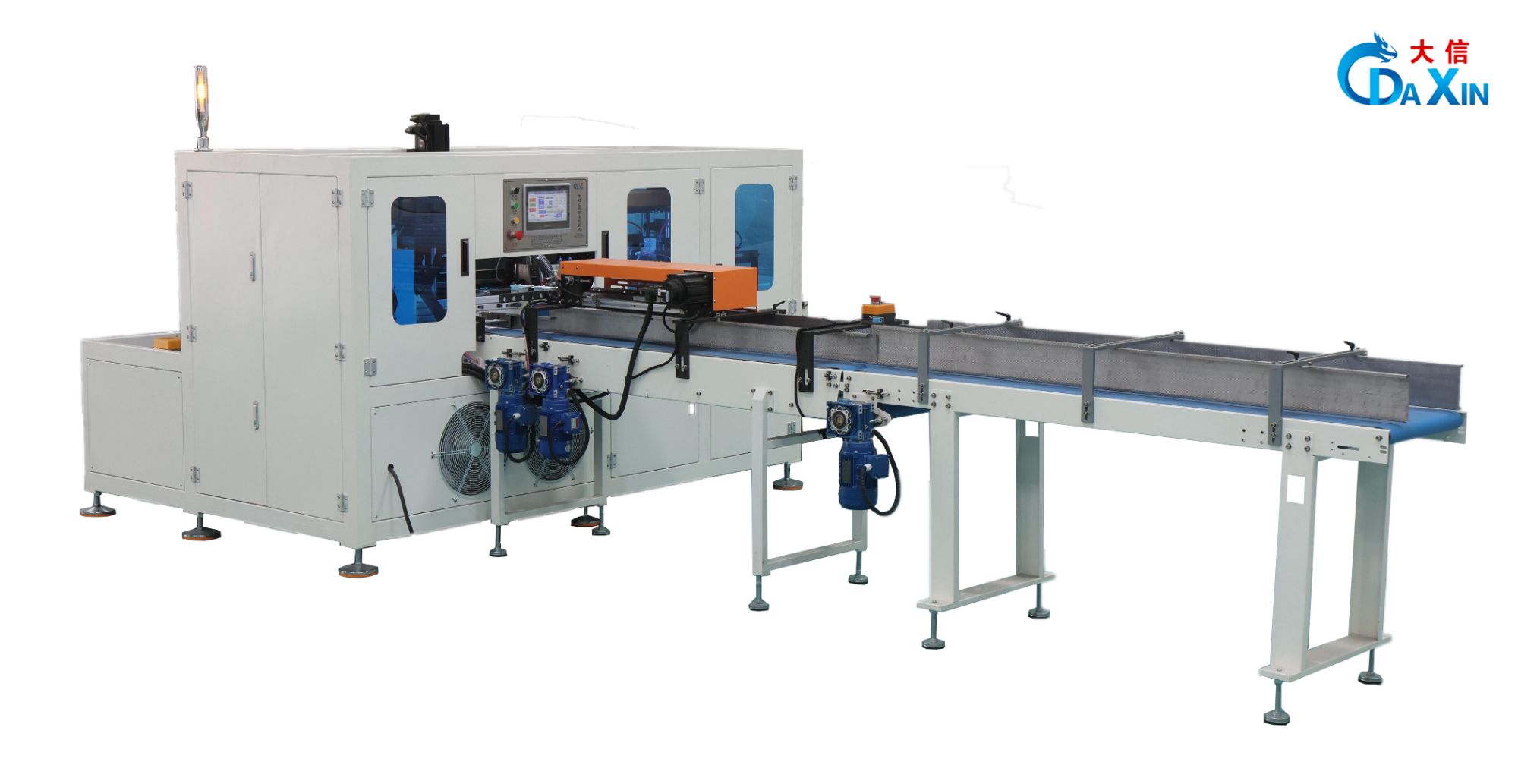
Choosing a tissue packaging machine manufacturer isn't just about specs and price tags—it's about long-term reliability, customization, and support. But with so many suppliers claiming to be the best, how do you separate genuine expertise from empty promises? Before you sign a contract or even request a quote, there are critical questions you need to ask—and most buyers overlook them until it's too late. Whether you're upgrading an existing line or building a new facility, DAXIN believes the right questions lead to the right machine. Here's what to find out before making your decision.
Can they run your exact tissue paper in a live demo?
A live demo with your exact tissue paper isn't a courtesy; it's a stress test. If a supplier hesitates or only offers footage from a different grade, treat that as a red flag. You need to see your basis weight, ply count, embossing pattern, and any lotion or fragrance application running under normal production speeds—not a slowed-down showcase.
During the run, watch for real-time defects that spec sheets hide: edge pick-out, sheet count drift, emboss registration wobble, and dusting at the converting stage. Ask them to pause and restart mid-roll, change parent rolls, and run a full case pack. Those transitions expose whether their equipment and operators know your substrate or are just improvising.
The best suppliers will invite you to the line, hand you fresh samples off the stacker, and discuss measured tensile and softness targets before and after the run. If they can't run your exact tissue paper live, you're not buying capability—you're buying a promise that often breaks downstream.
The changeover time your operator will actually face
The stopwatch number in a lean workshop rarely matches the minutes your operator actually burns. Before the first bolt is touched, someone has to walk to the shared tool crib, wait for a wrench that is never where it belongs, clear leftover parts from the previous job, and maybe find a printed setup sheet that no one updated. Those steps do not appear on most time study forms, but they land squarely on your output and on the operator's patience.
Then comes the sequence nobody wrote down. A fixture is mounted, a locating pin turns out to be worn, the operator taps it back into place, runs a first piece, measures it, adjusts the offset, runs another. The official changeover window says twenty minutes. The operator's back and knees say forty-five. Until you measure the gap between the posted time and the lived time, you cannot shrink it.
A spare parts list with local stock, not a warehouse promise
When a machine goes down, the last thing you need is a parts list that looks impressive but ships from somewhere three time zones away. Our inventory is counted shelf by shelf in the same region where your equipment operates. That means the gasket, the sensor, or the drive belt you order at 9 a.m. can often be in your hand before lunch.
We don't pad our catalog with items that only exist in a central distribution center. Every part on our local stock list has a physical bin location, a recent cycle count, and a real person who knows where it sits. If a part gets low, replenishment is triggered from nearby suppliers—not from a distant warehouse that treats your downtime as a rounding error.
This approach changes the conversation from “we can get it by Friday” to “it's on the shelf now.” You get the same part numbers and OEM quality, but without the hidden delay of a warehouse promise that quietly slips into next week.
Who answers the phone when the line stops at 2 a.m.?
The voice on the other end doesn’t belong to a machine, not at that hour. It’s a person who’s already had three cups of cold coffee and has stopped noticing the flicker of the desk lamp. They’re trained to listen for the pauses between words, the shaky breath before a confession, the silence that means something worse than shouting. At 2 a.m., the phone stops ringing because someone has decided to pick it up — a volunteer on a crisis line, a night-shift nurse at a small hospital, a late-night radio host who left the request line open for exactly this reason.
When the line goes quiet, it isn’t an ending; it’s a held breath. The person who answers has learned to wake up fully in the space of one ring, to steady their voice before saying hello, even if their own eyes are gritty and their heart is still half-dreaming. They might be sitting in a room lit only by a screen glow, a notebook open to a page of half-finished thoughts. They know that the caller could be anyone — a stranger in a parking lot, a mother checking on a child who hasn’t come home, an old man who just needs to hear another human say his name. So they don’t rush. They wait.
Sometimes the person picking up is not trained at all. It’s a friend who forgot to silence their phone, a sibling who sleeps lightly, a neighbor whose bedroom window faces the street. They answer because the ringing has become unbearable, because someone has to break the stillness of the night. At 2 a.m., the phone line doesn’t just carry a voice; it carries a small thread of trust, pulled tight across the dark. Whoever answers is choosing, for a few minutes or a few hours, to be the one who doesn’t turn away.
The three-year cost per pack, not the invoice price
The invoice price on a toner cartridge rarely tells you anything useful. What matters is how many of those cartridges you will burn through over three years and what each one actually costs during that stretch. A $40 cartridge that needs replacing every three months adds up to $480 over three years per printer, while a $110 cartridge that lasts a full year totals $330. Same job, very different drain on the budget. That gap is exactly why the three-year cost per pack is the number worth negotiating, not the sticker price.
Suppliers love to anchor the conversation on the upfront figure because it looks clean and small. But the real cost hides in the replacement cycle. If you buy cheap packs that fade early or clog printheads, you end up paying for extras, cleaning kits, and downtime that never appears on the invoice. Comparing the three-year cost per pack across vendors flips the negotiation in your favor. You stop debating pennies on the purchase order and start holding them accountable for how long the thing actually lasts.
Ask any vendor for a simple table: number of packs used per printer over 36 months, multiplied by their unit price, plus any related consumables. That gives you the three-year cost per pack. If they cannot produce it, treat that as a warning sign. Long-life cartridges and bulk-yield packs will almost always win this math, even when the invoice price makes a purchasing agent wince.
A nearby plant visit where you can ask operators anything
Walking through a working plant changes how you see the machinery. Instead of standing behind a safety line, you get to approach the people who run the lines every day and ask them what actually happens when a sensor trips or a batch runs late.
The operators don't stick to scripted talking points. They'll show you the worn spots on a conveyor, explain why one shift runs smoother than another, and tell you which alarms are worth worrying about. You can ask about maintenance routines, weird noises, or even the best way to load a hopper without jamming it.
That kind of access turns a simple tour into a real conversation about production. You leave with more than a brochure's worth of facts—you get the kind of practical detail that only comes from people who have spent years on the floor.
FAQ
Ask for trials with your own materials; don't rely on brochure speeds. A good manufacturer will invite you to run samples and measure actual cycles, accounting for film gauge, product compressibility, and seal time.
The fewer change parts, the better for production flexibility. Confirm whether guides, formers, and sealing jaws are tool-free adjustable or require dedicated sets for each SKU.
Ask for a documented communication protocol map and real examples of connecting to different OEMs. Avoid manufacturers that promise compatibility but only support their own ecosystem.
Clarify if you get direct access to a technician, remote access to the PLC, and whether emergency spares can be dispatched within 24 hours. Ask for a sample service contract, not just a verbal promise.
Insist on a structured training plan that includes hands-on sessions for maintenance staff and operators, with documentation and refresher options after installation.
Request actual utility consumption data from existing installations and compare film scrap rates during start-stop and splice cycles. This affects long-term operating cost more than the purchase price.
If you foresee new product formats, ask how quickly the manufacturer can implement design changes and whether they maintain CAD models and change history for your machine.
Conclusion
Before committing to a tissue packaging machine, push past the glossy brochures and ask whether the manufacturer can run your exact tissue paper in a live demo—many machines stumble on lightweight or embossed sheets. Then get real about changeover: ask what time your operator will actually face when switching between pack sizes, not the theoretical best-case figure. Spare parts matter too; demand a list showing local stock levels rather than a vague warehouse promise, because a missing $2 sensor can idle a line for days.
Find out who answers the phone when the line stops at 2 a.m. Is it a local technician or an answering service? Calculate the three-year cost per pack—energy, film waste, maintenance, and downtime—not just the invoice price. Finally, ask to visit a nearby plant running the same model and talk to operators without the sales team present; they'll tell you about quirks no brochure covers. These six questions separate dependable partners from costly gambles.
Contact Us
Contact Person: Sam Xie
Email: [email protected]
Tel/WhatsApp: 86-18938538530
Website: https://www.daxin321.com/