

Tissue Converting Equipment Solutions for Efficient Production Lines
2026-11-02
Every production line tells a story of speed, precision, and hidden bottlenecks. When tissue converting equipment falls short, even the most efficient plans unravel into downtime and waste. At DAXIN, we’ve seen how the right converting solutions don’t just keep pace with demand—they redefine what your line can achieve. This post cuts through generic promises to explore the real mechanics behind smoother workflows, fewer jams, and higher output. Because efficiency isn’t a buzzword; it’s the difference between surviving a shift and owning it.
Rethinking Throughput: Modular Converting Lines That Scale with Demand
Traditional converting lines often lock manufacturers into a fixed throughput ceiling. Once installed, the equipment dictates how much material can be processed per shift, and any increase in market demand forces a choice between running overtime, outsourcing, or investing in an entirely new line. This rigid approach treats throughput as a static number rather than a variable that should track real-world order volumes. Modular converting lines break that pattern by allowing capacity to be added or reconfigured without replacing the core system. Instead of a single monolithic machine, the line is assembled from self-contained modules—unwinds, coaters, cutters, accumulators, and rewinds—that can be swapped, duplicated, or extended as production needs shift.
The practical advantage shows up most clearly when demand fluctuates. A converter serving both steady-state industrial clients and seasonal consumer packaging, for instance, might run three coating modules during peak quarters and drop back to one during slower months. Each module connects through standardized mechanical and control interfaces, so adding a second slitting station or a faster drying tunnel becomes a matter of days rather than months of engineering and installation. This granularity also changes the cost conversation: instead of justifying a large capital expense against a speculative five-year growth forecast, a plant can invest in a single module now and let actual order intake trigger the next addition. Maintenance becomes simpler too, since a faulty module can be bypassed or replaced while the rest of the line continues producing.
Beyond raw output, modular design reshapes how operators think about efficiency. Throughput stops being a fixed target that everyone must squeeze against and becomes a tunable parameter—much like adjusting web tension or coating weight. A line that scales with demand reduces both the risk of overcapacity and the pain of bottlenecking, because the bottleneck itself is relocated to the module level. When a specific converting step limits overall speed, that module gets upgraded or duplicated, not the entire line. This rethinking turns capacity planning from an annual guessing game into an ongoing operational task, one where the equipment adapts to the market rather than the market adapting to the equipment.
Precision Winding and Slitting Without the Usual Trade-offs
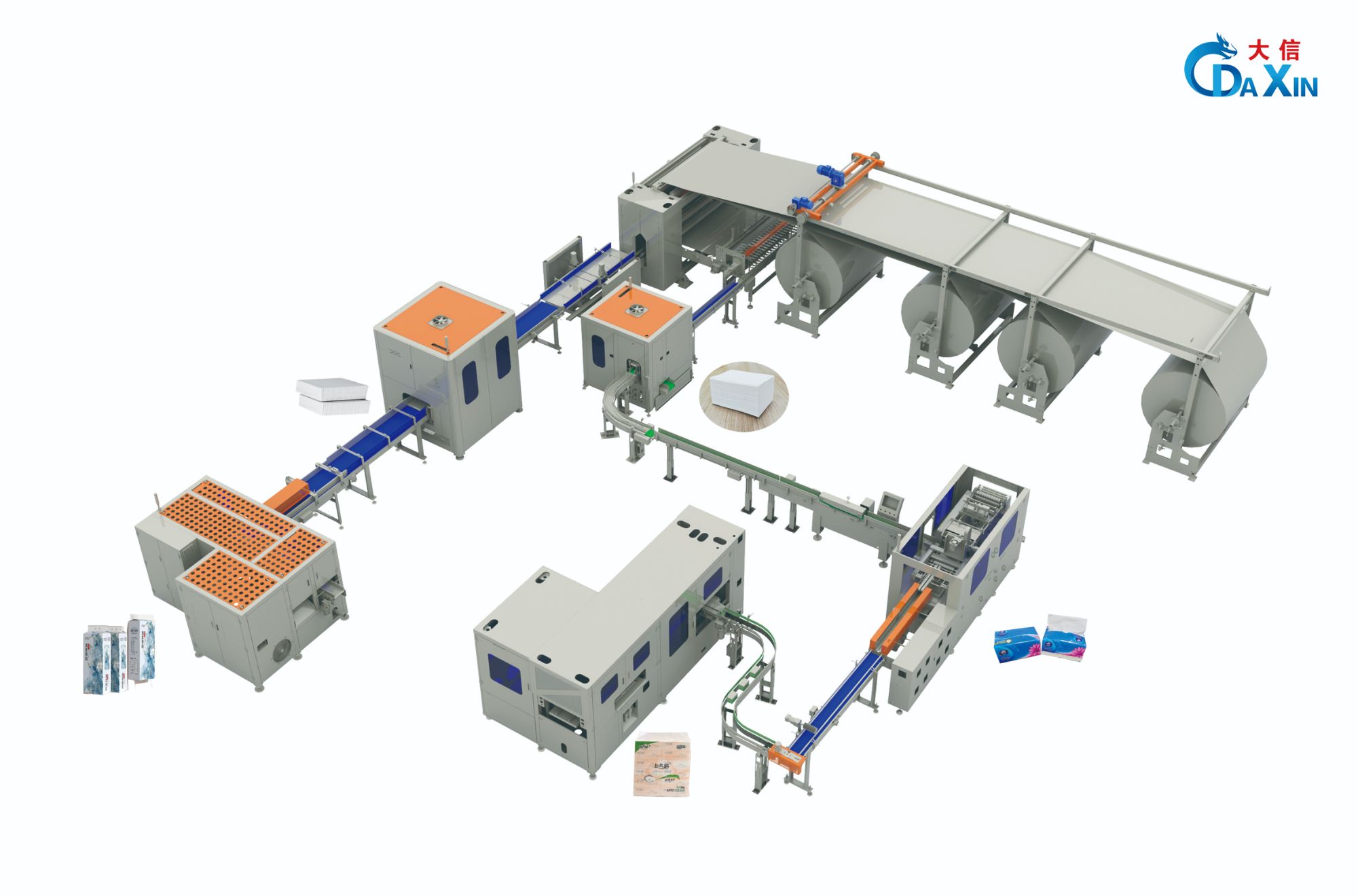
Precision winding and slitting have long forced manufacturers to choose between tight tolerances and high throughput. Run too fast and the edges fray; slow down and the line becomes a bottleneck. But that old equation no longer holds. Modern systems now combine closed-loop tension control with servo-driven traversing and razor-sharp rotary knives to hold width tolerances within a few microns at full production speed.
The key shift is in how the material is handled, not just cut. Rather than relying on a single tension zone, advanced winders split the web path into independently monitored segments. Each segment adjusts in real time based on feedback from load cells and edge sensors, preventing telescoping, starring, and stretch. Slitting blades are positioned with micron-level precision and can be changed without re-zeroing the entire setup, cutting downtime while keeping cut quality consistent across the entire roll width.
What used to be an either/or decision—accuracy or speed—is now a single integrated process. Operators can run sensitive films, laminates, and foils at rates that would have caused defects just a few years ago. The result is less waste, fewer roll rejects, and a more predictable workflow from unwind to finished slit rolls.
Automation That Cuts Downtime, Not Corners
Most automation projects fail quietly. They cut a corner here, skip a validation there, and for a while nothing seems wrong. Then a sensor drifts out of calibration, a version mismatch goes unnoticed, and a line that was supposed to run lights-out stops at 2 a.m. Automation that cuts downtime treats stoppage as a design constraint. Every handoff includes a verification step, and any path that can silently pass bad data gets reworked until it can't.
On a packaging line switching between products, the quick route trusts the recipe, fires actuators, and hopes the guide rails moved far enough. That works until a carton jams and someone loses half a shift clearing it. A better route confirms the rail position, measures the first carton, and only then ramps to full speed. It looks slower in a demo but runs faster over a month because the stops you do have are planned and short instead of random and long.
Software deployments inside industrial systems follow the same logic. Rollback is not a failure of automation; it's a feature. If a container or config change doesn't pass its post-deploy checks, the system reverts on its own and alerts the right person. That turns a potential four-hour outage into a two-minute blip. Teams stop dreading releases and start scheduling them during normal hours. Downtime drops not because corners are cut, but because the corners now have guardrails.
Material Handling Built for Delicate Tissue Webs
Tissue webs rarely behave like standard paper grades. At 12 to 18 gsm, they stretch, flutter, and tear under forces that would barely register on linerboard. Effective handling starts with accepting that every transfer point is a potential break source. Instead of forcing the sheet through conventional nips, the equipment uses air-assisted turns and low-tension vacuum rolls to carry the web without touching its coated or creped surface. Adjustable air pressure at each separation point lets operators fine-tune behavior for different furnish blends, recycled fiber ratios, and crepe counts, which keeps the sheet stable without sacrificing caliper or softness.
Static and dust compound the problem. As the web moves faster, friction builds a charge that can make edges fold or repel the sheet from guide paddles. Built-in ionization bars placed just before critical transfers neutralize that charge before it causes misalignment. Edge trimming systems with helical knives cut cleanly at high speeds without leaving micro-tears that later expand into full breaks. And because maintenance often happens in cramped, fiber-laden spaces, the components are designed for quick swap-outs: cantilevered rolls, tool-less covers on vacuum boxes, and open-frame supports that prevent dust from packing into moving parts.
The payoff shows up in fewer unscheduled stops and more consistent roll structure. When the web arrives at the reel without being stretched or abraded, the finished product retains the bulk and surface feel that converters expect. One mill running 100% virgin fiber switched to this approach and reduced sheet breaks by roughly a third in the first quarter, while also cutting dust complaints from downstream lines. For tissue operations that run close to their mechanical speed limits, that margin is not trivial; it is the difference between hitting daily tonnage targets and losing hours to rethreading.
Data-Driven Quality Checks at Full Line Speed
Running quality checks at full production speed used to mean choosing between thoroughness and throughput. Modern inspection systems flip that trade-off by feeding every measurement, image, and sensor reading into a live analytics pipeline. Rather than sampling a few units per shift, the line now captures data on each item as it passes, building a continuous record that reveals drift, wear, or tool degradation long before a defect becomes visible on the floor.
The real advantage shows up when historical patterns meet real-time alerts. A slight shift in seal pressure or a subtle change in surface texture may not trigger a traditional pass/fail gate, but against a rolling baseline it stands out immediately. Operators can adjust parameters mid-run instead of stopping for manual inspection, keeping the line moving while the system learns what “normal” looks like for each SKU, batch, or raw material lot.
Over time, these data streams turn quality from a checkpoint into a feedback loop. Engineers can trace a field complaint back to exact sensor variance during that production window, then tighten the relevant control limits without slowing the line. The result is fewer rejected pallets, less rework, and a process that gets more stable the faster it runs.
Retrofit Paths That Extend Existing Assets
Older buildings often carry hidden structural value that new construction can't replicate — thick masonry walls, deep floor plates, or a rhythm of columns that begs for a second life. When retrofitting paths to extend these assets, the smartest moves aren't about erasing the past but about weaving new circulation through it. A stair tower slipped into an old light well, a glass bridge linking two formerly separate wings, or a ramp carved along the edge of a loading dock can unlock square footage that was always there but never reachable. The best retrofits treat the existing bones as a partner, not an obstacle, so every added walkway or connector draws attention to the building's original logic.
Yet extension isn't just about connecting floors or filling gaps — it's about giving old assets a new operational heartbeat. Think of a warehouse where a new interior street cuts diagonally across the column grid, turning dead storage into a bright arcade of studios or labs. Or a mid-century office block where a new exterior escape stair doubles as a south-facing sun screen, solving code compliance while adding usable balcony space on every level. These paths don't just move people; they redistribute light, air, and value. By mapping the most underused corners — the forgotten mezzanine, the oversized elevator lobby, the roof that was never designed for occupancy — retrofit paths can extend an asset's life without pretending it's brand new.
FAQ
A standard tissue converting line usually integrates unwinding stands, embossing units, folding machines, log saws, and accumulators. Some configurations also add packaging modules or bundlers, depending on whether the output is facial tissue, toilet rolls, or kitchen towels.
Efficiency gains come from features like servo-driven axis synchronization, automatic splice detection, and quick-change tooling. These reduce downtime between product runs and allow the line to maintain consistent speeds without manual intervention.
Automation handles repetitive tasks such as roll handling, core feeding, and rejection of defective logs. Advanced systems use sensors and PLC logic to adjust tension and alignment in real time, which cuts waste and keeps output quality stable even at high throughput.
Yes. Most lines are modular, so you can swap embossing patterns, change folding plates, or adjust cutting lengths to produce napkins, handkerchiefs, or jumbo rolls. Retrofitting with dual-lane unwinds or multi-fold units is common when product mix changes.
Regular lubrication of embossing rollers and blade sharpening or replacement are essential. Many plants also schedule predictive maintenance using vibration sensors on drive motors and air pressure checks on pneumatic clamps to avoid unexpected stops.
Tension control systems with load cells and dancer rollers compensate for changes in paper thickness. Some lines include automatic web guiding to keep the sheet centered, preventing wrinkles or edge misalignment when converting lightweight or recycled grades.
Key factors include maximum unwind diameter, rated speed in logs per minute, and the speed of the log saw. Also check the ease of format changeovers and whether the control interface supports remote diagnostics, since that reduces reliance on on-site technicians.
Often yes. Upgrades like adding a new unwind stand with automatic splicing, retrofitting a servo-driven folding unit, or installing a modern HMI with recipe management can extend the life of older lines and boost output without a full capital investment.
Conclusion
Tissue converting rarely rewards a one-size-fits-all line. The equipment that keeps a plant competitive today is modular at its core, letting you add unwind stands, embossers, or folding units as order mixes shift. That same flexibility shows up in winding and slitting: modern systems hold diameter and tension within very tight bands, so you get clean roll edges and consistent sheet counts without slowing the line to chase adjustments. For delicate tissue webs, thoughtful material handling matters just as much as blade geometry. Air-assisted threading, low-inertia rollers, and web guides that respond to micro-variations prevent tears and wrinkles that quietly eat into yield.
The real difference, though, comes from how these machines run together. Automation built around quick changeovers and self-diagnostics trims downtime instead of hiding it behind scheduled stops. Vision systems and laser calipers now inspect embossing depth, perforation strength, and roll diameter at full line speed, flagging drift before it becomes waste. Even older assets can reach that standard through targeted retrofits—replacing drives, adding sensors, or upgrading control software—rather than a full replacement. That approach extends useful life and spreads capital cost more evenly. The result is a converting operation that scales with demand, holds quality without heroic effort, and doesn't demand a new building every time the market changes.
Contact Us
Contact Person: Sam Xie
Email: [email protected]
Tel/WhatsApp: 86-18938538530
Website: https://www.daxin321.com/