

TECO Frequency Converter Vendor: Key Considerations for Industrial Buyers
2026-09-22
A TECO drive that fails six months in isn't a bargain, no matter the invoice price. Industrial buyers sourcing TECO frequency converters often learn this the hard way, focusing on upfront cost while ignoring vendor support, lead times, and compatibility. Before you commit to a supplier, it pays to look beyond the datasheet. That’s why Soochee keeps appearing in shortlists—not as a generic distributor, but as a vendor that treats post-sale service as part of the product.
Beyond the Spec Sheet: What Actually Matters in a TECO Drive Supplier
A glossy datasheet can tell you the nominal torque, voltage range, and overload capacity of a TECO drive, but it rarely reveals how the supplier behaves when a drive fails on a Friday afternoon. Real-world value shows up in the quieter moments: the speed of a technical support callback, the availability of a replacement unit from local stock, or the willingness to walk your maintenance team through a parameter lockup instead of just shipping a new board. Those intangibles separate a supplier who merely sells drives from one who keeps your line moving.
Ask any plant engineer who has lived through a retrofit, and they will point to the importance of application knowledge. A spec sheet lists maximum switching frequency and encoder input types; a competent TECO drive partner asks about your load profile, ambient temperature swings, and whether harmonic distortion from neighboring equipment has ever caused nuisance trips. They size the drive for your actual duty cycle, not just for the motor nameplate, and they configure defaults that account for the quirks of your mechanical system—belt stretch, gear backlash, or regenerative energy that must be dissipated safely.
Finally, look at how the supplier treats you after the purchase order closes. Do they offer commissioning assistance, preventive maintenance training, or firmware update notifications without being chased? Can they cross-reference legacy TECO models when an older drive reaches end of life, suggesting a migration path that avoids rewiring the cabinet? These are the details absent from any brochure, yet they determine whether your variable speed drive investment pays back in years of quiet operation or in a stack of urgent service tickets.
When Lead Times Make or Break Your Production Line
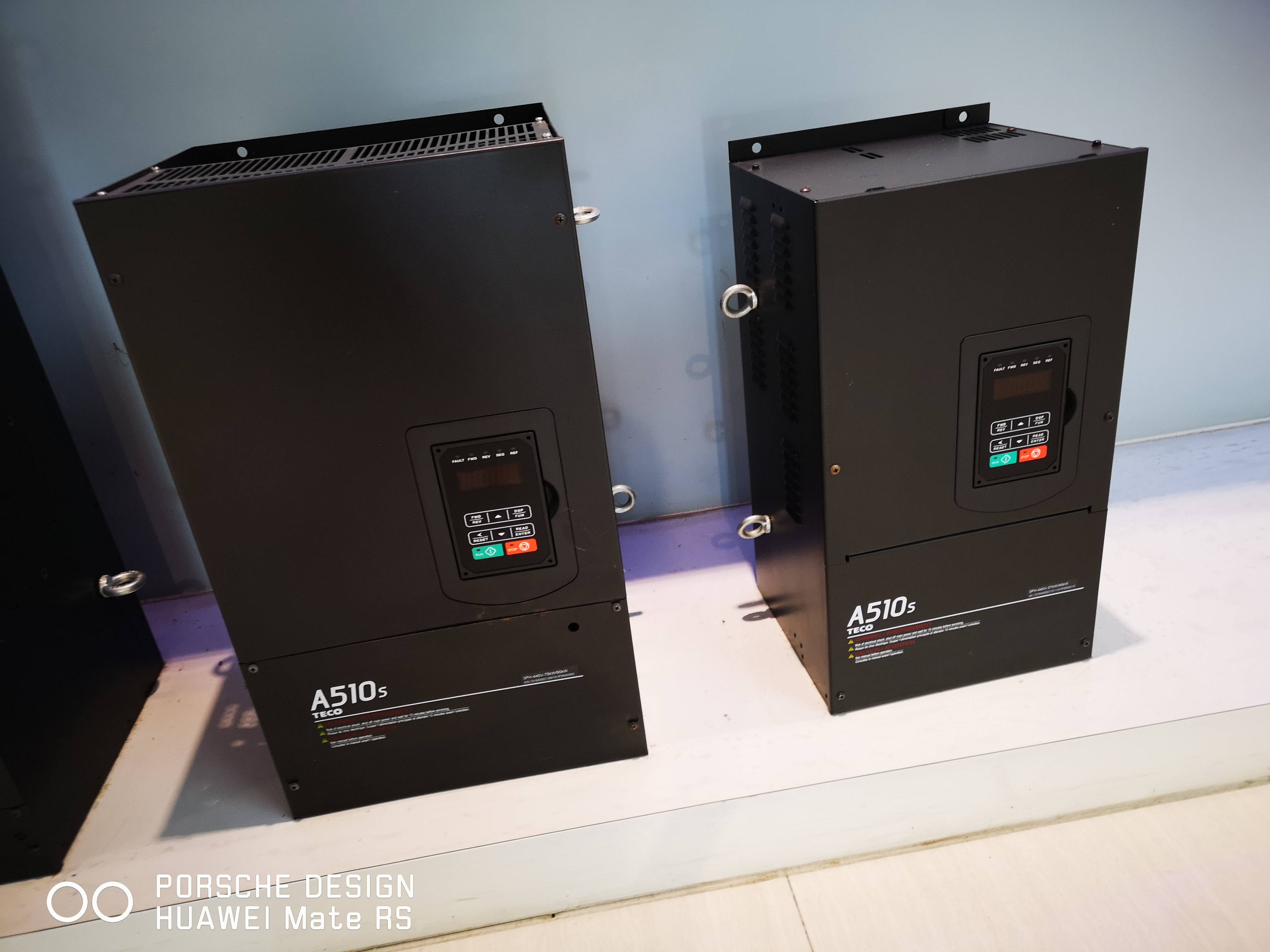
Long lead times don't just delay a single order—they quietly unravel the entire rhythm of your production line. When a critical component arrives two weeks late, downstream stations sit idle, workers are reassigned in a scramble, and the carefully balanced takt time collapses. What often gets overlooked is the compounding effect: a missed delivery on Monday doesn't simply push Friday's output to next week, it forces rushed changeovers, overtime premiums, and sometimes even air freight for a last-minute substitute, all of which eat into margins that were already thin.
The real danger isn't the occasional late shipment, but the habit of accepting extended lead times as a fixed constraint. Teams start building buffer inventory as a crutch, which ties up cash and creates a false sense of security. Then a quality issue surfaces in that buffered stock, and suddenly you're not just late—you're building defective products on schedule. The most resilient production lines treat lead time reduction as a continuous improvement target, not a logistics problem handed off to procurement. Shortening the distance between order placement and material arrival, whether through local suppliers or modular design, gives the entire line the flexibility to respond to actual demand instead of a forecast frozen weeks ago.
Ultimately, lead time is a strategic lever, not just a date on a purchase order. Production managers who track supplier lead time variability with the same rigor as equipment uptime discover that the biggest gains often come from rethinking the sourcing map or simplifying the bill of materials. A line that can start building within days of a customer order—not months—doesn't need heroic expediting or oversized safety stock. It simply moves with the market, and that agility is what separates a factory that survives a demand shock from one that gets buried by it.
Reading Between the Lines of Warranty and Service Commitments
Most buyers stop at the headline promise—a lifetime warranty or around-the-clock support—but the real story hides in the definitions section. A warranty can quietly exclude the exact parts most likely to fail, or it may demand certified installers and every receipt before a claim is even reviewed. Service commitments often advertise fast response times, yet the clock may start only after a ticket is formally opened, not when the issue first appears.
Another pattern is coverage that shrinks over time. A five-year warranty might cover parts and labor for the first year, then drop to parts-only with a long list of exclusions. Some service agreements allow the provider to change terms with little more than an email notice, while the customer remains bound by the original fine print. Reading closely isn't about distrust—it's about knowing which failures will actually come out of your pocket.
Before signing, compare the exclusions list against what the salesperson emphasized. If a likely failure mode falls under normal wear, environmental damage, or improper use, you will probably pay for repairs yourself. Ask for a written example of a covered claim. A meaningful warranty should point to concrete repair scenarios, not vague phrases like defects in materials or workmanship.
Custom Firmware and Application Tuning: Where Vendors Differ
The gap between vendors becomes most visible when you look at how they handle custom firmware requests. Some treat it as a bespoke engineering service, walking customers through low-level parameter tweaks like interrupt coalescing, queue depths, or power state transitions—adjustments that can shave milliseconds off latency in niche deployments. Others, however, merely repackage stock firmware with a different build name and offer no meaningful path for application-specific tuning. This distinction often surfaces in sectors like industrial automation or high-frequency trading, where a one-size-fits-all firmware falls short.
Application tuning tells a similar story. A vendor with deep silicon expertise might expose per-core cache partitioning or allow you to pin critical threads to isolated CPU complexes, effectively handing control of the memory hierarchy to the application team. Meanwhile, another vendor might restrict you to a handful of sysctl knobs and a generic “performance profile” that mostly just raises clock speeds. The real differentiator is whether the vendor documents the trade-offs—thermal headroom, wear-leveling impact, or determinism under bursty I/O—or simply hides them behind marketing-friendly “boost modes.”
Over the lifecycle of a product, these differences compound. A vendor that offers stable, versioned tuning interfaces lets you reproduce exact firmware/app configurations across fleets, which matters when you are chasing a rare race condition at 3 a.m. A vendor that pushes silent firmware updates with undocumented behavior changes, on the other hand, leaves you debugging a moving target. In the end, the vendors that stand out are the ones who treat firmware and application tuning as an ongoing collaboration, not a one-time checkbox on a datasheet.
The Hidden Costs of Choosing a Low-Bid Frequency Converter Partner
当采购团队把报价单摊在桌上时,最低价那一栏总是格外显眼。但很少有人愿意追问:这家供应商的变频器在满载运行六个月后,效率还能保持多少?谐波抑制是否达标?电网波动时会不会直接跳闸?低价设备在实验室里的数据通常过得去,可一旦进入真实的生产环境,温度、粉尘、电压波动这些变量就会让隐藏的设计短板暴露出来。而每一次非计划停机,都意味着产线停摆、订单延误,以及现场工程师深夜被叫醒的加班费。
更隐蔽的成本藏在售后环节。低价合作伙伴往往没有本地库存,一个关键功率模块损坏后,你可能需要等上两三周才能从海外仓库调货。这期间设备无法运转,但工人工资、厂房租金和客户违约金不会暂停。技术支持同样如此——电话打过去,对方可能先让你填一张英文工单,然后转给时差十二小时的工程师,问题排查变成一场漫长的拉锯战。当初省下的那点差价,往往连一次紧急空运的运费都抵不上。
还有一个容易被忽略的层面是合规与安全。低价变频器可能缺少某些认证,比如针对特定行业的EMC测试或功能安全等级。平时看不出问题,但一旦发生工伤事故或环保处罚,追责链条会直接指向设备选型决策。到那时,财务上的节省显得微不足道,而品牌声誉和客户信任的损失才是真正的无底洞。选择合作伙伴,本质上是在为未来几年的运营风险投保,只看首年采购价,等于主动放弃了这份保单。
Field Stories: How TECO Drives Hold Up in Harsh Industrial Environments
On a steel mill floor where ambient temperatures swing from freezing drafts to furnace-blast heat, a TECO drive keeps a 400-ton shear cycling without a hiccup. Maintenance crews here used to replace variable frequency drives every eight months due to conductive dust and vibration. Three years after switching to TECO units, the logbook shows only scheduled inspections. The drives are mounted in enclosures caked with mill scale, yet their conformal-coated boards shrug off the metallic grime that killed previous models.
A wastewater treatment plant in the Midwest tells a similar story. Pumps run in a damp, hydrogen-sulfide-rich gallery where corrosion eats exposed copper within weeks. The plant manager recalls pulling a TECO drive from service after 22,000 hours for a routine capacitor check—the heatsink still shiny, the cooling fan spinning freely. He attributes the longevity to the heavy-duty varnish on the power modules and the sealed keypad that ignores splashes from a leaking overhead pipe.
Not every environment is dramatic. A quarry in Arizona subjects its drives to continuous fine dust and 110°F summer afternoons. Operators there note that TECO drives don't derate as aggressively as other brands they tried, and the built-in DC link choke keeps harmonics low enough that no extra line reactors were needed. The real proof: after five years, all twelve drives on the conveyor network are originals, and the spare unit still sits in its box.
FAQ
Look beyond the catalog. A solid vendor will ask about your load type, starting torque, ambient temperature, and harmonic limits before quoting a model. If they jump straight to a part number, keep looking.
Drives fail at the worst times, so test their after-hours line. Ask how quickly they can dispatch a replacement or remote into a unit. A vendor with stocked boards and local technicians beats one with a cheaper price and a three-week lead time.
Downtime costs more than the drive itself. A vendor holding common sizes, keypads, braking resistors, and IGBT modules locally can save you days. Confirm they stock what you are likely to need, not just what they want to sell.
Ask for examples of custom enclosures, communication cards, or parameter presets they have done for similar plants. A good vendor can preload your motor data and application macros so installation is plug-and-play instead of a weekend project.
It separates order takers from partners. Request sample manuals, parameter lists, and whether they offer hands-on training for your maintenance crew. Clear startup guides reduce the chance of miswiring a 480V drive.
Match the drive to your environment: UL, CE, RoHS, and sometimes marine or explosive atmosphere ratings. Don't assume every TECO model carries the same marks. Ask for certificates tied to the exact part number you plan to install.
Factor in energy efficiency at your typical speed range, spare parts pricing, and warranty terms. A drive that costs 10% more but runs cooler and includes a five-year warranty can pay for itself through reduced downtime and fewer replacement fans.
Conclusion
A TECO drive’s printed specifications rarely reveal whether a vendor can keep your line running when a unit fails on a Friday afternoon. The real test is inventory depth, regional service reach, and whether the supplier stocks common replacement boards instead of forcing a two-week air freight wait. Lead times deserve more than a sales rep’s promise—ask for recent order histories and what happens when a container is delayed. Warranty terms often hide the true cost: some vendors cover parts but not labor, or require you to ship the drive to a distant depot at your expense. A low-bid partner may look attractive until you tally emergency rentals, lost production, and the hours your technicians spend re-tuning drives that were never properly commissioned.
Custom firmware and application tuning separate genuine TECO specialists from box movers. A vendor who understands your specific load profile—whether a rock crusher, a paper mill winder, or a high-pressure pump—can adjust acceleration ramps, torque limits, and carrier frequencies to prevent nuisance trips and extend motor life. In harsh environments, TECO drives have a reputation for holding up to dust, moisture, and vibration, but only when the supplier helps with proper enclosure selection, harmonic filtering, and periodic maintenance checks. Field stories from cement plants and wastewater facilities consistently show that the drive itself is rarely the weak point; it is the lack of vendor support that turns a minor fault into a major shutdown. Buyers should therefore evaluate a TECO frequency converter partner the way they would a maintenance contractor—on proven responsiveness, application knowledge, and willingness to stand behind the product long after the invoice is paid.
Contact Us
Contact Person: Jenny Jaa
Email: [email protected]
Tel/WhatsApp: 0086 152 9510 6006
Website: https://www.china-motor-supplier.com