

Steel Purlin Maker: Key Factors for Selecting a Reliable Fabrication Partner
2026-11-02
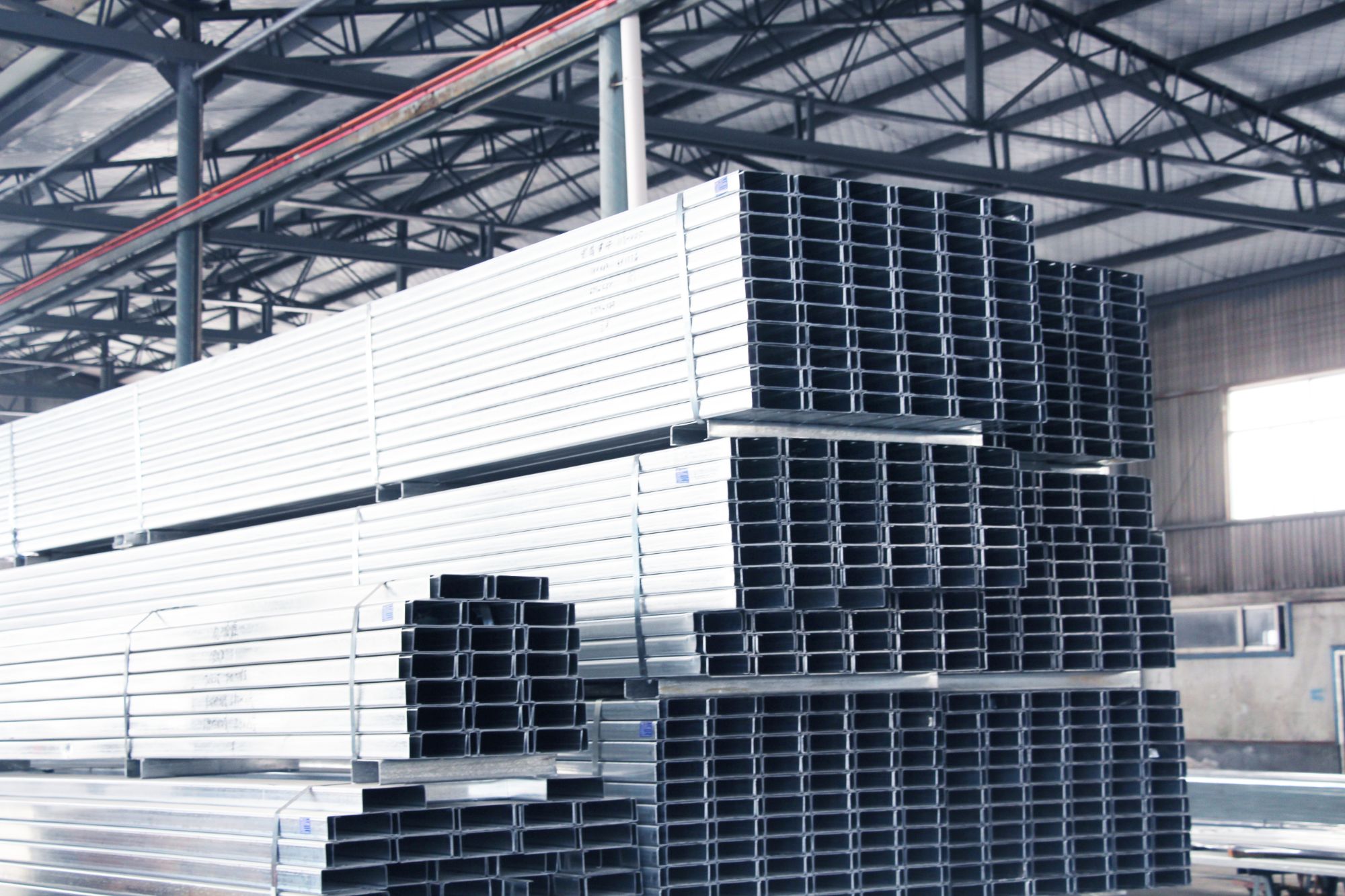
Choosing a steel purlin maker isn't just about price per ton. It's about trusting a partner with your project's structural integrity and schedule. From cold-formed precision to galvanized coating consistency, the wrong fabrication choice can ripple into costly delays or field rework. So what separates a dependable manufacturer from a gamble? In this guide, we break down the factors that matter—material traceability, roll forming accuracy, corrosion protection, and delivery reliability. LANYUN brings these disciplines together, but don't take our word for it. Let's examine what to demand from your purlin supplier before you sign the next purchase order.
Factory Floor Realities You Should Verify
Walking a factory floor tells you more in ten minutes than a polished audit report ever will. Look past the staged workstation and check whether raw materials are stacked against exit doors, whether the fire extinguisher inspection tag is actually dated this year, and whether workers make eye contact or suddenly busy themselves when you pass.
Ask to see the rework area, not just the finished-goods shelf. A pile of rejected parts near the loading dock usually signals an unstable process that the final inspection photos won't show. Also verify machine maintenance logs against actual grease stains and worn belts — clean paper records mean little if the equipment next to them is held together with tape.
Raw Material Choices and Where They Come From
We don't start with a spec sheet; we start by visiting farms, mills, and small-scale processors. For our main fabric line, that means organic cotton from a family-run cooperative in Gujarat, where the soil has been worked without synthetic inputs for over a decade. The wool in our heavier pieces comes from a single flock in New Zealand's South Island—same shepherds, same genetic line, which gives the yarn a consistency you can feel in the finished garment.
Dyes and finishes matter just as much as fibers. Instead of buying pre-mixed colorants from a catalog, we work with a fourth-generation dyehouse in Osaka that still uses low-impact reactive dyes and a closed-loop water system. The buttons on our jackets are turned from corozo nuts harvested in Ecuador, picked only after they fall naturally. Even the thread is sourced from a mill in Portugal that spins recycled polyester from post-industrial waste.
This isn't about checking boxes or chasing certifications. It's about knowing that each raw material has a place and a person behind it. When a batch of cotton arrives, we can trace it back to the exact field. When the wool is delayed by a late spring storm, we wait. Those choices cost more and take longer, but they're the only way we can stand behind what we make.
How Tight Tolerances Are Actually Held
Achieving tight tolerances starts long before any metal hits the machine. Engineers choose materials with predictable thermal expansion and stable grain structures, then design fixtures that minimize clamping distortion. On the shop floor, temperature control is just as critical as the cutting path—a five-degree swing can shift dimensions by microns. Machinists often let parts rest between operations so residual stress can relax, a practice that looks like idle time but prevents hours of rework later.
The real skill lies in offset management. Instead of relying on a single toolpath, operators run first articles, measure with calibrated CMMs, and adjust tool comp offsets based on live data. High-end shops use in-process probing where the machine stops, touches the surface with a spindle probe, and updates its own coordinate system. This closed-loop correction catches drift before it becomes scrap. Some turned parts are held to two microns by tweaking the program after every tenth part—tedious but far cheaper than sending out rejects.
Tool wear is another silent killer of precision. Diamond or CBN inserts maintain edge sharpness longer, but even they degrade predictably. Savvy machinists chart wear curves and swap tools at scheduled intervals rather than waiting for a size alarm. Coolant concentration and filtration get checked as rigorously as the dimensions themselves, because a clogged nozzle starves the cutting zone and causes thermal spikes. At the extreme end, lapping and honing are used to finesse surfaces to sub-micron flatness, where measurement itself becomes an art of isolating vibration, dust, and even the warmth of a hand.
Delivery Promises Worth Testing
Many delivery promises sound great in a boardroom but fall flat when customers actually encounter them. Before you commit to “free overnight shipping” or “guaranteed Saturday delivery,” run a small pilot on a subset of your catalog or customer base. Pay attention to whether the promise lifts conversion enough to offset higher logistics costs, and watch for side effects like increased returns or customer service tickets. One online furniture retailer found that offering a narrow two-hour delivery window boosted checkout completion by 9%, but only in urban zip codes where their courier partner had dense routes.
Another angle worth testing is pairing a bold promise with a clear consequence for missing it. For example, you might offer “delivery by Friday or your next order ships free.” Customers tend to trust these conditional promises more because they feel less like marketing fluff. Track not just immediate sales but repeat purchase rate and reviews—sometimes a promise that doesn't maximize speed actually builds more loyalty because it sets expectations accurately. Also consider testing promises based on inventory proximity: showing “arrives tomorrow” only for items stocked within 50 miles of the shopper, while everything else gets a conservative date. This kind of granular honesty often outperforms blanket promises.
Custom Profiles Without the Runaround
Time was, setting up a custom profile meant wading through menus, toggling obscure switches, and hoping you didn't break something. That friction is gone now. The whole point here is to get you from idea to active profile in under a minute, with zero detours.
You pick the parameters that matter to you, give the profile a name, and it's live. There's no hidden second screen asking for permissions you already granted, no "advanced options" banner nagging for attention. Just the fields you need, exactly when you need them.
The result is a workflow that feels less like configuring software and more like jotting a note. Because at the end of the day, a custom profile should adapt to your habits, not force you to adapt to its setup ritual.
Warranty and Support After the Handshake
A signed contract shouldn't feel like the final scene in a movie. The best partnerships treat warranty and support as an extension of the sale, not an afterthought. Before you shake hands, ask how the company handles the first 30 days, the first year, and the rare moment when something quietly stops working. Look for a clear path to a real human—not a ticket queue that vanishes into the void.
It's the small details that separate transactional vendors from true partners: a direct phone number for your account manager, a promised response window that's actually kept, and a warranty document written in plain English rather than legal fog. Pay attention to whether the warranty covers parts and labor equally, whether on-site support is included or costs extra, and how software updates are handled after the initial install. These are rarely advertised, but they tell you everything about how a company treats customers once the ink is dry.
After-sale support is where reputations are quietly built or slowly eroded. Ask for references from clients who've been using the product for two or three years—not just the ones still in the honeymoon phase. A willingness to share those long-term stories is often the strongest signal that the warranty is more than a piece of paper.
FAQ
Ask for their raw material sourcing records for the last six months. Look for consistent mill certifications showing full coil traceability back to the heat number. A fabricator that can't produce these on demand often mixes scrap or secondary steel, which leads to uneven yield strength and premature sag in long spans.
Certifications confirm the base steel meets the specified grade, such as G450 or G550, and that the zinc coating weight actually matches what's quoted. Without batch-level certs, you're trusting a label. Even small dips in zinc thickness shorten service life in coastal or industrial environments, so verify the coating designation like Z275 or Z350 rather than accepting 'galvanized' at face value.
Request a sample run on your exact profile—not a similar one—and ask about their adjustment time between setups. Shops that specialize in purlins typically keep dedicated roll forming lines for common sections like C and Z. If they need to disassemble and reassemble tooling for every change, lead times stretch and dimensional drift becomes more likely.
A low quote paired with a vague delivery window often means your order gets bumped when a larger job comes in. Reliable fabricators give you a production slot, not just a promise. Ask for their current backlog and how they prioritize repeat versus one-off orders. If they can't tell you which week your coils enter the mill, expect delays on site.
Request recent dimensional inspection reports and a copy of their internal tolerance sheet for hole punching and flange width. Then ask them to measure three random purlins from current inventory and send photos with the caliper readings visible. A shop that hesitates or sends only marketing photos usually lacks a written QC procedure.
Watch for phrases like 'commercial grade zinc' or 'standard galvanizing' without a coating designation. Check whether they do in-line galvanizing or batch dipping after punching—holes cut after dipping expose raw edges. Also ask about their salt spray test results. If they can't provide test data or rely only on visual checks, the coating may be thinner than needed.
Not necessarily. Some fabricators buy pre-punched coils and only do cutting and punching, which can be fine for simple orders. But if you need tight tolerances on complex profiles or mixed lengths, an in-house roll forming line gives them direct control over profile geometry and reduces reliance on another shop's schedule. Ask who owns the tooling and who pays for profile corrections when specs drift.
Conclusion
Choosing a steel purlin fabricator often comes down to what you can confirm before signing anything. Walk the shop floor if possible—check whether equipment is maintained, material is stored properly, and workers follow a clear process. Ask exactly where the coil or sheet comes from, because not all substrate is alike; mills with inconsistent chemistry will cause problems at the rollformer. Tolerances matter more than most buyers realize. A shop that claims ±1 mm but has no in-line laser measurement or regular gauge checks is guessing. Ask how they hold web, flange, and lip dimensions across a full run, not just on the first piece. Custom profiles shouldn't mean endless back-and-forth. A good partner will have engineering staff who can read your load tables and adjust hole patterns, lengths, or stiffening lips without treating every change as a new project.
Delivery promises are worth testing with small orders before you rely on them for a big pour or erection date. Ask what happens if a truck is late or missing pieces—how quickly they re-run and ship. Finally, look at the warranty language and support after the handshake. Some fabricators guarantee only the steel, not the formed section; others will stand behind the profile's dimensional accuracy and provide mill certs for traceability. The difference shows up when a bundle arrives rusted, punched wrong, or out of square. Reliable partners fix it without blaming the mill or the carrier. In short, verify the floor, the material, the tolerance system, the delivery track record, the custom engineering capacity, and the post-sale response. Those six checks tell you more than any polished quote.
Contact Us
Contact Person: Nia
Email: [email protected]
Tel/WhatsApp: +86 18954360337
Website: https://www.sdppgi.com