

Steel Mesh Welding Production Line Exporter Guide: Key Factors for Global Buyers
2026-08-29
Sourcing a steel mesh welding production line from overseas can feel like a high-stakes gamble—one wrong exporter choice leads to months of downtime and costly rework. This guide cuts through the noise, highlighting the critical factors global buyers often miss when evaluating suppliers. From weld consistency to after-sales support, we’ve distilled hard-won lessons from the field. At YI ZHOU TECHNOLOGY, we believe informed buyers make smarter decisions—and this guide is your first step toward a production line that actually delivers.
Hidden Costs in Steel Mesh Welding Lines That Catch First-Time Buyers Off Guard
Many first-time buyers focus on the sticker price of the line itself, but the real surprises come later. Tooling heads, electrodes, and mesh alignment pins wear faster than expected when running high-tensile wire. Replacing these consumables isn't just a line item; it often requires partial disassembly and lost production hours.
Another overlooked expense is facility preparation. The floor may need reinforcement or leveling to handle vibration, and the power supply sometimes requires a dedicated transformer or line filter to avoid tripping breakers under load. These infrastructure costs can easily add 10-15% to the upfront budget.
Then there is the software side. Basic control interfaces are often included, but advanced diagnostics, remote monitoring, or recipe storage for multiple mesh sizes come with annual license fees. Training operators on a new line also takes longer than advertised, and scrapped wire during the learning curve quietly eats into margins.
What Your Current Supplier Won’t Tell You About Mesh Welding Line Downtime
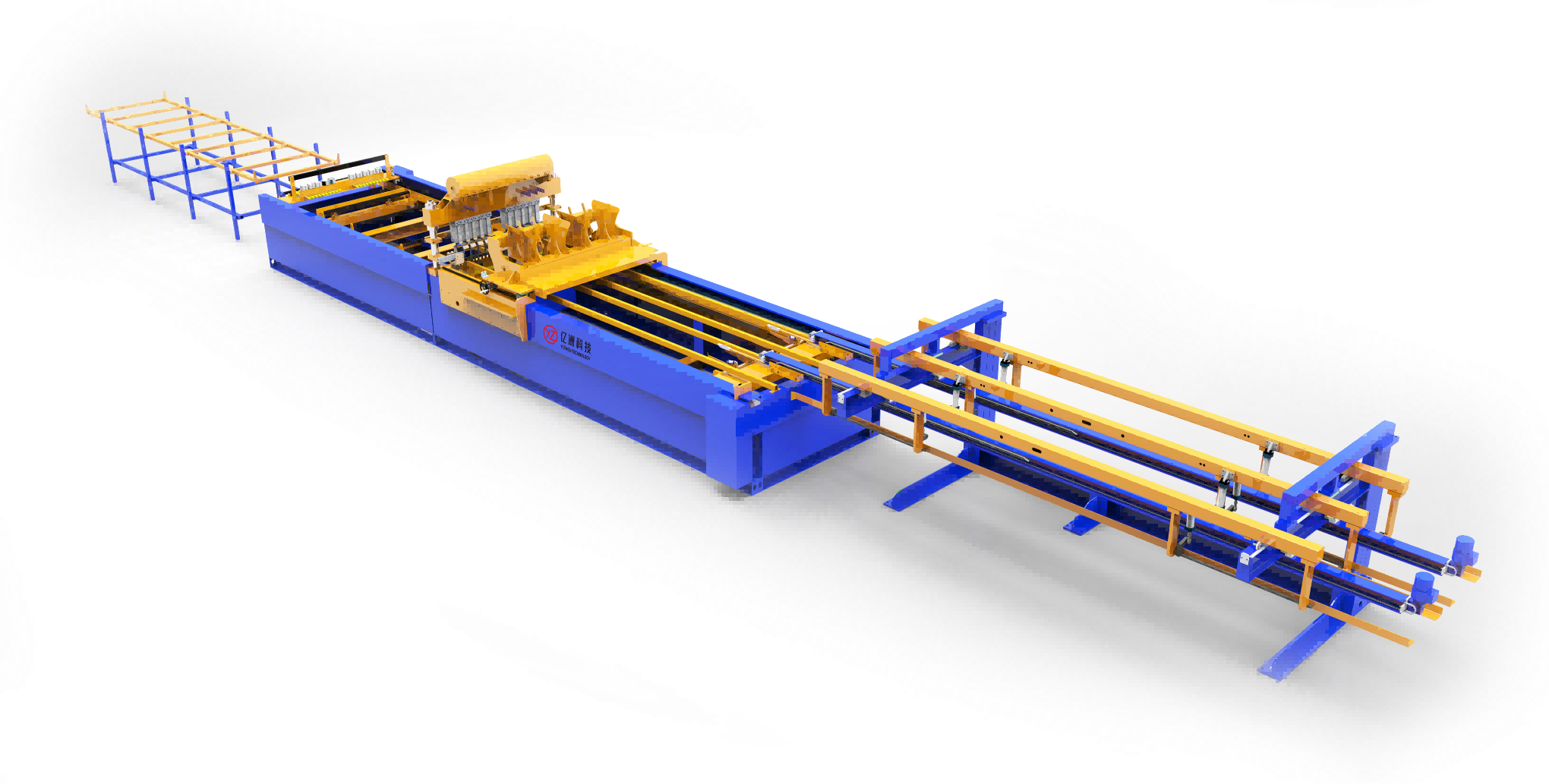
Your supplier will never admit that a large share of mesh welding line downtime comes from design shortcuts they took years ago. Those repeated faults in the wire feed mechanism or electrode alignment? They know about them. They just classify them as “normal wear” so you keep paying for replacement parts instead of demanding a proper fix.
The uptime figures they quote are almost always from clean-room trials, not real production floors. They exclude the minutes lost to wire spool changes, the frequent sensor resets, the occasional jam that every operator knows by heart. In your plant, those “minor” interruptions stack up to real lost output, but they won’t show you that math.
They also won’t tell you that a surprising amount of downtime is preventable with simple operational changes—like better spool loading sequences or daily cleaning of guide rollers. But that knowledge would reduce your reliance on their emergency service calls, so it stays buried in a technician’s head.
Beyond Price Per Meter: The Real Cost Drivers in Steel Mesh Automation
Steel mesh welding lines are often compared on a simple price-per-meter basis, but that figure rarely reflects what actually happens on a production floor. A machine that costs less upfront can burn through its savings in a few months if it struggles with frequent electrode dressing, inconsistent wire feed, or stubborn changeovers between panel sizes. The real cost lives in unscheduled downtime, scrap from misaligned welds, and the extra labor needed to babysit a line that was supposed to be automated.
Another overlooked driver is how the equipment handles material variation. Coil set, wire hardness, and diameter tolerances change from one heat to the next, and a rigid system will produce rejected mesh until someone manually tweaks settings. Lines that self-adjust welding current and feed speed based on real-time feedback avoid that quiet bleed. Floor space also matters: a compact layout with integrated straightening and cutting can reduce material handling between stations, which adds up when you run multiple shifts.
Support and spare parts logistics often decide whether a line stays productive five years after installation. If the control system uses proprietary boards with long lead times, one failed component can idle an entire plant. Better to look at how diagnostics are exposed, whether local technicians can replace wear parts quickly, and how software updates are delivered. Price per meter is a starting point, not the finish line.
How to Verify Weld Integrity Before Your Container Leaves the Port
Start with a slow, deliberate visual pass over every weld you can reach before the container gets loaded. Look for hairline cracks, porosity, undercut along the weld toes, or any spatter that hides a bad tie-in. Pay extra attention to the corner castings, door hinge plates, and the points where bottom rails meet crossmembers, because those spots carry a lot of twisting force during lifting and road travel. A bright flashlight and a small magnifying glass will reveal more than a quick glance, so mark any suspicious areas with a paint pen instead of relying on memory.
After the visual check, tap along the welds with a small ball-peen hammer and listen to the sound. A clean weld rings in a consistent tone, while a dull or rattling sound can point to lack of fusion or a hidden void inside the joint. For critical, load-bearing connections, use dye penetrant or magnetic particle testing if the equipment is available. If you are not set up for that, hire a certified welding inspector for a spot check. It costs far less than a failed container survey or a cargo damage claim later.
Finally, test the repaired or suspect areas under conditions that mimic the real trip. Shut the doors and have someone shine a bright light around the inside edges while you stand outside in dim light; pinholes will show as tiny bright spots. For the floor and roof seams, a light water spray can reveal leaks, but dry the area thoroughly and re-inspect for rust bleeding afterward. Keep a dated photo log of each checked weld, especially the ones you had to grind out and reweld, so you have a clear record that the container left your yard in sound condition.
The Overlooked Role of Power Supply Stability in Export-Grade Lines
Most discussions about export-grade production lines focus on mechanical precision, automation speed, and surface finish, yet the quality of incoming electrical power rarely gets the same attention. In reality, a line that meets international tolerance standards can still produce inconsistent output if the supply voltage drifts by a few percent during a shift. Sensitive servo drives, vision systems, and laser measurement tools may not shut down, but their readings and positioning can shift subtly. Over weeks of production, these small deviations accumulate into dimensional scatter that fails final inspection for overseas buyers.
Another often-ignored factor is harmonic distortion and transient dips caused by nearby heavy equipment or grid switching. Export orders frequently require tighter batch-to-batch consistency than domestic contracts, and power-related glitches tend to appear as intermittent defects that are difficult to trace. A sudden voltage sag during a critical welding or dispensing cycle can alter material properties without triggering any alarm, leaving the line running while quietly producing marginal units. Adding line reactors, active filters, or an online UPS with proper capacity is not just an electrical upgrade—it directly protects the repeatability that foreign clients expect.
Long-term stability also affects calibration intervals and maintenance costs. Equipment that runs on unstable power drifts out of spec sooner, forcing more frequent recalibration and raising the risk of rejected lots. A simple power quality audit, including continuous monitoring at key machine inputs, often reveals problems that no amount of mechanical tuning can fix. For any manufacturer aiming to keep export customers over multiple years, treating power supply stability as a core line parameter—not an afterthought—can be the difference between steady repeat orders and costly quality disputes.
Why Some “Turnkey” Installations Never Reach Full Output
A turnkey system often arrives with laboratory-perfect specifications, but the actual site quickly introduces losses that were never modeled. For example, a PV array designed around one weather file might sit in a valley with more fog than expected, or a rooftop string layout ignores a vent pipe that shades three modules from 2 p.m. onward. Contractors under schedule pressure sometimes skip IV curve tracing and hand over a plant where a single faulty bypass diode quietly drags down an entire string. The inverter may also be clipping for several hours a day because the DC-to-AC ratio looked fine on paper but was never checked against real irradiance spikes.
Another overlooked factor is that monitoring dashboards can show all green while actual output sags. Loose MC4 connectors, rodent-chewed insulation, or faster-than-expected soiling rarely trigger alarms—they just reduce current in ways that only show up in monthly production totals. Owners often assume “turnkey” means no further tuning, yet even a well-installed system drifts: modules degrade unevenly, firmware updates reset MPPT voltage ranges, and vegetation grows high enough to shade ground-mounted rows. Without someone periodically comparing measured yield against a nearby reference system, small losses compound into a permanent 5–8% shortfall.
Contractual handover tests can also mask long-term underperformance. An EPC may run a single spot check at noon on a cool, clear day and call it successful, never validating output across seasonal temperature swings or partial cloud conditions. Grid voltage fluctuations and transformer losses add another layer that the inverter’s datasheet efficiency curve doesn’t capture. If the service agreement excludes thermal imaging and soiling removal, hotspots and dust can go unnoticed until the system is already producing 10% or more below its expected yield, and by then the root cause is harder to trace.
FAQ
Look beyond the spec sheet. Ask for video of a recent installation running the same wire diameter and mesh spacing you need, and find out how long that line has been in daily production.
Request detailed photos of the weld heads, electrode holders, and frame joints. Serious exporters will also share a list of purchased components like PLCs, transformers, and bearings, which tells you more than polished brochures.
Yes, but confirm the exporter has in-house mechanical and electrical design. If they only resell standard lines, customization often becomes a costly patchwork of third-party modifications.
At minimum, get remote commissioning support, a clear spare parts list with lead times, and a named technical contact. Avoid agreements where support ends once the container leaves the port.
Reputable exporters split the line into marked modules that fit standard containers, then provide assembly drawings and live video guidance. Ask about total weight, crate dimensions, and whether they offer a supervised installation option.
Differences come from frame rigidity, transformer quality, control system brand, and whether the line includes automatic mesh stacking or cutting. Cheap lines often hide costs in frequent electrode replacement and unstable weld consistency.
Ask for CE or equivalent electrical safety documentation, weld sample reports for your target mesh, and a detailed operations manual in English. Avoid exporters who promise certification but cannot show test records.
Start with a small trial order or a paid sample run using your wire and mesh specs. Pay attention to response time, engineering questions they ask, and whether they flag potential issues instead of agreeing to everything.
Conclusion
First-time buyers rarely account for the auxiliary expenses that surface after a steel mesh welding line leaves the factory floor. Freight insurance, customs brokerage, local electrical compliance, and spare part stockpiling can easily add 15–20% to your initial quote. Sellers often quote a low per-meter price, but that number means little if you ignore consumable electrode wear, air compressor duty cycles, and real energy draw under continuous operation. Ask your exporter for a detailed cost breakdown tied to your specific wire diameter range and mesh opening tolerances, not a generic brochure figure. Downtime remains the biggest silent killer of profitability. Many current suppliers won't volunteer how frequently their pneumatic clamps lose calibration or how long it takes to source a replacement servo drive from a third-party warehouse. Insist on documented mean time between failures and a local service partner with on-hand inventory before signing.
Weld integrity can be verified cheaply before your container departs. Request a third-party inspector to pull random samples and run a shear test on cross-wire joints, checking for cold welds or excessive spatter that signals improper current settings. This is not a formality; a batch of weak intersections can fail on a construction site and trigger warranty claims. Power supply stability is often overlooked in export lines. Voltage fluctuations above ±5% will degrade thyristor-based welding controls and cause inconsistent penetration. Factor in a line voltage regulator or an isolation transformer if your grid is unreliable. Finally, be wary of 'turnkey' promises that never reach full output. Many installations stall because the exporter underestimates your operators' training needs or the time required to fine-tune the mesh pulling and stacking systems. A realistic commissioning timeline, with clearly defined acceptance tests at 80% and 100% rated speed, protects your investment far better than glossy installation photos.
Contact Us
Contact Person: Sophia Jiang
Email: [email protected]
Tel/WhatsApp: +86 17367381818
Website: https://yzwelding.com/