

Sandpaper Jumbo Roll Exporter Guide to Reliable Bulk Sourcing
2026-09-17
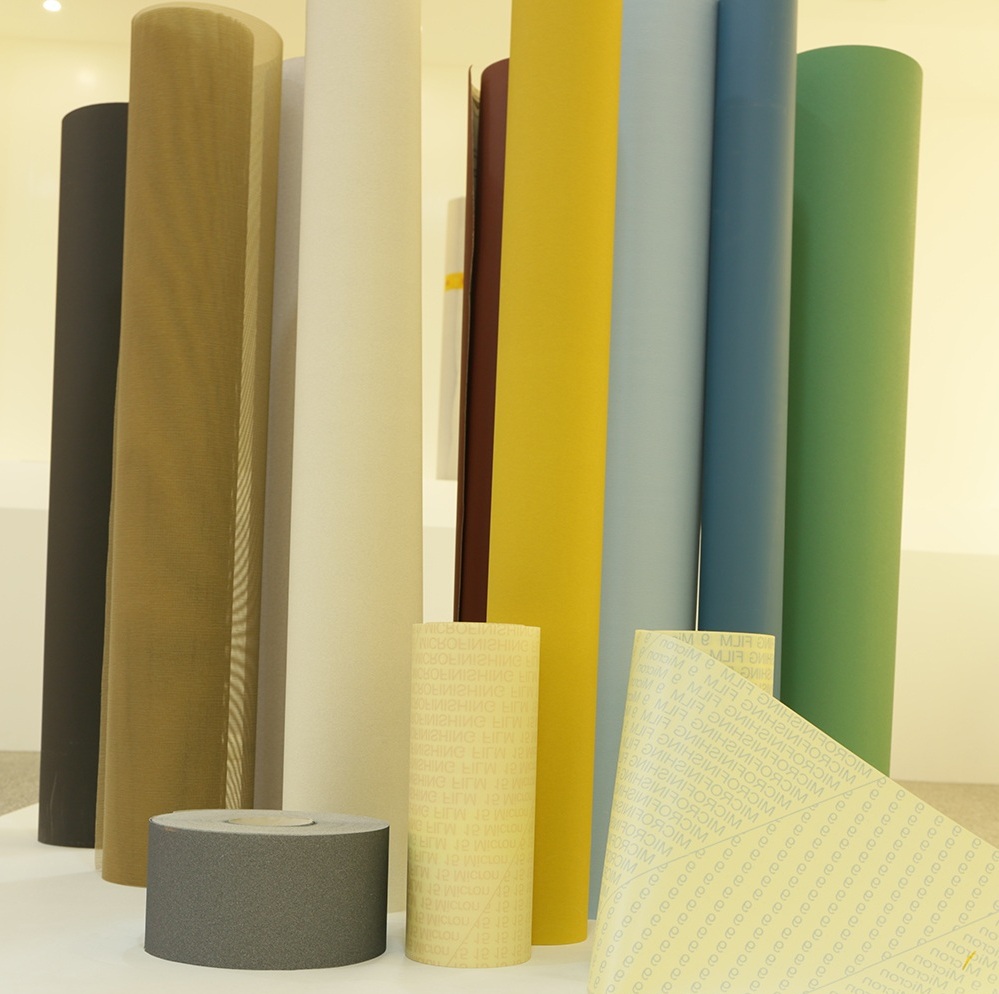
Ask any converting plant manager about sandpaper jumbo rolls, and you'll likely hear the same complaint: quality swings between shipments make production planning a nightmare. Bulk sourcing shouldn't be a roll of the dice, especially when your downstream sanding discs or belts depend on consistent backing, resin bonding, and grain distribution. That's where a specialist exporter changes the equation. SHENZHEN SUN ABRASIVES has built its bulk supply model around repeatable specs and direct factory accountability—not just per-container pricing. In this guide, we'll break down what reliable sourcing actually looks like, from jumbo roll dimensions and paper weight to the red flags that signal trouble before your next purchase order goes out.
Where Jumbo Roll Exporters Cut Corners on Backing Weight
Some exporters start with the spec sheet, not the mill floor. They list a nominal backing weight—say 55 gsm—but run the line at 48 or 50 gsm and rely on a heavier coating or extra calendering to keep the roll feeling stiff. Buyers who only check thickness or total weight rarely catch the drop until converting lines start jamming or the backing tears under tension.
Another trick hides in the fiber blend. To hit the same grammage, a mill swaps out a share of virgin softwood for cheaper recycled fiber or adds more filler. The total weight stays on target, but the backing loses tear strength and becomes brittle after storage. By the time a converter notices edge cracking or delamination, the shipment is already paid and the supplier has moved on to the next order.
There is also a spatial pattern to the cheating. The outer layers of a jumbo roll get the full backing application, because those are what a buyer samples. Deeper into the roll, the spray boom pressure drops, the coat weight thins out, or the splice zones get a lighter pass. Core waste and mid-roll defects only show up weeks later, long after the container has cleared customs.
How to Test Grit Uniformity Before Your First Container
Grit uniformity rarely gets the attention it deserves until a batch starts acting up. Before you commit to a full container load, grab samples from at least three different spots in the shipment—top, middle, and bottom bags if possible. Spread each sample thinly on a clean, flat surface and look for obvious clumping, odd-colored particles, or a wide range of grain sizes that shouldn't be there. Your eyes can catch the worst offenders faster than any instrument.
For a more reliable read, run a small portion through a sieve stack that matches your grit's specified size range. Weigh what stays on each sieve and compare the distribution across your samples. If one sample shows a heavy spike in fines while another runs coarse, the lot has poor uniformity. Don't skip this step just because the supplier's data sheet looks polished—actual loads can shift during transit or storage.
A quick field test also works when you're short on time: run the same grit through your blast nozzle or mixing process using a fixed pressure and time, then inspect the resulting surface texture. If some areas come out rougher or smoother than others with no change in technique, the grit itself is inconsistent. Document your findings with photos and weights; this evidence makes it much easier to negotiate replacements or credits before the whole container is unloaded.
Decoding Bulk Quotes for True Cost Per Square Meter
Many suppliers present bulk pricing in a way that obscures the actual cost per square meter. A quote might list a total for 500 sheets without clarifying whether the price covers usable area or includes offcuts, edging, or protective film. To decode it, you need to strip the number down to the net surface area you can actually install. Start by asking what the sheet dimensions are, and whether the quoted area is nominal or finished. Then divide the total price by the real square meters, not the nominal ones. This small step frequently changes the value comparison between two vendors.
The second common trap is the unit of measure hidden in the fine print. Some bulk quotes switch between square feet, linear meters, or even kilograms depending on the material grade. If you compare a per-piece price from one supplier to a per-square-meter price from another without normalizing, you end up with a distorted picture. Also watch for bundled items like delivery, palletizing, and minimum order surcharges that are not part of the material cost. When these are lumped into the quote, the true cost per square meter gets inflated or hidden. Pull each component out, assign it to its own line, and only then you can see what the surface itself is costing.
Another practical way to decode a bulk quote is to request a breakdown for one full batch normalized to a standard thickness and finish. If two quotes differ in material thickness, the per-square-meter figure will mislead you unless you adjust for the volume of material actually used. For instance, a 10 mm panel at $18 per square meter may actually be cheaper in material use than a 12 mm panel at $20 per square meter because you’re getting less mass per unit area. Good buyers often build a small spreadsheet that converts every line item into cost per net installed square meter, including waste factors and trimming allowances. That final number, not the headline rate, is what drives project budgets.
Why Some Exporters Overpromise on Flex Life and Tensile Strength
Many exporters inflate flex life and tensile strength figures because they rarely run full validation testing themselves. They copy numbers from raw material datasheets or rely on a single outdated lab report, then add a comfortable margin that was never verified. Without a dedicated in-house test program, those numbers drift upward with every new catalog revision, and no one inside the company is responsible for checking them against actual performance.
There is also real pressure from buyers who treat these specs as a quick sorting tool. An exporter who quotes a lower but honest rating risks losing the order to a competitor who simply prints a higher number. Once a few players start overstating, the whole market shifts. Even factories that want to be accurate begin padding their data just to survive the first round of comparison, knowing that most customers will never run independent tests.
Cost-cutting during production makes the gap even wider. Swapping in a cheaper alloy, reducing the number of strands, or tightening the twist pitch can cut actual flex life by 30 to 50 percent, yet the datasheet keeps the original optimistic rating. The exporter often never sees the field failures because they show up months later, long after the payment has cleared and the sales team has moved on to the next tender.
Questions That Separate Serious Suppliers from Middlemen
A serious supplier can walk you through the actual production floor without leaning on polished brochures or stock photos. Ask them to explain daily output capacity for your exact SKU, name the specific machinery involved, and describe what happens when a key piece of equipment breaks down mid-order. Middlemen tend to dodge these operational details or offer answers that sound like a generic factory tour they pulled from a website.
Another set of questions separates those who manage production from those who merely forward messages. What was the batch rejection rate over the last twelve months, and how do they handle a nonconforming shipment before you even notice? Can they share traceability records for raw materials down to the lot number? If the response is an instant quote without a pause to consult the production team, you are probably dealing with an intermediary.
Finally, ask for a copy of their internal quality checklist or the name of the third-party inspection lab they use for final checks. A supplier who controls the process can produce these within hours, not days. Someone who has to go back to another company for every answer is not adding much beyond a markup.
Locking In Rebate Terms and Replacement Guarantees Early
Suppliers tend to adjust rebate tiers quietly between quarters, so getting the exact percentage and volume threshold signed before those internal reviews start removes a variable that's hard to claw back later. It also gives your procurement team a fixed number to plug into cost models instead of a range that shifts every time the vendor updates its pricing sheet.
Replacement guarantees follow the same logic. While the sales rep still has room to make concessions, ask for a written promise on defective unit turnaround, shipping responsibility, and whether loaner equipment is included. Once the draft goes to legal or procurement standardization, those extra clauses often disappear in favor of the vendor's boilerplate language.
Locking these terms early doesn't just protect the budget; it protects the rollout schedule. If a replacement guarantee is vague until after signing, your team ends up negotiating service-level details during an outage instead of before one happens.
FAQ
Request rolls from an active production run rather than a curated sample set. Compare the backing stiffness, grain sharpness, and coating uniformity against the datasheet. Check if the exporter directly controls the converting line or simply resells, because a middleman rarely guarantees traceability. Ask for three recent buyers in your region and contact them with specific questions about batch consistency.
Focus on four elements: backing weight and flexibility, abrasive grain type and friability, the bond system (resin over resin vs. glue), and the coating density. A jumbo roll that drifts by even 10 microns in backing thickness will behave differently on wide belt sanders. Also confirm whether the roll uses an open or closed coat, because open coat reduces loading on softwood but cuts less aggressively.
Ask for a run chart covering the last five production batches, not just a certificate of analysis. Look at grain adhesion test results, backing tensile strength, and thickness deviation across the web. A dependable exporter will also offer a pre-shipment inspection from a third party like SGS or Bureau Veritas without hesitation. If they resist, treat that as a red flag.
Most converters set MOQs between 500 and 2,000 square meters per width and grit combination, but many will drop to 300 square meters for a trial order if you cover the slitting setup cost. Negotiate by offering a rolling forecast instead of a one-time purchase; exporters value predictable volume more than a large single PO. Ask for a stepped pricing structure tied to quarterly volumes.
Each roll must be wrapped in moisture-barrier film and placed inside a rigid spiral-wound core, with the core ends plugged. Rolls should be stacked horizontally on pallets with edge protectors, never upright, to avoid flat spots. Insist that the exporter print the grit, backing code, and production date on the outer label, and request a desiccant pack inside each film wrap if the destination has high humidity.
One is focusing only on price per square meter while ignoring the cost of premature loading or delamination. Another is accepting a sample from one production line and then receiving shipments from a subcontractor. A third mistake is not clarifying the roll length tolerance: a 100-meter roll can legally arrive as 97 meters, which shrinks your converting yield. Always pin down roll width, length, and splice allowance in the purchase order.
Yes, but you need to specify more than width and length. Tell the exporter the type of sander or converting machine, the substrate you work with, and whether you want a flexed or unflexed product. Ask for options like anti-static treatment, stearate coating for clog-resistant sanding, or a film backing instead of paper. A capable supplier will suggest a grain blend or bonding modification instead of simply slitting a stock roll.
Include a raw material index clause, typically tied to aluminum oxide or phenolic resin prices, with a quarterly review window. Specify the acceptable defect rate per roll—usually under 2 percent of the usable coated area—and define a compensation formula. Add a clause allowing you to reject any shipment where the average grit size deviates by more than one FEPA grade from the spec. Finally, require a retained sample from each batch for dispute resolution.
Conclusion
Sourcing jumbo rolls from exporters often looks straightforward until you realize how many ways a spec sheet can mislead you. Backing weight is one of the first places factories shave cost: a lighter cloth or paper base may pass a quick visual check but fails on the first heavy sanding line. Before you commit to a full container, ask for a randomized grit sample from the actual production batch, not a hand-picked swatch, and run a simple uniformity test under a loupe or with a drawdown on glass. Bulk quotes need decoding too. A low per-roll price can hide a higher true cost per square meter once you factor in narrower widths, shorter lengths, or extra splicing. Always request quotes on a per-square-meter basis, including any tolerance for waste.
Flex life and tensile strength promises are cheap. Many exporters repeat lab numbers from a single ideal batch, not the range you will see across ten tons. Demand test data with standard deviation, or better, ship a trial roll before opening a letter of credit. When you talk to a supplier, the questions matter more than the presentation. Ask who controls the backing conversion, who mixes the resin, and whether they can show the actual jumbo roll slitting record from your order. Serious manufacturers answer with paper trails; middlemen deflect with reassurances. Finally, lock in rebate terms and replacement guarantees before any money moves. A realistic rebate for a high reject rate and a binding replacement clause for backing delamination or grit shedding protect you far more than a polished catalogue.
Contact Us
Contact Person: Amanda Wang
Email: [email protected]
Tel/WhatsApp: +86-13602569854
Website: https://www.sunabrasives.com.cn