
Professional Welding Clothing That Keeps You Safe on the Job
2026-10-19
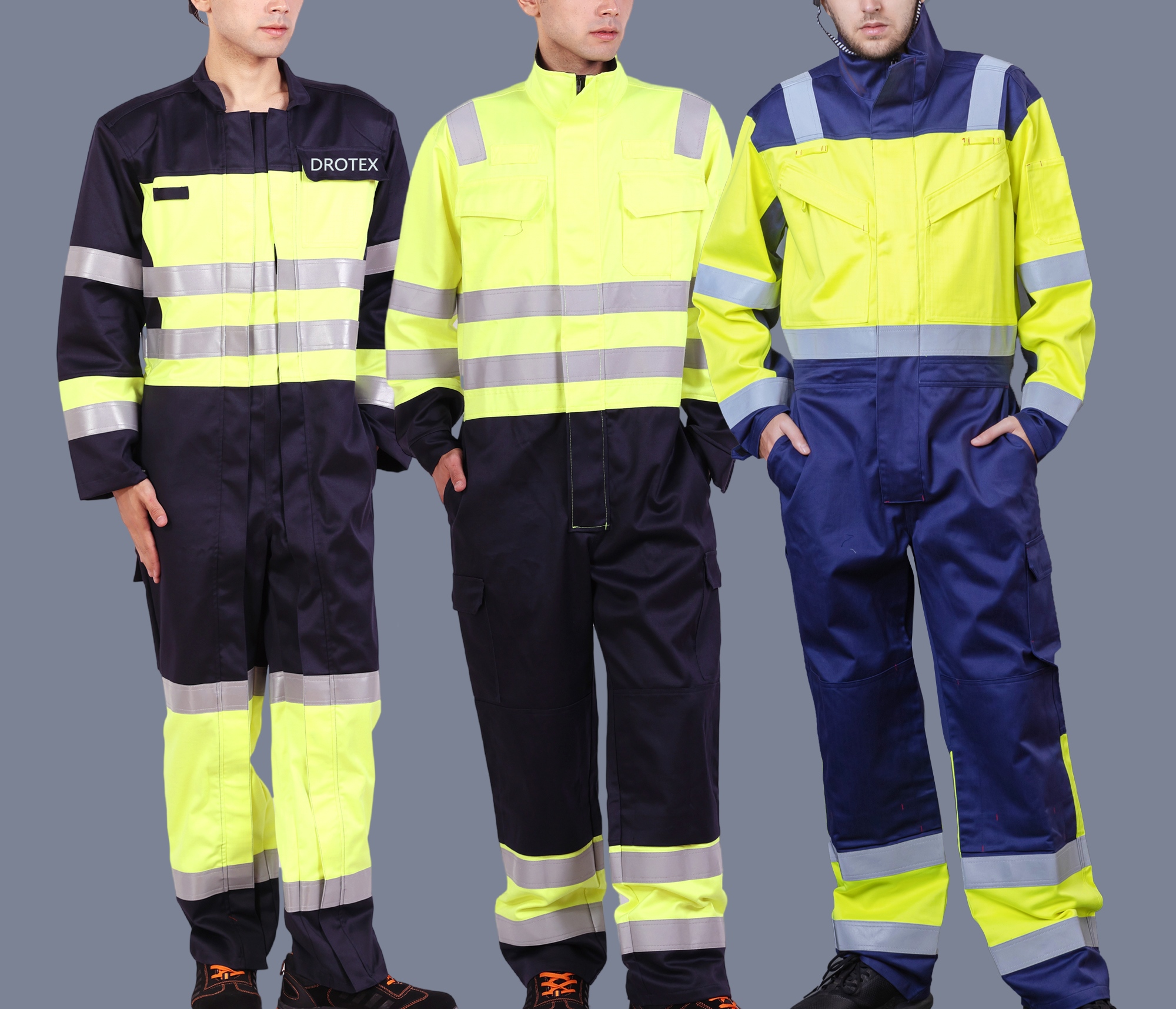
In welding, every spark tells a story—and the wrong gear can end it. Professional welding clothing isn’t just about covering skin; it’s engineered armor against heat, slag, and split-second mistakes. At DROTEX, we obsess over the details most brands ignore, from flame-resistant fabrics that breathe to reinforced seams that survive daily abuse. If you’ve ever felt that stiff, bulky gear slows you down more than it protects, this post will change how you think about safety on the job.
Sparks Land Where You Least Expect When Overhead Welding
The obvious danger zone is directly below the arc, but that is not where the real trouble starts. Sparks from overhead welding bounce off surfaces, roll into pipe sleeves, settle on top of ductwork, and wedge into cable trays. A tiny glowing bead can hide in a fold of fire blanket or drop through a floor grate and smolder for minutes before flame appears. If you only sweep the floor after the job, you are missing the places that actually catch.
Welders often check the immediate area and call it good, but that is exactly how smoldering fires begin hours later. Look up, then look sideways: check the tops of wall angles, the lip of an I-beam, the space behind a flange, inside open conduit, on horizontal bracing. A spark that lands in a thin layer of dust or a forgotten rag will not always flare up right away. It waits. That delay is what makes overhead welding more dangerous than it looks from the ground.
Not All Flame-Resistant Labels Survive the Wash Cycle
A label that claims flame resistance might give you peace of mind, but fabric care is far more complicated than a one-time certification. Many treatments used to make clothing fire-resistant are not permanent—they break down after repeated exposure to water, detergent, and mechanical agitation. That means a shirt that passed safety testing on day one could lose much of its protective quality after just a handful of laundry cycles.
The problem is especially common in garments labeled as "FR treated" rather than "inherently FR." Treated fabrics rely on chemical finishes that wash away gradually, while inherently flame-resistant fibers like aramid or modacrylic retain their properties for the life of the garment. Without clear care instructions or a maximum wash count, even safety managers and parents can be left guessing when a garment has crossed the line from protective to ordinary.
To avoid a false sense of security, check the label for specific durability claims—some manufacturers state the number of launderings the flame resistance is expected to last. If that number is absent or hidden in fine print, assume the protection degrades with every wash. In high-risk environments, it's safer to treat such garments as consumables and replace them long before the fabric shows visible wear.
Weak Seams Are the Silent Killer of Welding Jackets
A welding jacket can look tough on the rack, but the real failure point rarely shows up in the fabric. It hides in the stitching. When seams carry polyester or cotton thread that hasn't been treated for high heat, every spark that lands nearby weakens the fibers a little more. Over time, those small burns stack up. The jacket still appears intact, yet the thread has lost its grip. One sharp tug against a piece of pipe or a sudden stretch overhead, and the seam simply lets go. Not with a dramatic tear, but a quiet split along the shoulder or side. That's the moment a welder realizes the jacket wasn't protecting the way it should.
The problem gets worse because seams collect slag and spatter in the folds. A flat panel of flame-resistant fabric can shrug off a few globs of molten metal, but the raised ridge of a seam catches and holds them. The thread burns, hardens, and then cracks apart under normal movement. Welders often notice tiny pinholes or brittle blackened lines before the seam fully fails, but these signs are easy to ignore during a long shift. By the time the gaps widen, the jacket is shedding its only barrier against arc flash and hot debris.
Spotting a weak seam before it turns dangerous isn't complicated. Run a thumb along the stitching and look for uneven spacing, pulled loops, or threads that snap with light pressure. If the seam feels stiff or crunchy in spots, heat has already done damage. A better-made jacket uses flame-resistant thread like Kevlar or Nomex and reinforces high-stress areas—underarms, shoulders, and side seams—with double stitching. Spending a few extra seconds checking those lines of thread beats finding out mid-weld that the jacket gave up before you did.
A Tiny Gap at the Collar Can Ruin a Perfect Shift
It starts so subtly you almost miss it. You're standing in front of the mirror, smoothing the front of a shift dress that looks flawless on the hanger, and then you turn slightly. There it is: a small gap at the back of the collar, just enough to let light through, just enough to break the clean line. That tiny opening whispers something's off even when everything else fits like a glove.
People tend to blame the dress, but it's rarely the fabric's fault. A gap at the collar usually means the shoulder slope or neckline curve wasn't adjusted for your frame. Maybe the back is too wide, or the shoulder seams sit a half-inch too far forward. The result is the same: the collar lifts away from your neck and refuses to lie flat, making a beautifully cut shift look borrowed or cheap.
Fixing it doesn't require a complete overhaul. A skilled tailor can pinch out the excess at the back neck or reshape the shoulder seams in less than an hour. In some cases, a single small dart at the nape solves the problem entirely. Once that gap disappears, the whole dress changes. The silhouette becomes crisp, the neckline sits exactly where it should, and the shift finally looks like it was made for you.
That Stiff New Jacket Is Fighting Against You
A brand-new jacket should feel like armor, not a straitjacket. But when the fabric is stiff enough to stand on its own, every arm movement turns into a negotiation. You raise a hand to grab a coffee, and the shoulder seam digs in like it's holding a grudge. That stiffness isn't just uncomfortable—it actively works against your body's natural motion, making simple tasks feel like a wrestling match with your own clothing.
The problem goes deeper than break-in time. Stiff materials like heavy denim, untreated canvas, or over-starched cotton resist bending where your elbows and shoulders need to flex. Instead of draping, they crease in sharp, unnatural folds that pinch and pull. You end up moving differently just to avoid the friction—shoulders hunched, arms swinging wide like a robot avoiding a short circuit. That's not style; that's surrender.
Before you blame your measurements, try a few simple tricks to make the jacket work with you, not against you. Roll the sleeves up and down a dozen times to soften the elbow zones. Wear it around the house while doing chores, letting body heat and repeated motion break down the stiffness. If the fabric is extremely rigid, a light mist of water on the inside followed by gentle hand-flexing can speed things up. The goal is to teach the jacket where your body actually bends—not the other way around.
Hanging Your Welding Gear Wrong Can Void Its Protection
Most welders assume their jacket or gloves still work as long as the fabric looks intact. But how you store that gear between shifts matters just as much as the arc time it sees. Draping a leather welding jacket over a sharp corner or leaving it crumpled on a bench can crease the outer layer, crack the heat-resistant coating, and create thin spots you won't notice until a spark finds them. Those micro-fractures break the barrier that keeps molten spatter from reaching your skin, and no amount of careful technique can undo that kind of damage.
The same applies to gloves and sleeves. Tossing them into a pile with grinders, wire brushes, or even just your keys puts pressure on the seams and wears down the stitching. Once a seam splits or a cuff loses its shape, the protection rating that was tested in a lab no longer applies to what you're actually wearing. You might still check the tag and trust the label, but that label was earned under specific conditions—not after months of being hung by a single finger loop or stuffed into a locker with oily rags.
A better habit takes almost no time: hang jackets on a wide, rounded hanger so the shoulders keep their form, and lay gloves flat or clip them by the gauntlet—never by the fingertips. If you have to fold a leather jacket for travel, do it along the intended seams, not across the chest or back. The goal is to avoid creating permanent creases or stretching the material in one spot. Your gear's protection isn't just about what it's made of; it's about whether you've kept that material in the condition it was designed to work in.
FAQ
Regular workwear might have ripstop panels or reinforced knees, but welding gear has to stop molten metal, direct flame contact, and radiant heat from an arc. The fabric is usually flame-resistant by nature or chemically treated, and the closures, pockets, and seams are built so sparks can't snag or settle.
Leather sleeves paired with a lighter FR cotton torso give a good mix of protection and breathability. The sleeves take most of the spatter and heat when you're working close to the weld, while the cotton body keeps you from overheating as fast as a full leather jacket would.
Check the label for a reference to NFPA 2112 or ASTM F1506 if you're in the US. Those aren't just marketing terms; they mean the fabric has been tested for flame resistance and arc flash protection. Also look for a tag that lists the standard, not just 'fire resistant' or 'safe for welding'.
It can, but only if it's actually FR treated and not just a heavyweight cotton canvas. Treated cotton will char and self-extinguish when sparks hit, but untreated cotton can keep burning. You'll still get small pinholes over time from heavy spatter, so inspect it regularly and don't expect it to last like leather.
Look for a gusseted crotch, articulated knees, and a leg opening that fits over your boots without a huge cuff. If the fabric bunches behind the knee, sparks can pool there. Some welding pants have a double layer on the front of the thigh and shin, which helps when you're kneeling near the arc.
Yes, a few options. Cotton-blend FR fabrics with mesh vent panels under the arms or across the back can help. Some jackets use a lighter-weight leather on the front and FR cotton on the back to shed heat. You can also choose a welding apron over just an FR shirt to keep your core protected without a full jacket.
I usually replace a daily-use jacket about every 8 to 12 months if it's FR cotton, or when I can see the base fabric through worn spots. Leather lasts longer, maybe 2 to 3 years, but once the stitching frays or the hide gets stiff and cracked from heat, it's time. More important than a calendar is checking for holes, broken zippers, and lost FR treatment after washing.
For TIG, you can often get away with lighter FR cotton because there's less spatter, but you still need protection from UV and arc flash. Stick and MIG throw more sparks and molten metal, so you'll want leather in high-exposure areas like the front, sleeves, and lap. A hybrid jacket with leather where it matters and breathable fabric elsewhere works well for both.
Conclusion
Most welders learn the hard way that sparks drop into places you'd never predict, especially when working overhead. A jacket that only shields the front leaves your shoulders and collar exposed at the worst moment. The real difference between a close call and a serious burn often comes down to how well the fabric holds up after repeated washing. Too many garments carry a flame-resistant tag that fades into a false promise once the stitching fails or the chemical treatment breaks down. And don't overlook the seams—weak, single-stitched joints can split under normal movement, turning a protective layer into a hazard. Quality welding gear should feel like a second skin, not a gamble.
Even a tiny gap at the collar can let a stray spark slip in and ruin an otherwise smooth shift. That's why proper fit matters more than most people think. A stiff, boxy jacket forces you to fight your own clothing all day, which leads to careless adjustments and dangerous distractions. Look for articulated sleeves, breathable panels, and a collar that actually closes. After the job, how you store and hang your gear affects its lifespan. Wadding it up or hanging it wet can compromise flame resistance, even if the label says it's durable. Treat your welding clothing like the safety tool it is: inspect it, wear it correctly, and store it with the same care you'd give your helmet or gloves. Then it will protect you when you need it most.
Contact Us
Contact Person: Sandy
Email: [email protected]
Tel/WhatsApp: 86150 8310 5120
Website: https://www.frdrotex.com