

Professional Ozone Generator: Benefits, Risks, and Best Practices
2026-08-27
Thinking about using an ozone generator for your business? You're not alone—these powerful machines are popping up everywhere, from food processing plants to hotel rooms. But here's the catch: the same technology that eliminates pathogens can also harm your lungs if mishandled. That's where smart practices make all the difference. At LUFUTATECH, we don't just sell ozone systems; we help you use them safely and effectively. Read on to learn the real benefits, the hidden risks, and the best practices that separate professionals from amateurs.
What a Professional Ozone Generator Actually Does to Air and Surfaces
A professional ozone generator doesn't just mask odors with fragrance—it floods a space with reactive oxygen that collides with airborne particles and surface contaminants. The third oxygen atom breaks away from the ozone molecule, attacking organic compounds at the molecular level. This includes smoke residue, mold spores, bacteria, and volatile chemicals that settle into carpets, upholstery, and hard-to-reach corners.
What separates a pro-grade unit from a household gadget is output volume and distribution. Industrial machines push out enough ozone to reach behind walls, under furniture, and into ventilation systems. The gas penetrates porous materials where liquid cleaners fail, neutralizing odors trapped deep in drywall, insulation, or vehicle headliners. After treatment, the ozone reverts to ordinary oxygen, leaving no chemical residue behind.
Surfaces also benefit indirectly. While ozone is not a replacement for scrubbing visible grime, it degrades the microscopic biofilm and odor-causing proteins that cling to sinks, drains, and equipment housings. For restoration work or post-construction cleanup, this means a faster return to occupancy without relying on heavy detergents or masking agents that fade within days.
Where Professional Ozone Generators Prove Their Worth in Real Settings
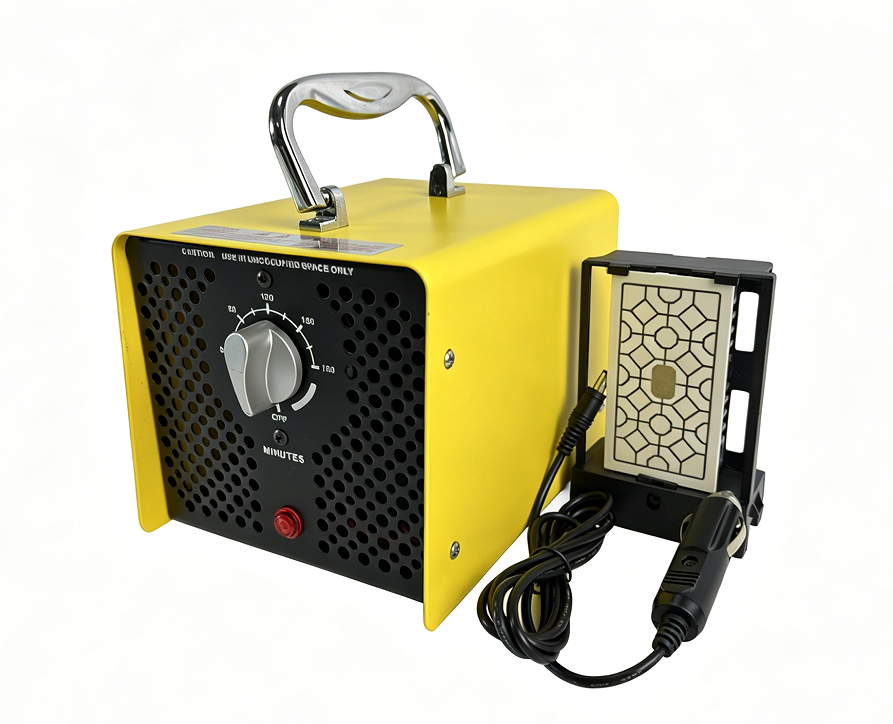
Walk into a busy hotel kitchen just after the lunch rush and you won't see much evidence of the fish special that sold out by noon. That faint, clean smell hanging in the air isn't from a lemon-scented spray—it's the quiet work of an industrial ozone unit tucked behind the ventilation. Unlike surface cleaners that wipe down counters, these machines treat the entire room, reaching into drains, storage corners, and the gaps under stainless steel shelving where odors hide long after the mop bucket is emptied.
The same principle holds in places you wouldn't expect. Fire restoration crews rely on ozone generators to neutralize smoke residue that clings to drywall and carpet fibers after a small kitchen blaze or an overheated HVAC motor. In rental properties between tenants, property managers run units overnight to strip away the accumulated scent of pets, tobacco, or heavy cooking—not by masking it, but by breaking apart the odor molecules themselves. Even in medical clinics, where sanitization has to be verifiable, ozone offers an extra layer against bacteria on surfaces that get touched but rarely scrubbed, like door tracks and underside ledges.
What separates a useful ozone treatment from a gimmick is knowing when the space is unoccupied and how long the gas needs to work. A one-hour blast in a cluttered storage room does less than a four-hour cycle in a properly sealed office with fans to circulate. Experienced users watch the humidity, close off vents that lead to occupied areas, and let the ozone dissipate fully before anyone walks back in. That attention to setup—rather than the machine's wattage or brand name—is what turns a decent tool into a reliable part of a maintenance routine.
Health Risks of Ozone Exposure That Users Often Overlook
Most people link ozone to smoggy skies, but indoor sources like laser printers, certain air purifiers, and even electrostatic filters can push levels high enough to irritate airways without any visible haze. The damage isn't always immediate: repeated low-level exposure can reduce the lungs' elastic recoil, making deep breaths feel less satisfying over time. This subtle stiffening often goes unnoticed until climbing stairs or carrying groceries leaves you more winded than expected.
Ozone also changes how the body reacts to everyday allergens. When lung tissue is already inflamed from ozone, inhaling pollen or dust mites can trigger a much stronger bronchial response. People with mild seasonal allergies sometimes find their symptoms become dramatically worse on days when outdoor ozone is elevated, even if they stay mostly indoors. The compound essentially lowers the threshold for an allergic reaction, turning minor irritants into significant triggers.
Another overlooked risk involves repeated exposure during exercise. Because deeper and faster breathing pulls more ozone into the lower respiratory tract, runners and cyclists who train in polluted air can develop chronic airway remodeling faster than sedentary people in the same environment. This isn't just about coughing during a workout; it can permanently narrow small airways and reduce overall lung function years before any clinical diagnosis appears.
Setting Safe Exposure Limits and Ventilation Protocols
Determining safe exposure limits begins with a thorough review of toxicological data, but it also requires understanding how workers actually interact with the chemical in your specific process. Relying solely on regulatory thresholds like OSHA PELs or ACGIH TLVs can miss the mark if operations involve irregular tasks, high temperatures that increase vapor generation, or extended shifts beyond eight hours. A more practical approach is to pair published limits with workplace observations and air sampling data, then adjust the numbers based on actual exposure patterns. For instance, if a task is performed only once per week but produces a brief, intense spike, a time-weighted average may look acceptable while peak exposures still pose a risk. Setting a ceiling limit or a short-term exposure limit becomes necessary in such cases, and these should be documented clearly so everyone knows the trigger points for action.
Ventilation protocols are not one-size-fits-all, and designing them around the exposure limit rather than a generic air change rate yields better protection and lower energy costs. Start by identifying where the contaminant is generated, then capture it at the source using local exhaust ventilation such as slotted hoods, fume arms, or enclosing cabinets. The capture velocity and face velocity required depend on the chemical's vapor pressure, particle size, and how vigorously it is released. For operations that cannot be fully enclosed, dilution ventilation with properly placed supply and exhaust diffusers can reduce background concentrations, but it rarely handles high-toxicity substances effectively. Regular checks are non-negotiable: a hood's performance declines as filters load, ductwork leaks, or workers reposition baffles. Simple tools like smoke tubes, anemometers, and static pressure gauges should be part of a monthly routine, with more detailed testing performed after any modification to the process or the ventilation system itself.
Once limits and ventilation are in place, sustained compliance hinges on a feedback loop between monitoring data and system adjustments. Personal sampling pumps worn by workers offer the most direct measure of exposure, but results take days to return from the lab—too slow to catch a failing ventilation system before harm occurs. Real-time sensors for gases, vapors, or particulates can provide immediate warnings, though they require calibration against the specific chemical and careful placement to avoid false alarms. A balanced protocol combines periodic personal sampling for legal records with continuous area monitoring near potential leak points. When monitoring shows concentrations drifting upward despite ventilation running, the response should not be to simply increase airflow, which may only spread contamination. Instead, revisit the source controls, check for blocked ducts or worn seals, and involve the operators who work with the equipment daily—they often know where the process generates the most emissions and can suggest practical fixes that an engineer might miss.
Matching Ozone Output to the Job Without Overdoing It
Not every ozone job calls for the highest dial setting. A small bathroom with a mild musty smell usually clears with a brief low-output cycle, while a large flood-damaged basement may need more concentration and longer contact time. Matching output to the space means estimating room volume and targeting the specific contaminant instead of running the generator at full blast by default.
Excess ozone lingers after the treatment window and can attack rubber seals, plastic housings, and certain fabrics. It also delays re-entry because the space needs longer to drop back to safe levels. Choosing the lowest effective output shortens that waiting period and reduces unnecessary wear on the room itself.
A practical habit is to start with a conservative setting, allow one full cycle, then reassess. If the odor or contamination persists, raise the output slightly and repeat. This step-up approach prevents the common mistake of producing far more ozone than the job actually needs, which rarely speeds up results and often creates new problems.
Maintenance Habits That Keep Ozone Output Consistent and Safe
Ozone generators drift out of spec when their internals get dirty, and most problems trace back to neglected plates or blocked air paths. A monthly wipe-down of the corona cell with a soft cloth and a mild vinegar solution keeps residue from building up. Let everything dry fully before you reassemble—trapped moisture invites arcing and shortens plate life. You don't need to scrub hard; gentle, consistent cleaning beats an occasional deep clean.
Beyond the plate, check the intake filter and the thin silicone tubing that moves air or oxygen. A clogged filter forces the pump to work harder and reduces ozone concentration. Cracks or kinks in tubing leak output before it reaches your application, and they also let humidity sneak in. Swap out filters every three to six months depending on dust levels, and replace any tubing that feels stiff or looks cloudy.
Finally, keep a simple log of run hours and output readings if your unit has a monitor. Drops in concentration often show up long before a failure, and catching that early lets you clean or replace a wearing part instead of guessing. Store the generator in a dry, cool spot when not in use, and never run it in a damp room without checking the manufacturer’s limits—consistent, safe ozone starts with respecting the machine’s basic needs.
FAQ
Professional units are built for heavy-duty commercial work. They produce much higher ozone concentrations, often measured in grams per hour rather than milligrams, and they can run continuously for hours without overheating. You'll also find features like adjustable output, external timer controls, and serviceable ozone plates or UV lamps. Home units tend to be plastic, low-output, and meant for occasional use in small spaces.
Ozone is a strong oxidizer. When it contacts odor molecules, mold spores, or bacteria, it breaks down their cell walls or chemical bonds through oxidation. That's why it works so well on smoke damage, pet urine, and musty basements. The key is reaching a high enough concentration for long enough—just running a weak unit for 20 minutes won't do much in a large room.
Ozone is harmful to breathe. It can irritate the lungs, trigger asthma attacks, and cause chest pain or coughing. People, pets, and even plants need to be out of the treatment area. There's also a risk of residual ozone lingering after the machine shuts off, so you have to ventilate thoroughly before re-entry. Never use it in a room where you or others are present.
Yes, especially at high concentrations. Ozone can degrade rubber seals, plastics, and certain fabrics. Electronics may suffer from corrosion on metal contacts. Leather and some synthetic upholstery can become brittle or discolored. Hard surfaces like tile and glass are generally safe, but anything with organic compounds—wood finishes, rubber gaskets, electrical wiring insulation—can be affected with repeated or prolonged exposure.
At minimum, you need a plan to keep everyone out of the space during the treatment and for the required ventilation period. If you must enter to start or stop the machine, use a proper respirator with an ozone-rated cartridge, not just a dust mask. Seal off the area with plastic sheeting or tape to prevent ozone from leaking into adjacent occupied spaces. Remove or cover sensitive items like plants, artwork, and certain electronics.
It depends on the room size, ozone output, and target odor. A typical professional treatment might run for 2 to 6 hours, then you need to let the ozone naturally dissipate for another 2 to 4 hours before ventilating. Open windows and use fans to air it out until you can no longer smell ozone—usually detectable as a sharp, bleach-like scent. Don't enter earlier without proper breathing protection.
Absolutely. If the source of the odor is still present—like a dead animal in a wall or active mold growing behind drywall—ozone will only mask the problem temporarily. It can't fix water leaks or remove particulate matter. For people with severe respiratory conditions, even trace ozone can be problematic. In some cases, source removal, HEPA filtration, or enzyme cleaners are better options.
Most units need regular cleaning of the ozone plates or replacement of UV lamps depending on design. Dust and humidity reduce output, so keep intake filters clean and store the unit in a dry place. Check gaskets and seals for cracks. Run the generator periodically to prevent internal corrosion from condensation. Follow the manufacturer's schedule for replacing ceramic plates, usually every few thousand hours of use.
Conclusion
Professional ozone generators do far more than mask odors—they actively break down volatile organic compounds, mold spores, and bacteria by releasing highly reactive ozone molecules that oxidize contaminants in the air and on exposed surfaces. In controlled settings like unoccupied hotel rooms, vehicles, or post-flood remediation, this oxidative power can eliminate stubborn smells and sanitize hard-to-reach areas where chemical cleaners fail. However, the same reactivity that makes ozone effective also creates serious safety concerns: even brief exposure can irritate the lungs, trigger asthma attacks, or worsen chronic respiratory conditions, and repeated low-level exposure may cause permanent lung damage. Because ozone does not distinguish between harmful pollutants and healthy lung tissue, users must treat every professional unit as a precision tool rather than a casual air freshener.
The key to safe, effective use lies in matching output to the job and never running a generator in occupied spaces. Many commercial units exceed 5,000 mg/h, which is overkill for a small room but inadequate for a large warehouse unless runtime and air circulation are carefully calculated. Before treatment, remove people, pets, and plants, seal the area, and set a timer that allows enough time for ozone to dissipate—typically 2–4 hours after the machine shuts off, depending on ventilation. Post-treatment, open windows and use fans to accelerate off-gassing, and confirm with a low-range ozone monitor that levels have dropped below 0.05 ppm before re-entry. Regular maintenance also matters: clogged filters, dirty corona plates, or worn-out ceramic electrodes can cause inconsistent output or premature failure. By respecting ozone’s potency through strict exposure limits, ventilation protocols, and routine upkeep, professionals can harness its benefits without compromising health or safety.
Contact Us
Contact Person: Paul Luo
Email: [email protected]
Tel/WhatsApp: 0086-19966314501
Website: https://www.lufutatech.com