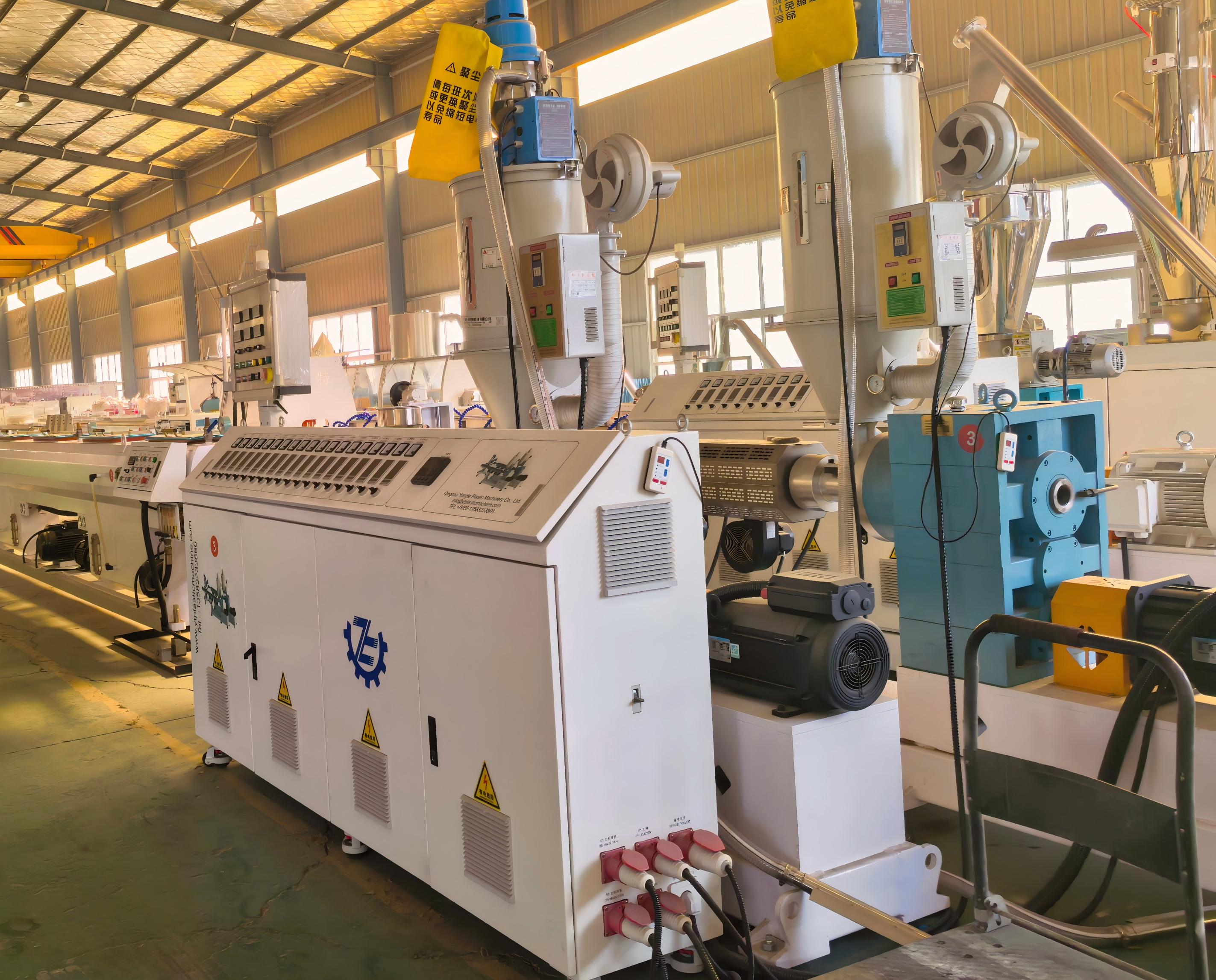

Plastic Pipe Machine Company: Key Factors for Choosing the Right Manufacturer
2026-11-02
Selecting the right plastic pipe machine company can make or break your production line, yet many buyers overlook critical factors until it's too late. From extrusion technology to after-sales support, the differences between manufacturers are more than just price tags. Yongte has been navigating these complexities for years, and this guide breaks down what truly matters when evaluating your options.
Beyond the Spec Sheet: What Actually Defines a Trustworthy Pipe Extrusion Partner
Anyone can post impressive numbers on a data sheet, but a real partnership shows itself when the line goes down at 2 a.m. or a new resin batch behaves strangely. The extruder that looked perfect in the brochure might need constant tweaking, while a less flashy machine keeps humming because the supplier invested time in understanding your specific material, tooling, and production rhythm. Trust is built in those unglamorous moments—when a technician answers the phone, walks you through a quick barrel temperature adjustment, and doesn't treat every call as a billable hour.
A dependable extrusion partner doesn't hide behind the warranty clause. They share hard-won process knowledge: how screw geometry affects melt homogeneity with recycled content, why a certain die gap works better for HDPE than PVC, or what to watch for when line speed creeps up. This transparency turns a vendor into an extension of your own engineering team. You stop measuring them solely by output per hour and start valuing their willingness to challenge a bad idea before it becomes expensive scrap.
Years later, the spec sheet is forgotten. What remains is the pattern of small consistencies: the same spare parts arriving in three days not three weeks, the same service engineer who remembers your line's quirks, the same honest answer when a proposed upgrade won't pay for itself. That accumulated reliability is the real differentiator—it means your extrusion partner has a stake in your uptime, not just your purchase order.
Material Matters: Can the Manufacturer Handle Your Polymer Range?
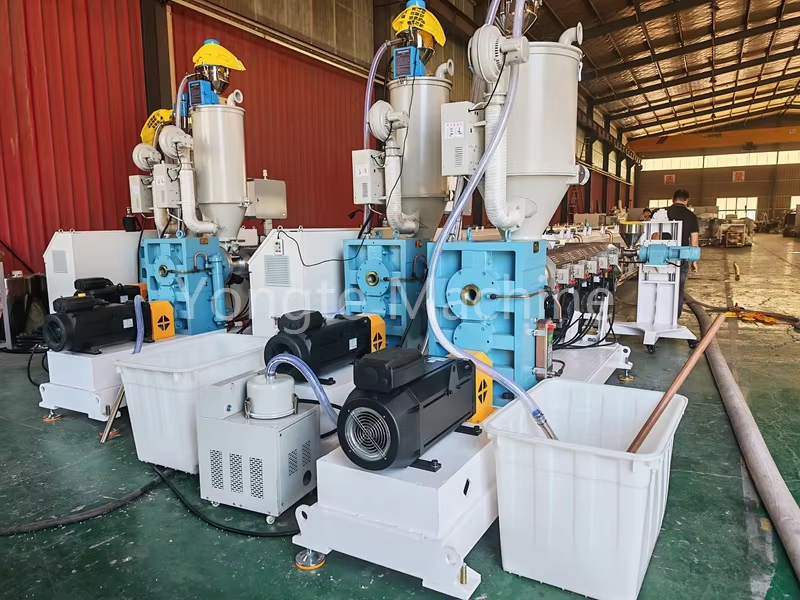
A supplier that runs polypropylene and ABS all day may freeze the moment a PEEK or a glass-filled nylon hits the hopper. Each polymer family brings its own thermal window, moisture sensitivity, and shear behavior, and a shop set up for commodity resins rarely has the barrel metallurgy or drying discipline to switch without contaminating the batch.
Ask how the manufacturer handles viscosity shifts during a run—some materials thin out dramatically under shear while others climb as they cure. Fillers, flame retardants, and impact modifiers also change the way a screw recovers and how tool temperatures must be held. A capable partner will have run scrap-rate trials on your specific grade, not just a generic datasheet match.
Beyond the machine, look at material handling. Nylon and polycarbonate need serious desiccant drying; TPUs and soft-touch elastomers demand gentle conveying and precise dosing. If the answer to 'can you run our full range?' is an immediate yes without a discussion of screw geometry, venting, or purging compounds, you are probably talking to a sales rep, not the production floor.
Customization Without the Runaround: Getting a Line Built for Your Plant
The moment you mention a custom production line, most suppliers start hedging. They’ll show you a catalog of 'almost right' machines and suggest tweaking your process to fit their standard frame. That’s backwards. A line should fit the way your plant actually runs — your floor layout, your power constraints, your operator habits. Anything less just creates a new set of problems you’ll have to pay someone else to fix later.
What’s different here is that you skip the layers of sales handoffs. The people quoting the job are the same ones who’ll handle the CAD files and the control logic. Tell them your throughput target or describe the oddball conveyor angle you’re stuck with, and the quote comes back with notes in the margin — not another request for a meeting. You’re not handed a generic proposal with your company name pasted at the top; you get a build plan that mentions your specific PLC brand by name.
That directness shows up in the result, too. Because the line is designed around what your plant already does well, installation tends to be a matter of days rather than months. Maintenance folks don’t need a translator to figure out where the sensors are. And when something needs adjusting down the road, you’re not routed through a ticket queue — you call the same engineer who signed off on the drawings.
After the Sale: Support Practices That Keep Production Running
When a machine leaves the factory floor, the real test begins. A buyer who can't get a straightforward answer about a spare part or a wiring diagram won't stay loyal for long. Support after the sale means answering the phone when production is down, not just sending a generic email. It means knowing the exact revision of the control board in a unit shipped six years ago and having a replacement on a truck the same afternoon. Companies that treat post-sale help as a cost center lose the next order before the current one is even unpacked.
Good support also means documenting the quirks. Every production line has a personality: a sensor that drifts when humidity spikes, a conveyor that likes a specific belt tension, a firmware update that must be applied in a certain order. Passing that hard-won knowledge to the customer, not hoarding it, builds trust faster than any warranty language. A simple, searchable field note—written by the tech who actually installed the unit—can save a plant manager three hours of trial and error. That kind of help doesn't show up on a balance sheet, but it shows up on the next purchase order.
Finally, support practices should anticipate failure instead of just reacting to it. A proactive call at the 2,000-hour mark to suggest a bearing swap feels like partnership, not upsell. Remote diagnostics that catch a pressure drop before it shuts down a line turn a vendor into an invisible safety net. The goal isn't to be the loudest brand at the trade show. It's to be the one name that a maintenance supervisor writes on the whiteboard when the boss asks, "Who keeps us running?"
Field Reports from Operators Who Switched Manufacturers
Switching machine brands is rarely a decision made lightly on the floor. The operators I've talked to often mention the first week as a mix of second-guessing and slow troubleshooting. One guy who ran the same German lathe for nine years switched to a Japanese model and spent two days just remapping his muscle memory for the tool offsets. What surprised him wasn't the difference in cutting speed but how much less he had to compensate for thermal drift once the coolant settled.
Then there's the maintenance side. A shop foreman told me their old machines would throw a spindle alarm every couple of weeks, usually on a Friday afternoon. After replacing four of them with a different manufacturer, those alarms dropped to almost zero, but the trade-off showed up in parts availability—some replacement sensors sat in customs for three weeks. Another operator appreciated the new safety interlocks but found the touchscreen interface too nested, so he still keeps a handwritten cheat sheet taped to the control panel.
Most field reports I've gathered share that same pattern: initial frustration with unfamiliar controls, followed by a grudging respect for better reliability, and eventually a preference for the new brand's ergonomics. Hardly anyone says the switch was painless, but few would go back.
The Real Cost of Downtime: Why Cheaper Machines Often Cost More
Downtime is rarely a line item on a purchase order, yet it quietly eats into profits long after the invoice is paid. A cheaper machine may come with a lower sticker price, but its hidden costs surface through frequent breakdowns, slower repair cycles, and production halts that ripple across your entire schedule. Every hour of unplanned stoppage means missed deadlines, idle labor, and sometimes penalty clauses from customers who won't tolerate late deliveries.
Consider the maintenance burden: budget equipment often uses lower-grade components that wear faster and fail without warning. Your team ends up spending more time troubleshooting and sourcing spare parts than actually running the line. In contrast, a more reliable machine may cost more upfront, but it keeps running shift after shift, allowing you to plan maintenance instead of reacting to emergencies.
The real comparison is not the purchase price—it's the cost per productive hour over the machine's lifespan. When you factor in lost output, expedited shipping for replacement parts, overtime to catch up, and the strain on your workforce, the "cheaper" option frequently becomes the more expensive one. Smart buyers look beyond the invoice and ask a simple question: what does an hour of silence on the factory floor really cost?
FAQ
Start with the manufacturer's track record in your specific pipe type—whether PVC, PE, PP-R, or corrugated. Ask for detailed case studies and client references from comparable production volumes. An experienced builder will discuss material behavior, screw design, and die head tuning rather than generic specs.
It often determines day-to-day profitability. Look for systems that simplify recipe management, log production parameters automatically, and allow remote diagnostics. A good control package reduces dependence on highly specialized operators and cuts scrap during changeovers.
It's a major hidden cost factor. Clarify response times, availability of spare parts, and whether the company offers on-site commissioning, operator training, and ongoing process support. Local service engineers or a responsive remote support desk can prevent days of downtime.
Request a factory visit or a live video tour of machines in production. Pay attention to the gearbox brand, barrel and screw metallurgy, calibration sleeves, and downstream cutting units. Ask about tolerances on pipe wall thickness and ovality under continuous operation.
Not unless long-term operating costs are understood. Calculate energy consumption per kilogram of output, expected screw and barrel life, and typical scrap rates during start-up. A slightly more expensive machine with efficient motors and precise temperature control often pays back within two years.
The manufacturer should adapt the extrusion line to your factory layout and product range—such as different diameters, co-extrusion layers, or special materials. Avoid companies that offer only fixed configurations; a flexible design saves money when market demand shifts.
Look for practical improvements, not just patents. Ask about recent upgrades to screw geometry, energy recovery, or quick-change die systems. A manufacturer that continuously refines its designs is more likely to keep your line competitive over a 10-15 year lifespan.
Focusing on the extruder alone and ignoring downstream equipment like vacuum tanks, haul-offs, and cutters. Inconsistent pipe diameter or poor cutting quality often stems from weak downstream integration. Evaluate the complete line as one synchronized system.
Conclusion
Choosing a plastic pipe machine manufacturer is rarely about the fanciest datasheet. The most reliable extrusion partners earn that reputation through how they handle real production pressures. For instance, can they process the full polymer range you need—everything from rigid PVC to high-density PE and temperature-sensitive PP? If their experience is narrow, you may face costly trial-and-error later. Customization also matters more than many buyers expect: a line built for your plant should account for floor space, operator movement, downstream sizing and cutting, and even planned automation upgrades. Operators who have switched suppliers often say the difference came down to whether the manufacturer listened before quoting, not just offered a standard configuration with minor tweaks.
After the sale is where hidden problems surface. A cheaper machine that lacks responsive support can stop an entire production shift, and the cost of lost output quickly exceeds the initial savings. Field reports consistently point to spare parts availability, remote troubleshooting, and preventive maintenance guidance as the backbone of long-term uptime. You need a company that treats downtime as a shared emergency, not a distant warranty claim. The real question is total lifecycle value: what will it cost to keep this line running for five or ten years, not what it costs on the invoice. A manufacturer that combines material expertise, genuine customization, and dependable after-sale service is far more likely to keep your pipe production profitable.
Contact Us
Contact Person: Ms Qin
Email: [email protected]
Tel/WhatsApp: 8613583233866
Website: https://www.yongteplast.com