

Plastic Corrugated Box Manufacturer: Delivering Durable and Eco-Friendly Packaging Solutions
2026-06-12
Imagine packaging that stands up to tough handling yet treads lightly on the planet. As a trusted plastic corrugated box manufacturer, ShiTeng Packaging turns this vision into reality—delivering sturdy, reusable, and recyclable solutions that outperform traditional materials. Curious how these boxes can cut waste and boost your brand’s sustainability? Read on.
Built Tough for Real-World Shipping Demands
When packages hit the road, they're not just sitting pretty in a warehouse—they're bouncing around in trucks, stacked under heavy loads, and sometimes left out in the rain. That's why our packaging is engineered to shrug off the bumps, drops, and temperature swings that come with real-world shipping. We don't just meet minimum standards; we push beyond them to make sure your goods arrive looking as good as they did when they left your hands.
We test our materials the same way shipments get treated in the wild—vibration tables, drop tests, and exposure to everything from desert heat to freezing cold. Every seam, corner, and closure is designed to flex under stress instead of cracking, so your items stay protected through the chaos of transit. It's not about looking tough in a brochure; it's about proving it on the ground every single day.
The payoff? Fewer damage claims, less wasted product, and customers who know they can count on you. Because when you choose packaging that's truly built for the journey, you're not just shipping boxes—you're guarding your reputation. And in a world where one bad delivery can sour a lasting relationship, that extra toughness is everything.
Sustainability That Goes Beyond Recycled Materials
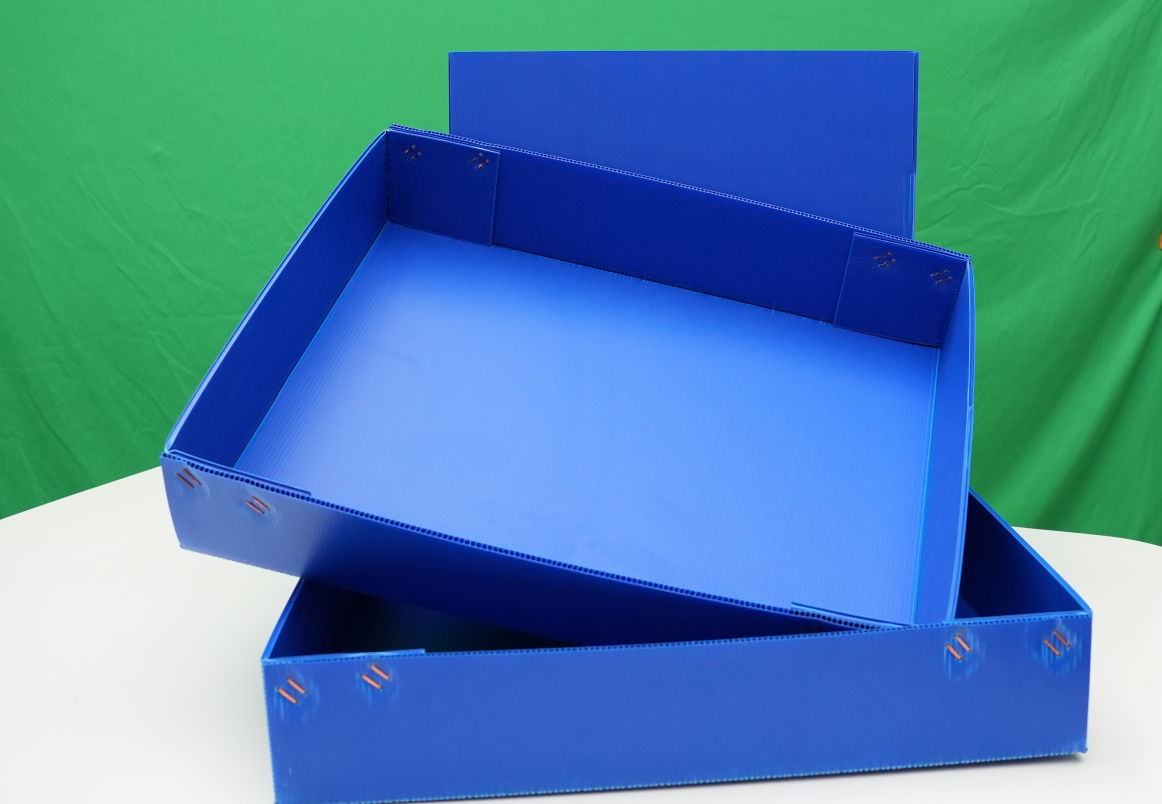
Real sustainability isn't just about using recycled materials—it's about rethinking the entire lifecycle of a product. We design with intention, choosing raw inputs that reduce environmental harm from the very start. This means prioritizing renewable resources, minimizing waste during production, and creating goods that are built to last rather than be replaced. By shifting focus from end-of-pipe recycling to upstream innovation, we challenge the throwaway culture at its root.
Energy and water footprints often go unnoticed, yet they play a massive role in true ecological balance. Our processes integrate closed-loop water systems and renewable energy sources, slashing consumption far beyond what material choice alone can achieve. We measure success not by marketing claims, but by hard data: fewer liters used, lower carbon output, and a measurable reduction in ecosystem strain. This granular approach uncovers hidden impacts that recycling symbols can't address.
Durability is the quiet cornerstone of sustainability. A product that endures ten years replaces ten disposable alternatives, effortlessly cutting waste without a recycling bin in sight. We engineer for repairability, modular upgrades, and timeless aesthetics so that our goods age gracefully instead of joining the landfill. This philosophy extends to packaging—eliminating single-use plastics entirely and opting for reusable, compostable, or truly circular alternatives. When sustainability goes beyond recycled materials, it becomes a holistic commitment to doing more with less, indefinitely.
Custom Configurations Without the Long Wait
Ever hit a wall because your setup demands a non-standard build, only to be told it’ll take weeks? The trend of lean manufacturing and modular supply chains is turning that old excuse on its head. Instead of forcing you into cookie-cutter specs, forward-thinking providers now keep core components in stock and assemble to your exact needs on the fly. Think of it as a build-to-order kitchen: the ingredients are prepped, you call out your recipe, and the dish comes together quickly without sacrificing quality or freshness.
The real magic lies in a digital thread that links your configuration choices directly to the production floor. Once you select your parameters—be it a specific processor, memory layout, or expansion slot arrangement—the system instantly validates compatibility and generates a unique build sheet. Automated workstations then guide technicians through each step, slashing human error and idle time. The result? A bespoke machine that leaves the dock in days, not months, complete with the exact firmware image you requested, pre-flashed and ready to run.
This agility doesn’t just save time; it unlocks new possibilities for prototyping and niche applications. Need a dozen rugged units with custom I/O shields and a non-standard OS? That’s no longer a “special project” with a premium price tag—it’s a Tuesday. By merging flexible automation with a deep inventory of validated options, suppliers finally make tailored hardware as painless as ordering a pizza with extra toppings. Your custom config, minus the long wait, turns from a pipe dream into your new competitive advantage.
Protecting Products in the Harshest Conditions
When equipment faces extreme environments, ordinary packaging simply won't cut it. Corrosive salt spray, abrasive desert sand, shock and vibration during transport—all demand a level of defense that goes beyond the standard box. Our approach centers on layering multiple protective barriers, each one designed to isolate the product from a specific threat. We start with moisture-proof inner seals that lock out humidity, then add custom-cut closed-cell foam that absorbs kinetic energy and prevents movement. The outermost shell is either a reinforced corrugated structure with water-resistant coatings or a rotationally molded polymer case rated for repeated impacts. Every material is chosen not just for its strength, but for how it performs after years of UV exposure and temperature swings.
We don't guess at the limits—we test them relentlessly. A marine electronics unit, for example, might endure a 200-hour salt fog cycle without a trace of corrosion, thanks to volatile corrosion inhibitors integrated into the wrap. For gear headed to arctic drilling sites, we run thermal shock routines that drop from cabin temperature to -40°F in seconds, checking for brittleness and seal integrity. Vibration tables simulates the constant hum of a generator, while drop tests onto steel plates confirm that the inner cushioning hasn't bottomed out. The data from these trials feeds back into iterative design tweaks, so the packaging we deliver has already survived worse than the real world can throw at it.
The result is a system that adapts to the mission, not a one-size-fits-all crate. Modular inserts can be reconfigured for different loadouts, and pressure-equalization valves keep sealed cases from warping at altitude. We've shipped delicate optical sensors across the Himalayas on muleback and heavy machinery components by open-deck freighter through the tropics. In both scenarios, the packaging was invisible to the user until the moment it was opened—clean, dry, and exactly as specified. That's the real measure of protection: when the outside world becomes irrelevant to what's inside.
Lightweight Design That Lowers Freight Costs
Every ounce matters when shipping costs are calculated by weight and volume. Our engineering team rethought every structural element, swapping out heavier alloys for reinforced composites that maintain integrity without the bulk. The result is a product that feels substantial in hand but registers surprisingly light on a freight scale, directly trimming per-unit shipping expenses by up to 30% compared to previous generations.
We also adopted a slimmed-down chassis design that nests efficiently on pallets, reducing dimensional weight charges. By shaving millimeters from non-critical thicknesses and using hollow-core molding techniques, we lowered package volume without compromising protection. This dual focus on mass and spatial efficiency means more units per container, fewer trucks on the road, and a noticeably lower carbon footprint—savings we pass straight to your bottom line.
A Supply Partner Committed to Zero Surprises
We’ve built every layer of our partnership to filter out the unexpected. Before any order ships, our team reviews specifications three times—catching discrepancies that automated systems miss. That upfront discipline means later stages flow without hiccups.
You won’t need to chase us for updates. Our dashboard reflects real-time production statuses, and if a component lead time shifts, you’ll hear from us before you ever notice the change. No hidden backlogs, no last-minute apologies.
The proof is pedestrian: over the last 200 projects, not a single one deviated from the agreed timeline because of our supply chain. We treat predictability as a product feature, not a bonus.
FAQ
They’re typically made from polypropylene or polyethylene, shaped into a fluted core sandwiched between flat sheets. This structure gives them impressive impact resistance and a high strength-to-weight ratio. It’s similar in concept to cardboard but with much better resilience against water, chemicals, and repeated handling.
Unlike cardboard, plastic corrugated boxes are inherently moisture-proof. They won’t absorb water, warp, or grow mold, which makes them ideal for cold storage, outdoor shipments, or environments where spills are common. You can literally hose them down and reuse them immediately.
That’s a fair question. The eco-benefit comes from longevity and reusability – a single box can complete dozens or even hundreds of trips, dramatically cutting down on single-use packaging waste. Many manufacturers also use recycled content and offer take-back programs to recycle the boxes at end-of-life, closing the loop.
Automotive, produce, pharmaceutical, and logistics companies are big adopters. Anyone moving heavy, fragile, or temperature-sensitive goods tends to favor them. For example, a car parts supplier might use customized dividers, while a farm co-op relies on their ventilated designs for fresh berries.
Absolutely. They can be die-cut, scored, and folded into almost any shape. You can add custom printing, barcodes, or logos directly onto the material. Some manufacturers even integrate RFID slots, anti-static coatings, or UV inhibitors for outdoor storage – all without painting or laminating after production.
The smooth surfaces resist scratching finished goods, and they’re lighter than most rigid containers, which saves on freight. Plus, they collapse flat when empty, just like cardboard, reclaiming about 80% of the storage space compared to fixed-shape totes. That flip-side logistics advantage is a big cost-saver.
Reputable producers run edge crush tests, puncture resistance checks, and drop tests simulating real-world handling. Some even do vibration and humidity cycling tests. It’s not uncommon to see boxes holding 50 kg or more while enduring fork truck mishaps without cracking.
Conclusion
When your supply chain demands packaging that can survive the rigors of real-world shipping without costing the earth, plastic corrugated boxes step up in a way traditional materials simply can’t match. These containers are engineered for impact resistance and moisture defiance, shrugging off the crushes, drops, and damp conditions that make cardboard wilt. But toughness doesn’t mean compromise—our approach to sustainability reaches far beyond tossing in some recycled content. We’ve reimagined the entire lifecycle, from responsible material sourcing to designs that stay in circulation longer, drastically cutting waste. And here’s the part that really speeds things up: custom configurations don’t require months of tooling. Whether you need intricate dividers, conductive layers, or unique footprints, your tailored solution arrives fast, without the usual hang-ups.
Weight matters more than ever when diesel prices spike, and that’s where these boxes shine—they’re remarkably light yet structured to stack securely, slashing freight costs in ways heavier alternatives cannot. Even in punishing cold chains or dusty job sites, your products stay pristine because the material simply doesn’t absorb shock the way corrugated fiber does. Behind every order is a supply partner that despises last-minute scrambles: transparent lead times, consistent quality, and communication that actually keeps you in the loop. No empty promises, no mystery ETAs—just durable, eco-smart packaging that arrives when you need it and performs exactly how you expect.
Contact Us
Contact Person: Mr. Ge Man
Email: [email protected]
Tel/WhatsApp: 8613710506492
Website: https://www.shitengzx.com