

Milled Parts Wholesaler: Your Trusted Source for Precision Components
2026-11-02
When every micron counts, sourcing milled parts from a wholesaler you can actually trust becomes the difference between a flawless build and a costly rework. BOYIKUN has built its reputation on exactly that—precision components delivered without the usual supply-chain guesswork. Whether you're scaling production or chasing a tight prototype deadline, here's why this name keeps showing up on the shortlists of engineers who refuse to compromise.
Stock Levels You Can Actually Check, Not Just Hope For
Real-time inventory visibility is the difference between promising a customer something you can't deliver and knowing exactly what's on your shelf before you say a word. Instead of relying on weekly counts or gut feeling, you pull up a live dashboard that shows units per SKU across every location, including what's already committed to open orders. That number isn't a forecast—it's the stock you can touch, count, and ship right now.
The useful part comes when you stop treating stock levels as a backend afterthought. A quick barcode scan at receiving or a weight-based sensor on a pick bin can update the system without anyone typing a thing. Then you set reorder points that trigger alerts based on actual velocity, not a static guess. If a product usually moves twenty units a week and you've got six left, the system flags it before the weekend rush, not after you've already disappointed three customers.
That kind of checkable inventory also changes the conversation with suppliers. You can send them a read-only view of your on-hand counts or let them auto-replenish when levels dip below a threshold you both agree on. It removes the hope from the equation—nobody is wishing the shipment arrives in time because the data already told everyone what's running low and when it needs to leave the dock.
Tolerances That Don't Drift Between Batches
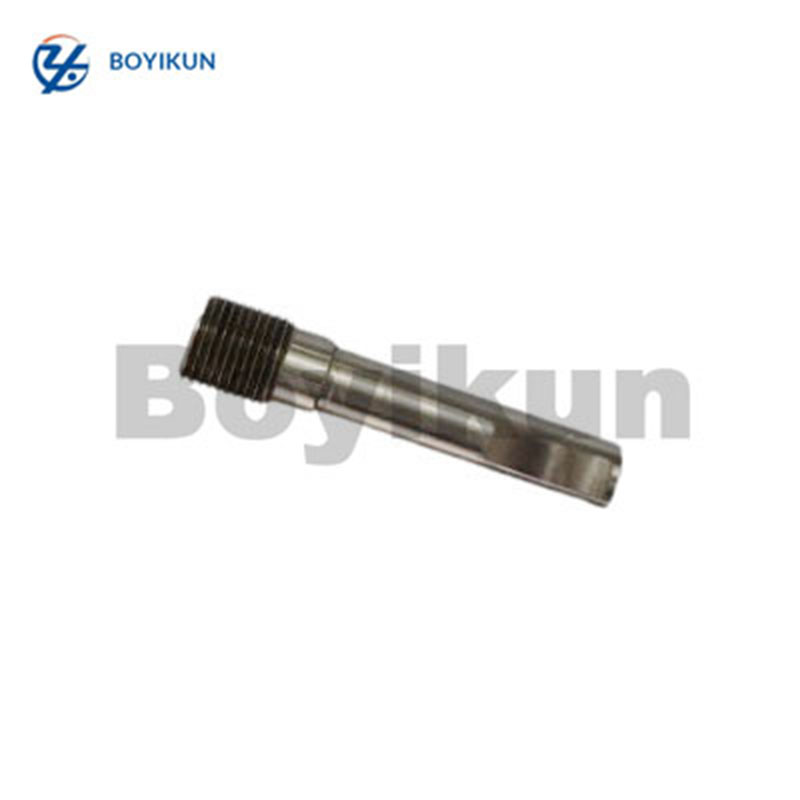
When a mating part slides into place with the same feel on the hundredth assembly as on the first, that's not luck. It comes from recognizing that dimensional variation rarely announces itself until two surfaces meet. The usual suspects are boringly predictable: tool edge wear, coolant temperature shifts, raw stock hardness changes. Shops that keep tolerances stable across batches treat these as controllable inputs, not ambient noise.
What separates stable processes from drifting ones is where measurement happens. Checking a handful of parts at the end of a run only tells you what you already made. Continuous in-process gauging, combined with control charts that trigger adjustment before the mean moves too far, keeps the spread from wandering. Fixture design matters just as much: if a part loads differently each time, even perfect tooling won't save the tolerance.
The payoff shows up downstream. Assemblies go together without hand fitting. Replacement components from a later batch drop into assemblies built months earlier. Scrap rates stop spiking every time raw material comes from a different supplier. When tolerances don't drift, the entire production chain stops compensating for invisible errors and starts trusting the numbers on the drawing.
The Audit Trail Behind Every Milled Component
Every milled part that leaves the floor carries more than dimensional data. It carries a paper trail—or these days, a digital one—that links the raw stock to the finished piece. A proper audit trail begins at receiving, where the heat number and material certification are logged against the purchase order. If a batch of 6061-T6 aluminum shows up with a questionable hardness reading, the record points straight to the supplier and the specific bar it came from, not just a vague date range.
Once a part enters the machining cell, the trail expands. Tool offsets, program revisions, spindle load graphs, and in-process probe measurements get stamped with timestamps and operator IDs. This isn't about assigning blame; it's about narrowing the search when something drifts. A surface finish callout that fails on part 47 of 200 can be traced to a dull insert changed three cycles earlier, a coolant concentration shift, or a fixture that lost its preload. Without those snapshots, you're left guessing.
The final layer ties inspection results to the serial number. CMM reports, thread gauge checks, and any rework notes are attached to that unique identifier. For aerospace or medical work, this kind of granularity isn't optional—it's what lets a manufacturer say with confidence which parts are affected if a material recall or process deviation comes to light weeks later. The audit trail doesn't improve the part, but it proves what happened to it.
Bulk Orders That Don't Come With Bulk Headaches
Placing a large order can feel like a gamble—inventory piled high, quality slipping through the cracks, and a support line that goes quiet the moment you hit “submit.” We built our bulk process to break that pattern. Every large quantity request gets routed to a dedicated team that checks stock levels against live supplier data, confirms lead times before you commit, and flags any item with a longer production window so there are no surprises on your end.
The real headache usually starts after the boxes arrive. Wrong counts, mismatched SKUs, or packaging that barely survived transit. That’s why we treat every bulk shipment like a single high-stakes order: line-by-line verification against your purchase order, reinforced packing for heavy or fragile items, and clear labeling on each carton so your warehouse team can unload and cross-check in minutes, not days.
And when something does go off track—because no supply chain is perfect—you won’t be chasing a ticket number. Bulk accounts get direct access to a senior logistics rep who can authorize replacements, adjust future invoices, or reroute partial shipments without bouncing you through six departments. Large orders shouldn’t mean large friction. Yours won’t.
When Your Production Line Can't Wait for a Warm-Up
Downtime isn't just a pause—it's a tax on every order you promised by Friday. When the line stops waiting for bearings to reach operating temperature, the real cost shows up in missed hand-offs, idle operators, and a schedule that quietly slips into overtime. The warm-up cycle, often treated as unavoidable, is actually one of the few remaining pockets of lost throughput you can reclaim without adding staff or floor space.
The trouble is that most machinery still assumes a cold start is the default. Lubricants thicken overnight, tolerances tighten, and the first hour becomes a slow negotiation between metal and motion. If your process can't afford that gentle ramp-up—because a customer's truck is at the dock or a batch reactor is waiting—then the answer isn't a longer warm-up protocol. It's designing the line to skip the wait entirely: pre-heated lubricant loops, low-friction coatings that shed cold-start drag, and control logic that ramps duty cycles based on actual load rather than a fixed timer.
The shift from reactive warm-up to ready-on-demand changes how maintenance and production talk to each other. Instead of accepting that Monday morning always runs at 70 percent, you start asking which components are the real cold-soak offenders. Often it's not the bearings but the gearbox oil, or a seal that stiffens below 15 degrees. Target those, and the line doesn't just warm up faster—it starts warm enough to hold tolerance from the first cycle. That's the difference between surviving a tight deadline and actually meeting it.
Pricing That Doesn't Punish You for Precision
Most pricing models quietly penalize you for getting better at what you do. The moment you need more granular data, finer controls, or tighter accuracy, the meter starts spinning faster. We built our pricing to break that pattern. You won't see a sudden jump in your bill just because you decided to run a more precise query or pull a deeper report. The cost stays flat, and the precision is yours to use.
Think about how often you've held back from refining a search or adding a filter because you knew it would count against your quota. That hesitation is a tax on good work. Our approach removes it entirely. Whether you're looking at a broad overview or drilling down to the exact decimal, you're paying the same predictable rate. No hidden tiers, no surprise overage charges for accuracy.
This isn't about being generous; it's about respecting that your time and attention shouldn't be spent gaming a pricing page. You should be able to chase the precise answer without keeping one eye on the cost. So go ahead, dig into the details, run the complex analysis, and trust that the price won't move an inch. That's how it should have always worked.
FAQ
We handle everything from small brass fittings to larger aluminum brackets and stainless steel housings. Most orders are CNC-milled, but we also offer secondary finishing like anodizing or passivation if you need it.
Standard tolerance is usually ±0.05 mm, but with our five-axis machines we can hold ±0.01 mm on critical features. Just let us know what your drawings call for.
Custom work is a big part of what we do. Send over your CAD files and we'll produce a prototype batch first, then scale up to full production once you approve the samples.
Aluminum alloys like 6061 and 7075 are the most popular, followed by stainless steel, brass, and engineering plastics such as PEEK and Delrin. Titanium is available too, though lead times may be slightly longer.
Our parts end up in medical devices, automotive assemblies, robotics, and industrial automation. We also work with smaller manufacturers who need precision components for prototypes or short runs.
Every batch goes through in-process inspection with CMM equipment, and we provide material certificates and full dimensional reports on request. If a part doesn't meet spec, we remake it at our cost.
We keep things flexible. You can order as few as 10 pieces for a trial run, but pricing improves at 500, 1,000, or 5,000 units. Repeat orders get priority scheduling.
Conclusion
When you're sourcing milled components at volume, vague promises don't hold up. This wholesaler puts live stock counts directly in front of you, so you know exactly what's on the shelf before you commit. No more crossing your fingers after sending a purchase order. Tolerances stay locked in from one batch to the next—no drifting, no rework surprises that quietly eat into your margins. Every part also carries a full audit trail, from raw material heat numbers to final inspection reports, which means you can trace any issue back to its source without digging through email chains. That level of transparency changes the conversation from hoping to knowing, and it's the baseline expectation here, not an upsell.
Bulk orders are handled without the usual friction. The logistics team plans around your production schedule, and urgent requests get prioritized when your line simply cannot idle. You won't be asked to accept a long warm-up period disguised as 'standard lead time.' Pricing is structured around actual machining complexity, so precision doesn't come with an arbitrary premium. You pay for what you need, not for flashy catalogs or empty guarantees. It's a practical, no-nonsense approach that keeps repeat orders consistent and predictable, which is exactly what a production manager needs from a wholesaler.
Contact Us
Contact Person: Xianchen Hu
Email: [email protected]
Tel/WhatsApp: 86-13248645200
Website: https://www.hexnb.com/