

LV Switchgear Manufacturer: Key to Safe and Efficient Power Distribution
2026-07-23
In the world of electrical infrastructure, the right Chang Song LV switchgear manufacturer can make all the difference between seamless power distribution and costly downtime. As industries and commercial facilities demand ever-higher levels of safety and efficiency, the choice of low-voltage switchgear becomes a strategic decision. This article explores why partnering with an experienced manufacturer like Chang Song is essential for reliable, future-proof power management.
Core Engineering Behind LV Switchgear Reliability
Reliability in low-voltage switchgear is not a coincidence but the result of meticulous engineering that begins with conductor and insulation selection. The choice of copper or aluminum busbars, for example, directly influences current-carrying capacity and thermal performance under continuous load. Engineers also pay close attention to the shape and surface finish of conductors to minimize hotspots caused by skin effect and proximity effect. Insulation materials are selected for their dielectric strength, thermal endurance, and resistance to tracking, ensuring that even under harsh conditions, the switchgear maintains isolation between live parts and grounded structures.
Thermal management is another pillar of reliability, often overlooked in lower-tier products. LV switchgear must dissipate heat efficiently to prevent premature aging of components and insulation breakdown. This involves computational fluid dynamics (CFD) modeling during design to optimize ventilation paths and component placement. Forced air cooling or heat sinks are integrated when natural convection is insufficient. Temperature rise tests conducted in accordance with standards verify that all parts stay within safe limits, avoiding derating that would compromise the system's rated performance.
Beyond electrical and thermal design, mechanical robustness plays a crucial role. The enclosure must withstand the magnetic forces generated during short-circuit events without deformation that could compromise internal clearances. High-quality LV switchgear employs reinforced frames and bolted busbar connections with controlled torque to maintain low contact resistance over the equipment's lifetime. Additionally, advanced fault-handling mechanisms—such as arc quenching technologies and pressure relief flaps—contain and extinguish internal arcs, safeguarding both personnel and the installation from catastrophic failure.
Customization that Matches Real-World Electrical Loads
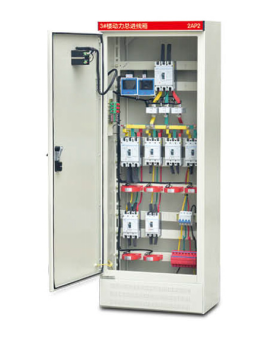
Electrical systems in actual buildings are never uniform—they fluctuate with occupancy, equipment usage, and time of day. To truly replicate these conditions, our solution allows you to tailor load profiles based on real consumption data, ensuring simulations behave like their physical counterparts. Whether it's a hospital's erratic nighttime demand or an office's predictable weekday ramp-up, the customization options cover a wide spectrum of real-world patterns.
The process moves beyond generic constant-power assumptions by letting you define transient spikes, harmonic content, and phase imbalances often seen in industrial settings. You can inject typical nonlinear behaviors from LED lighting arrays or variable frequency drives, creating a more nuanced electrical environment. This granularity helps engineers verify how protective devices and backup systems would perform under stress, bridging the gap between theoretical designs and operational reality.
Moreover, you don't need to start from scratch—pre-built templates based on industry surveys and historical data provide a solid foundation. These templates can be fine-tuned to match local grid codes or internal test protocols, making the customization both accessible and deeply flexible. The result is a test bench that genuinely mirrors the complexity of the loads it's meant to represent, reducing the risk of unexpected failures in the field.
Safety Mechanisms That Go Beyond Standard Compliance
Standard safety compliance often means checking boxes on a regulatory list, but truly resilient systems embed safeguards that anticipate failure modes no committee ever imagined. Think of a machine that not only stops when a guard is opened, but also monitors vibration signatures to predict bearing fatigue weeks before a catastrophic failure. It's this extra layer of intelligence that separates a compliant product from a genuinely safe one. Instead of relying solely on prescribed tests, these mechanisms constantly ask: what if two independent faults occur simultaneously, or what if a soft error flips a critical bit in memory?
One approach is to design with paranoid redundancy. This doesn't just mean dual-channel architectures; it means cross-checking diverse algorithms running on heterogeneous hardware. If a lidar and a radar disagree about an obstacle, a standard system might throw a fault. A beyond-compliance system cross-references with a thermal camera and applies a physics-based plausibility filter before deciding. This layered, skeptical design catches errors that no single sensor could, and it evolves from experience—field data silently reshapes the safety envelope without requiring a regulation to prompt it.
Finally, true safety leadership shows in the invisible details: power supplies that gracefully degrade instead of cutting out, communication protocols that maintain integrity during electromagnetic chaos, and fail-operational modes that bring a process to a dignified halt rather than an abrupt, potentially dangerous stop. These aren't features that appear on a datasheet; they're commitments that emerge only when engineers are empowered to solve problems before they become checkboxes. It's the difference between meeting the letter of the law and embracing the spirit of protection.
How Smart LV Switchgear Cuts Down Energy Waste
Traditional low-voltage switchgear often runs blind, with no real insight into where energy is being lost. Smart LV switchgear changes that by integrating sensors and communication modules that continuously track power quality, load patterns, and thermal performance. This constant stream of data allows facility managers to spot inefficiencies the moment they appear—whether it’s a phase imbalance, harmonic distortion, or a breaker running hotter than it should. Instead of waiting for a monthly bill shock, teams can act immediately to correct wasteful conditions, trimming consumption without sacrificing uptime.
Beyond real-time awareness, smart switchgear uses edge computing to make local decisions that prevent waste. For instance, it can dynamically shed non-critical loads during peak tariff windows or reroute power to avoid underutilized feeders. The system learns normal operating rhythms and flags anomalies like a gradual increase in nighttime baseload—often a sign of equipment left running unnecessarily. By automating these micro-corrections, facilities avoid the slow creep of wasted kilowatt-hours that often goes unnoticed in manual setups.
The integration with building management systems also means energy data becomes part of a bigger efficiency picture. Smart LV switchgear feeds granular consumption data into analytics platforms that can correlate energy use with occupancy, weather, or production schedules. This makes it possible to identify patterns that pure hardware can’t see—like a correlation between a specific motor’s start-up surge and overall power factor penalties. Over time, these insights guide targeted upgrades, from capacitor bank sizing to equipment replacement cycles, creating a compounding effect on energy savings that far exceeds the initial waste reduction.
Installation and Upkeep Without Operational Disruption
Bringing new equipment online doesn’t have to mean putting a hold on daily work. Our approach hinges on flexible scheduling and modular, plug-and-play components that slide into existing workflows with minimal fuss. Instead of shutting down whole lines, we map out a phased rollout—often during naturally slow periods or after hours—so your team can keep meeting commitments while the upgrade takes shape quietly in the background.
Routine upkeep gets a similar philosophy. We’ve designed key parts to be hot-swappable, and most diagnostic checks happen remotely through secure monitoring tools. That means wear-and-tear or minor glitches can be addressed long before they escalate, and often without anyone on-site even noticing. When a physical visit is needed, it’s scheduled at your convenience, targeting off-peak windows so the rhythm of your operations stays undisturbed.
Long-term reliability comes from staying ahead of surprises. Real-time data feeds help forecast component fatigue, letting us refresh parts well before they cause hiccups. Seasonal adjustments and firmware updates are tested in a sandbox environment first, then applied with a one-click rollback safety net. The result is a facility that hums along predictably—maintenance becomes a subtle background process rather than a calendar full of disruptive events.
Choosing a Manufacturer with a Proven Track Record
When evaluating potential manufacturing partners, it's essential to look beyond glossy brochures and sales pitches. A proven track record is built on more than just years in business—it’s about consistent delivery, adaptability, and a history of solving complex challenges. Seek out companies that openly share case studies, client testimonials, and performance data that speak to their reliability. Ask about their on-time delivery rates, defect percentages, and how they’ve handled supply chain disruptions. A manufacturer with real-world evidence of their capabilities will often have long-standing relationships with similar businesses, which is a strong indicator of trust and competence.
Dig deeper by requesting references from clients who have projects comparable to yours in scope and complexity. Reach out directly and ask specific questions about communication, quality control, and problem resolution. A manufacturer that hesitates to provide references or gives vague answers to performance metrics may be hiding gaps in their history. Also consider how the company invests in training, equipment upgrades, and process improvements—these are the hallmarks of an organization that is committed to maintaining its record well into the future. A track record isn’t just about past successes; it’s a snapshot of a company’s culture and long-term vision.
FAQ
A reliable manufacturer designs systems that prevent faults and minimize downtime. They use robust components and thorough testing to ensure consistent power flow, which is vital for both safety and operational continuity.
They integrate advanced protection mechanisms like circuit breakers and residual current devices, along with arc-fault detection. Their designs also incorporate proper insulation and isolation, drastically reducing the risk of shocks, fires, or equipment damage.
Look for a track record of reliability, use of quality materials, and compliance with global standards. The ability to offer tailored solutions and responsive technical support also sets top suppliers apart.
Efficient switchgear minimizes power losses through optimized conductor paths and low-resistance connections. It also enables smarter load management, which reduces wasted energy and lowers operational costs over time.
Absolutely. Off-the-shelf units often require compromises. Custom designs fit exact spatial, environmental, and functional requirements, improving reliability and ease of maintenance while avoiding unnecessary features that drive up cost.
These standards ensure the equipment has been rigorously tested for performance under fault conditions, heat rise, and durability. Compliance gives confidence that the switchgear will operate safely and reliably even in demanding environments.
Digital monitoring, IoT connectivity, and eco-friendly materials are gaining traction. Smart switchgear now provides real-time diagnostics and predictive maintenance alerts, helping to prevent outages before they occur.
Conclusion
A dependable LV switchgear manufacturer anchors its products in meticulous engineering—thermal resilience, short-circuit withstand, and arc-fault containment are not mere compliance checkboxes but core design priorities. Beyond off-the-shelf solutions, genuine customization emerges from deep collaboration: analyzing harmonic profiles, inrush patterns, and load diversity to tailor busbar ratings and protective coordination precisely to the facility's electrical signature. Safety layers extend far beyond standard IEC 61439 requirements, integrating passive arc-quenching barriers, captive-key interlock schemes, and continuous insulation monitoring that together create a defense-in-depth framework, protecting both operators and downstream assets during abnormal events.
Modern smart switchgear goes further by embedding energy metering and power quality analytics directly into the assembly, exposing hidden losses from unbalanced phases or creeping standby consumption so operators can reclaim efficiency without major retrofits. Thoughtful design simplifies lifecycle management—withdrawable units, front-access cabling, and hot-swappable components keep maintenance outages brief and isolated. The real differentiator, however, lies in a manufacturer's track record: decades of field performance across diverse industries, supported by agile service networks and long-term spare parts strategies, transforms a simple procurement into a strategic asset that upholds uptime and adapts as the electrical network evolves.
Contact Us
Contact Person: Tonglun Chen
Email: [email protected]
Tel/WhatsApp: 8618906642555
Website: https://www.cncsele.com