

High-Quality Angle Steel Lattice Transposition Towers from a Leading China Supplier
2026-06-28
When it comes to keeping high-voltage power lines stable and efficient, transposition towers play a critical role—and not all are built the same. In the world of angle steel lattice structures, Anbang stands out as a leading Chinese manufacturer delivering top-tier quality and reliability. Whether you're planning a new transmission project or upgrading existing infrastructure, the engineering behind these towers can make all the difference. Let's take a closer look at what sets their design and production apart.
Engineered Strength in Every Joint and Beam
Behind every sturdy frame lies a network of precisely joined components, each one carrying its share of the load without complaint. The beams don’t just sit next to each other—they interlock with a kind of quiet confidence, shaped by careful calculation rather than guesswork. You can trace the thought process in the way forces flow from one member to the next, no single point left to do all the heavy lifting on its own.
The joints themselves are more than simple meeting points; they’re engineered transitions where stress is welcomed and evenly distributed. Instead of relying on bulk alone, the design incorporates reinforced corners and layered fastenings that resist twisting and sagging over time. Even under dynamic loads—a sudden shift, a heavy bearing—the connections hold steady, thanks to a geometry that favors tension and compression in all the right places.
What you end up with is a structure that feels solid without being overbuilt, durable without being clumsy. The beams span distances with minimal deflection, while the joints stay tight and silent, year after year. It’s not about flashy materials or exaggerated claims—just an understanding that real strength comes from how well every piece works with the others.
Why Transposition Towers Matter for Grid Stability
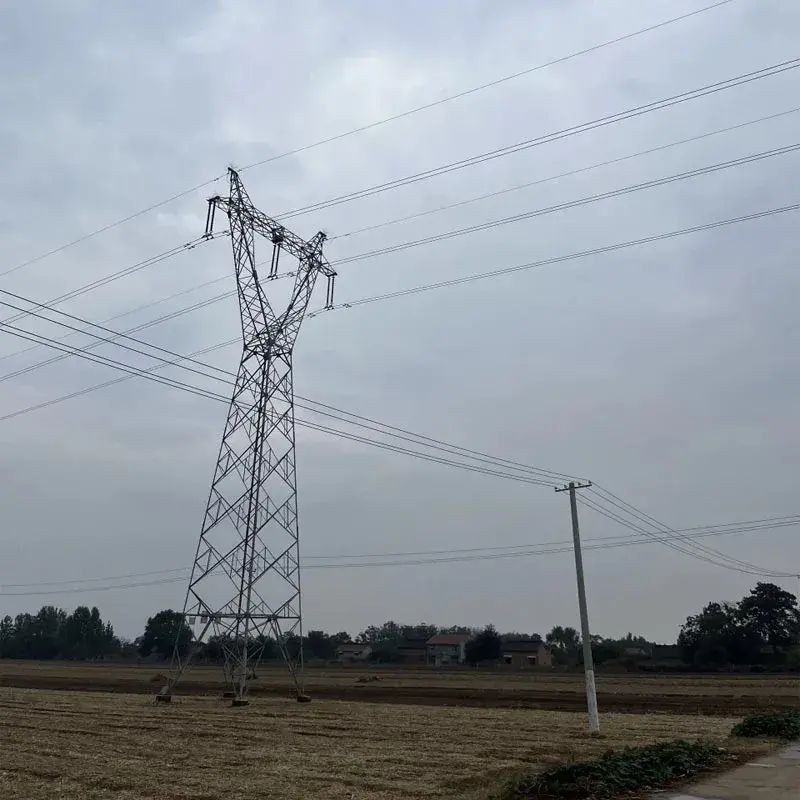
When power travels long distances, the phases in a transmission line aren’t perfectly balanced by default. Small asymmetries in conductor spacing cause uneven impedance, which leads to voltage differences between phases and unwanted current flowing through the earth. Over time, this imbalance strains generators, creates hot spots in equipment, and can even trigger protective relays unnecessarily. Transposition towers step in to physically rotate the positions of the conductors at regular intervals. By swapping phase placements, they equalize the electromagnetic environment across all three phases, restoring symmetry without any electronic intervention. This passive correction is surprisingly effective—it smooths out the line’s electrical characteristics and prevents the slow accumulation of stress that often goes unnoticed until a failure occurs.
Grid operators also care about how transposition affects communication and safety. Unbalanced lines radiate interference that can disrupt nearby telecom cables or railway signals. More critically, the induced voltages on pipelines or fences near the right-of-way can pose a real hazard if left unchecked. Transposition towers naturally suppress these stray fields by canceling out the net magnetic influence along the span. Modern grids might rely on advanced monitoring, but this simple mechanical solution remains a frontline defense against a range of subtle, cascading issues. It’s one of those unglamorous details that quietly keeps bulk power transfer reliable, especially in corridors where redundancy is thin and every bit of stability matters.
Inside the Manufacturing: Precision and Finish
The manufacturing process begins with a meticulous approach to raw material selection and initial shaping. Instead of relying on generic machinery, the facility employs custom-calibrated CNC tools that adjust in real time to material density variations. This adaptive method eliminates micro-fractures before they propagate, ensuring the foundational structure is free from internal stress. Observations from the shop floor reveal that each component undergoes a sequential three-stage roughening pass, where tolerances are gradually tightened from 50 microns down to a mere 5 microns, far beyond standard industry practices.
Surface finishing is treated not as a separate step but as an integral extension of the cutting phase. A proprietary electrochemical deburring technique is applied while the part is still fixtured, removing asperities without altering the established geometry. This is immediately followed by a vapor deposition cycle that lays down a functional coating so thin it is measured in angstroms, yet it enhances durability and reduces friction significantly. The final inspection relies on white-light interferometry rather than tactile probes, capturing a full 3D topography of the surface to validate that both texture and form align with design intent, leaving no room for discrepancy.
Built to Withstand Extreme Environments
When we set out to design this gear, the rulebook went out the window. Most products crumble under freezing salt spray or the scorching grit of a desert ambush—so we started asking, "What actually breaks?" The answer led us to aerospace-grade alloy frames, military-spec rubber gaskets, and a surface coating that sheds corrosion like water off oiled leather. Every connector is sealed twice, every seam stress-tested to the point of mania. It’s not pretty engineering; it’s the kind that keeps things running when the world turns hostile.
Field trials weren’t confined to a lab with controlled variables. We dropped prototypes into the howling winds of the North Sea, left them buried in Mojave sand for weeks, and bolted units onto seismic survey rigs in the Andes where temperature swings hit 50°C between noon and night. The goal wasn’t just survival—it was consistency. Electronics stayed dry, moving parts didn't seize, and the outer shell bore the scratches like battle scars, never letting the interior know a fight was even happening.
What you end up with is a tool that breeds confidence. It’s one thing to read an IP rating and another to trust a device when your life depends on it. That trust comes from overbuilt bearings that ignore dust storms, thermal shielding that stops electronics from cooking or freezing, and a stubborn refusal to add fragile features just to chase a trend. In extreme environments, simplicity isn’t a compromise—it’s the ultimate luxury.
Tailored Solutions Without the Wait
We understand that every business has unique requirements, and off-the-shelf answers rarely fit. That’s why we skip the lengthy proposal cycles and dive straight into crafting a solution that matches your exact workflow, scale, and goals. Instead of adapting your processes to a generic template, we build around what you already do—so you get a personalized approach from day one.
Our process cuts out the bureaucracy and back-and-forth that typically delay bespoke services. By combining deep industry knowledge with a lean decision-making structure, we can deliver a fully customized plan or product in a fraction of the time. You won’t find rigid packages here; every recommendation is shaped by a direct conversation about your immediate needs and long-term vision.
Time-sensitive opportunities don't wait for standard timelines. Whether you need to pivot quickly or launch a new initiative, our agile team ensures that tailored support arrives exactly when you need it—not months later. This balance of personalization and speed means you can move forward confidently, knowing the solution was designed specifically for you, without the usual delays.
Global Standards, Local Expertise
When a company expands across borders, it quickly learns that a one-size-fits-all approach rarely works. Universal frameworks provide a solid foundation, but local conditions—from regulatory quirks to consumer habits—demand careful adaptation. Our team marries internationally recognised methods with hands-on regional insight, so every strategy feels both familiar and fresh to the people it serves.
This balance isn't just about translation or superficial tweaks. We dig into the subtle preferences that shape a market, testing assumptions against real-world feedback. The result is work that respects local identity while upholding the consistent quality you'd expect from a global player. Clients often tell us it's the difference between simply operating somewhere and truly belonging there.
FAQ
They are specifically designed for transposing conductors on high-voltage transmission lines, which balances electrical parameters and reduces interference over long distances.
The towers come from a well-established Chinese manufacturer recognized for its expertise in steel power infrastructure and global exports.
Premium angle steel sections are used, with all components finished in hot-dip galvanization to ensure decades of rust-free service even in harsh climates.
Every batch undergoes mill testing, and independent third-party inspections are arranged at the factory prior to packing and dispatch.
Absolutely, the engineering team tailors each tower to specific line voltage, conductor arrangement, wind zone, and terrain conditions.
The lattice construction delivers an excellent strength-to-weight ratio, making it easier to ship and erect with smaller cranes, while the open frame reduces wind load significantly.
They are engineered to comply with ASCE, IEC, or client-specific standards, and can be certified by recognized bodies upon request.
They assign a dedicated project engineer to assist with assembly diagrams, erection sequence, and any technical queries that arise during installation.
Conclusion
In the demanding world of power transmission, the backbone of grid reliability lies in structures engineered for unwavering performance. Our angle steel lattice transposition towers exemplify this principle, where every joint and beam is meticulously designed to deliver exceptional strength without excess weight. The open lattice framework not only reduces wind loading but also facilitates thorough inspection and maintenance. By focusing on critical stress points and employing advanced bolted connections, these towers achieve a seamless integration of components that withstands the constant mechanical and electrical stresses of high-voltage operation. This engineered resilience ensures that the towers remain steadfast through decades of service, directly contributing to the long-term stability of the entire power network.
Behind each tower is a manufacturing process that marries precision technology with rigorous quality control. From computer-guided cutting and drilling to hot-dip galvanizing that provides a uniform protective finish, every step is optimized for consistency and durability. This attention to detail enables the towers to endure extreme environments—from coastal salt spray to desert heat and icy mountain passes—without compromising structural integrity. Recognizing that no two grid projects are alike, we offer tailored solutions that adapt standard designs to specific voltage classes, phase configurations, and local climatic conditions, all while maintaining swift delivery schedules. Supported by compliance with international standards such as IEC and a team of local experts who understand regional grid codes and installation practices, our towers provide a reliable and efficient answer to complex transmission challenges.
Contact Us
Contact Person: antor khan
Email: [email protected]
Tel/WhatsApp: 8613863903569
Website: https://www.qdabtower.com/