

Flour Processing Machinery: Streamlining Grain Milling for Superior Efficiency
2026-08-03
Efficient flour processing machinery is the backbone of modern grain milling, transforming raw grains into high-quality flour with speed and precision. In an industry where every second counts, the right equipment can mean the difference between waste and profit. At the heart of this revolution is PINGLE, a name synonymous with innovation and reliability. Imagine achieving consistent particle size, minimal energy consumption, and maximum output—all without the headaches of frequent downtime. This blog delves into how cutting-edge systems are redefining milling efficiency, and why PINGLE’s solutions are leading the charge. Let’s explore what makes today’s machinery not just a tool, but a strategic advantage.
Mastering the Art of High-Speed Wheat Conditioning
Getting wheat ready for milling in record time isn't just about rushing the process—it's about precision at velocity. The real trick lies in understanding how water penetrates the kernel under pressure, and how to manipulate temperature and moisture gradients so the endosperm softens without making the bran too tough or too brittle. When you dial in the right combination of water volume, mixing intensity, and resting intervals, you can cut conditioning time drastically while still achieving the ideal mellowing effect that millers have chased for centuries.
One thing often overlooked is the role of kernel temperature at the moment water is introduced. If the grain is too cold, uptake slows to a crawl; too warm, and you risk uneven absorption and spotty conditioning. Successful high-speed methods often use pre-heating or warm water injection to kickstart the process, followed by aggressive agitation that forces moisture through the bran layers almost instantly. It takes careful monitoring, but once you find the sweet spot, you'll wonder why anyone still waits for hours when minutes will do.
Beyond the machinery and science, there's a certain intuition that comes from working with a living raw material—wheat isn't uniform, and every batch has its own quirks. The art lies in reading the subtle cues: the sound of the grain tumbling in the conveyors, the slight change in texture between your fingers, the way the mill starts pulling differently. Mastering high-speed conditioning means blending that sensory awareness with a tight grip on the process controls, so that speed never comes at the cost of flour quality.
Precision Roller Mills: The Heartbeat of Any Flour Plant
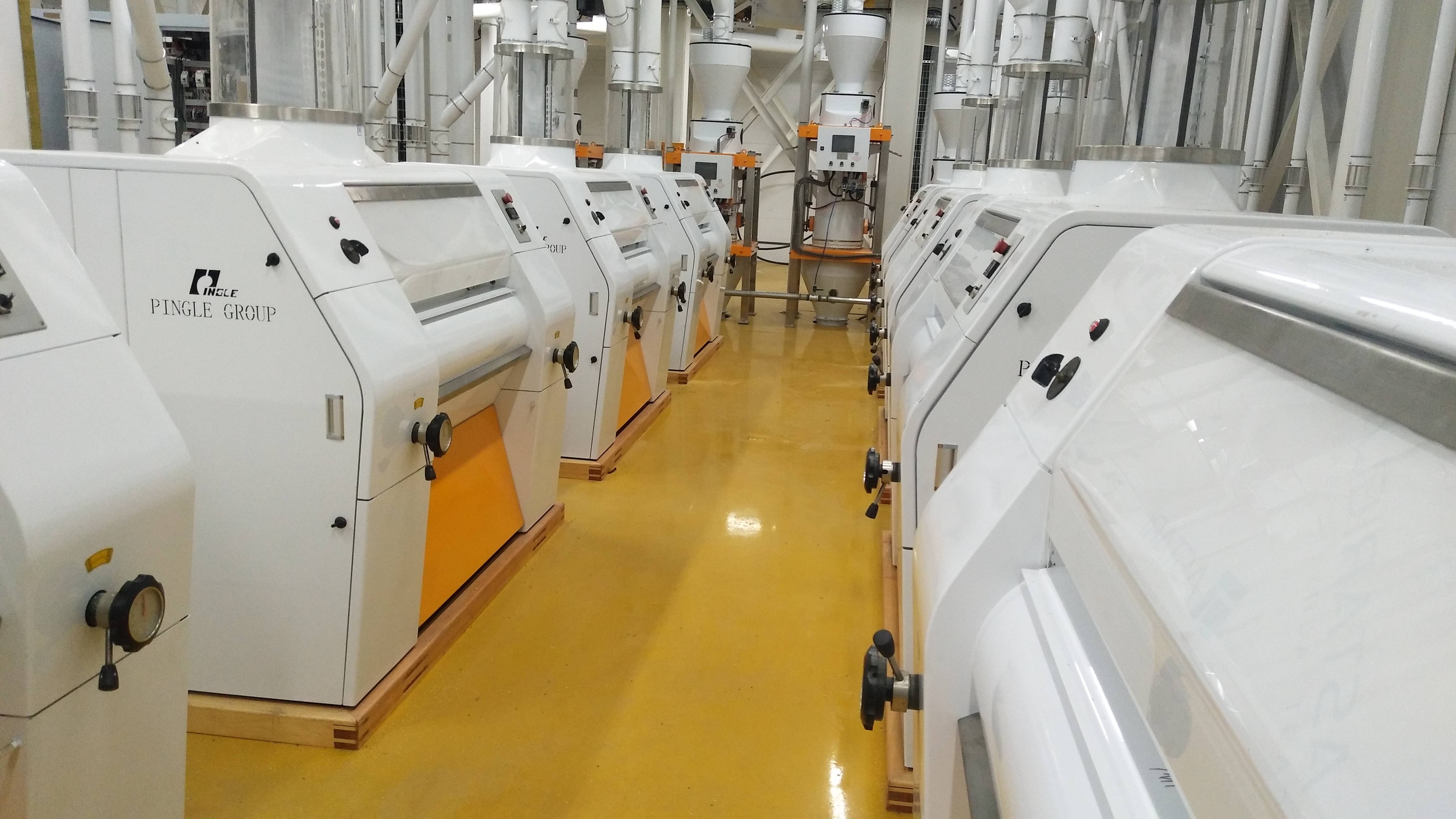
In every flour plant, precision roller mills do more than just crush grain—they define the quality and consistency of the final product. These machines use pairs of chilled iron rolls spinning at different speeds to shear wheat kernels open, carefully separating the starchy endosperm from the bran and germ. The distance between rolls, known as the grinding gap, is adjusted with micrometer-level accuracy to control particle size and maintain uniform flour texture. Without this precision, the mill would produce inconsistent results, wasting both raw material and energy. It's the meticulous engineering behind these rollers that transforms a simple grain into the fine, silky flour that bakers rely on.
What truly sets precision roller mills apart is their ability to adapt to different wheat varieties and desired flour types. By changing roll corrugations, speeds, and gap settings, millers can shift from producing coarse semolina to extra-fine pastry flour with minimal downtime. Modern mills often include automated monitoring systems that measure roll temperature and vibration, alerting operators to potential issues before they affect output. This proactive approach keeps the entire milling line humming, reducing breakdowns that could idle other connected machinery. As the central hub of the operation, roller mills must balance throughput with gentle handling—too much pressure generates heat that damages starches, while too little fails to free the endosperm efficiently.
Day in and day out, these mills run with a rhythm that dictates the pulse of the entire facility. Their steady churn sets the pace for sifters, purifiers, and packing lines downstream. When properly maintained, a set of precision rollers can process tons of wheat per hour with barely a whisper of metal-on-metal wear. Many millers describe the sound of a well-tuned roller mill as a low, consistent thrum—a sign that everything is working in harmony. It's this reliability and understated power that makes them the true core of any flour plant, quietly shaping the foundation of countless foods around the world.
Sifting Out Inefficiencies with Next-Gen Plansifters
Modern plansifters are rewriting the rules of material separation, tackling bottlenecks that traditional systems simply accept. Instead of relying on brute force or static mesh screens, they use adaptive motion and real-time feedback to keep product flowing smoothly, even when dealing with sticky powders or irregular granules. The result is a process that feels less like a constant battle against clogs and more like a predictable, low-touch operation.
What really sets these systems apart is how they learn from the material itself. Built-in sensors detect subtle changes in flow behavior—like humidity-induced clumping or shifts in particle size—and automatically adjust sifter amplitude, frequency, or deck angle without operator intervention. This isn't just about preventing downtime; it's about squeezing more usable product from every batch while reducing the energy that older machines waste on rework and manual cleaning.
For production environments where every minute counts, this shift means fewer interruptions and less guesswork. Maintenance teams appreciate the modular designs that let them swap components in minutes rather than hours, while quality managers see tighter control over particle distribution. It turns sifting from a necessary headache into a genuine competitive lever.
The Unsung Hero: Pneumatic Conveying in Modern Mills
Deep within the rhythmic hum of a modern mill, a quiet force drives efficiency. Pneumatic conveying systems whisk everything from flour to plastic pellets through sealed pipelines, using controlled air pressure. It’s a process so seamless that it rarely catches the eye, yet without it, production lines would grind to a halt. These systems don’t just move material—they protect it from moisture, contamination, and degradation, keeping operations lean and consistent.
What truly sets pneumatic conveying apart is its adaptability. Whether it’s a gentle vacuum pulling starch through a labyrinth of pipes or a powerful pressure system launching plastic granules to distant silos, the design bends to the material’s personality. Fragile powders demand low-velocity, dilute-phase setups; abrasive minerals require tough, dense-phase flow. Engineers craft each path like a bespoke suit, minimizing breakage and wear while maximizing throughput. The result? A tailor-made journey that traditional belts and buckets could never match.
Beyond the mechanics, pneumatic conveying quietly champions workplace safety and sustainability. By enclosing the product entirely, it eliminates the dust clouds that once plagued mill floors—reducing respiratory risks and explosive hazards. It curbs waste by preventing spillage and, with energy-efficient air management, trims power consumption. In an era demanding cleaner and smarter production, this invisible network of ducts delivers a compelling edge, proving that the most vital innovations are often the ones you never see.
Data-Driven Decisions: How Sensors Elevate Milling Precision
In the world of precision machining, even microscopic deviations can lead to scrapped parts or reduced tool life. Sensors embedded directly into milling machines are changing that dynamic by capturing real-time data on vibration, temperature, and spindle load. Instead of relying on post-process inspections or operator intuition, machinists can now monitor the cutting process as it happens. This stream of live feedback turns the shop floor into a connected environment where every pass of the tool can be analyzed and adjusted instantly to maintain exact specifications.
The shift from reactive troubleshooting to proactive control is where sensor data truly shines. Advanced algorithms interpret the incoming signals to detect chatter, tool wear, or thermal drift well before they compromise the workpiece. For example, a slight increase in spindle vibration might indicate a dull cutter, triggering an automatic offset adjustment or a tool-change alert. By correlating this information with historical job records, milling operations can predict maintenance needs and adapt cutting parameters on the fly. The result is a self-correcting system that consistently holds tolerances which were once considered borderline for manual oversight.
Data from sensors also feeds into broader process improvements beyond individual machining cycles. Aggregated metrics reveal patterns that help engineers refine toolpaths, select better cutting strategies, or even justify capital investment in new equipment. Over time, shops build a digital repository of performance benchmarks, making it straightforward to qualify new materials or onboard CNC programmers faster. Rather than treating precision as a static goal, sensor-driven insights turn it into a continuously evolving target—one that adapts to production demands while reducing waste and uncertainty.
Beyond Throughput: Building a Sustainable Milling Future
The milling industry has long been synonymous with high-volume production, where success is measured by tons per hour and operational speed. Yet a quiet transformation is taking root—one that redefines value beyond mere throughput. Today’s millers are increasingly turning their focus toward sustainability, recognizing that long-term viability depends on resource efficiency, waste reduction, and environmental stewardship. This shift isn’t just about compliance or public image; it’s a strategic imperative driven by rising energy costs, tightening regulations, and a growing demand from consumers and partners for responsibly sourced flour. A truly sustainable milling future balances productivity with planetary boundaries, proving that profit and purpose can coexist when innovation meets intention.
Achieving this balance requires a holistic rethinking of every stage in the milling process. From the way grain is sourced—favoring regenerative agriculture that rebuilds soil health—to the adoption of energy-efficient grinding technologies and air-handling systems, forward-thinking mills are cutting their carbon footprint without sacrificing output. Water recycling systems, closed-loop cooling, and byproduct valorization are turning waste streams into revenue opportunities, while predictive maintenance and smart sensors minimize downtime and resource drain. Such improvements are not merely operational upgrades; they represent a cultural shift toward circular thinking, where every input and output is optimized for resilience. The mills that embrace this philosophy are discovering that sustainability can drive differentiation in a competitive market, attracting customers who want more than just flour—they want a story of stewardship.
The journey beyond throughput is also deeply human. It involves upskilling workforces to operate and maintain advanced systems, fostering a culture of continuous improvement, and engaging with local communities to share the benefits of sustainable practices. Transparency is becoming a currency of trust, with traceability platforms allowing customers to follow grain from field to finished product. As the industry evolves, the true measure of success will not be how fast a mill can run, but how well it can endure—and contribute to—the ecosystems around it. Building a sustainable milling future means designing operations that nourish people, protect nature, and remain profitable for generations, proving that the path forward is not through speed alone, but through purposeful, mindful progress.
FAQ
Modern roller mills paired with automated sifting systems dramatically increase throughput by enabling continuous processing and precise control over particle size distribution.
Automation minimizes manual intervention through integrated sensors and PLC controls, ensuring consistent product quality while reducing material waste and downtime.
Notable innovations include direct-driven grinding rolls with brushless motors and advanced pneumatic conveying, which together cut energy use and raise flour extraction rates.
Adjustable roll gaps and interchangeable screen sieves allow a single system to easily switch between wheat, corn, barley, and other grains, providing flexible production without major retooling.
Modern designs feature modular components and self-lubricating bearings, simplifying upkeep; most routine tasks can be performed by operators with basic training.
Food-grade stainless steel contact surfaces and fully enclosed airflow prevent cross-contamination, while integrated clean-in-place systems comply with rigorous food safety requirements.
Beyond lower operating costs, high-efficiency equipment improves flour brightness and extraction yields, making the end product more competitive in the market and often delivering a short payback period.
Yes, many manufacturers offer modular units that scale from compact to large-capacity setups, allowing small mills to leverage advanced technology without excessive investment.
Conclusion
Modern flour processing has evolved into a precise science, where every component works in harmony to maximize output without compromising quality. High-speed wheat conditioning sets the stage by optimizing moisture levels, which softens the bran and toughens the endosperm, enabling cleaner separation. This prepared grain then flows into precision roller mills, the true workhorses of the plant, where corrugated and smooth rolls shear and grind the stock with micron-level accuracy. But even the best milling is ineffective without efficient separation; next-generation plansifters use stacked, self-cleaning sieves to classify particles at multiple stages, ensuring a consistent flour grade while minimizing waste. Together, these core systems—conditioning, grinding, and sifting—form a tightly integrated loop that dramatically reduces processing time and energy use.
Behind the scenes, pneumatic conveying quietly moves vast quantities of product through pipes, eliminating manual intervention and reducing contamination risk. Today, embedded sensors throughout the line feed real-time data on temperature, humidity, and flow rates into centralized control platforms, empowering operators to make instant adjustments that sharpen efficiency. This data-driven approach not only fine-tunes the current run but also predicts maintenance needs, cutting downtime. Looking ahead, sustainability takes center stage: advanced machinery now recovers heat from key processes, recycles air, and even captures by-products for animal feed or biofuels. By integrating these technologies, mills can push beyond mere throughput—they create resilient, eco-friendly operations that meet the demands of a growing population without exhausting resources.
Contact Us
Contact Person: Jiakuo Wu
Email: [email protected]
Tel/WhatsApp: +86-13011566087
Website: https://www.pinglemachine.com