
Custom Anodizing Equipment Built for Your Specific Surface Finishing Needs
2026-11-02
Most anodizing equipment is designed for average parts, average volumes, and average finishes. Yours isn't average—and that mismatch shows up as rework, bottlenecks, and compromises you shouldn't have to make. Junda builds custom anodizing equipment around your specific surface finishing needs, so the line fits the work instead of forcing the work to fit the line.
Designing Around Your Part, Not Around a Standard Tank
A standard tank forces your part to adapt to predefined dimensions, mounting points, and fluid flow assumptions. That approach quietly adds cost and complexity before the first prototype is even built. By shifting the focus to the part itself, the reservoir becomes a response to the component's true requirements rather than a constraint imposed from a catalog. You stop paying for unused volume, awkward port placement, or reinforcement in areas your application never stresses.
Custom shaping lets the housing follow the contour of nearby structures, using space that a rectangular or cylindrical tank would waste. Ports land exactly where plumbing runs shortest, baffles sit only where slosh actually occurs, and wall thickness varies according to local pressure gradients instead of a uniform worst-case guess. The result is not just a smaller package; it is a more predictable one, because every feature exists for a reason tied to how the part operates in its own environment.
Engineering around the part also changes the conversation with suppliers. Instead of negotiating over what is available off the shelf, you define the functional envelope first—fluid volume, thermal exposure, vibration profile, service access—and let the tank emerge from those inputs. That inversion often reveals that a simple welded or molded shape outperforms a heavier, more expensive standard unit, simply because design effort went into the interface rather than into adapting to someone else's defaults.
Oxide Thickness Control for Parts That Can’t Afford Rework
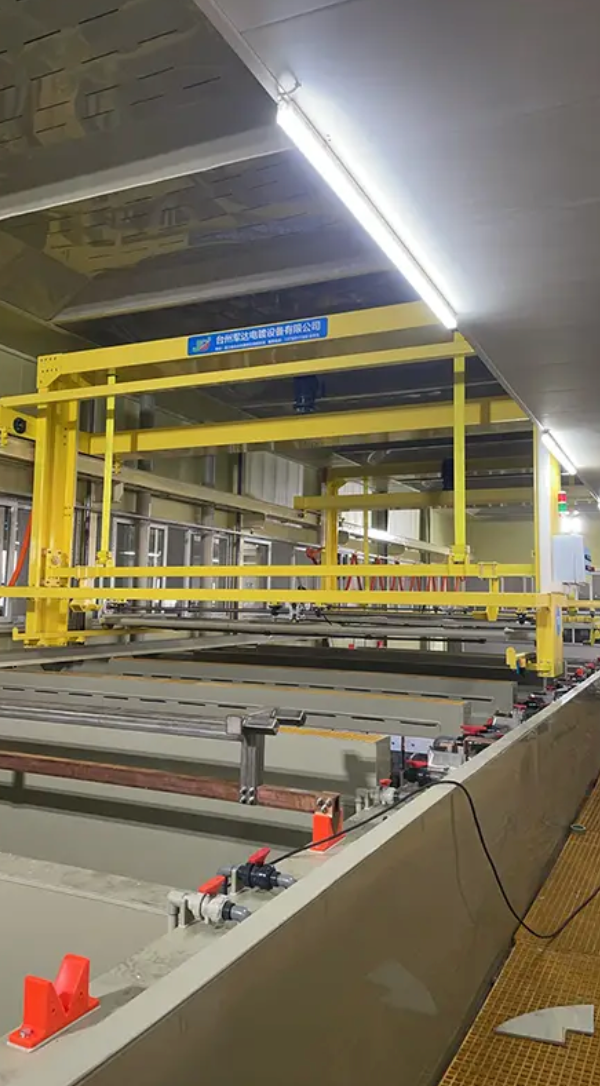
Oxide thickness is one of those parameters that looks forgiving on a drawing but turns unforgiving the moment a part goes into service. For components where rework isn't an option—think aerospace fittings, implantable device housings, or sealing surfaces inside a fuel system—the margin between a clean pass and a scrap event often comes down to a few microns of oxide growth. Controlling that layer isn't just about hitting a number; it's about understanding how the surface prepares itself before anodizing or chemical conversion even starts. Etch rates, rack contact points, and bath temperature drift all nudge the final thickness in ways that post-process measurement can only confirm, not correct.
When a part can't be stripped and re-run, the process needs to behave more like a recipe than a trial. One practical approach is to lock down the pre-treatment sequence: alkaline clean time, deoxidizer concentration, and rinse dwell all influence the base metal reactivity. If those upstream steps wander, the oxide layer inherits that variability. Some shops handle this by running a sacrificial coupon through the same line and pulling it for cross-section analysis before the valuable parts ever see the tank. That way the adjustment happens on the coupon, not on a $4,000 manifold with a delivery date attached.
There's also a hidden variable in how the part itself is handled. Fixturing that shields a surface from current flow or creates a local eddy in the electrolyte will change the oxide thickness right where the customer checks it with an eddy-current probe. For no-rework parts, the best control strategy often means designing the rack so that critical surfaces face the cathode squarely and the part never rests against a bare metal contact. It's a slower way to load a line, but when the alternative is writing a non-conformance report for a part that can't be saved, those extra minutes at the rack are cheap insurance.
Agitation, Cooling, and Racking Tuned to Your Alloy Mix
Different alloy families demand radically different stirring behavior. A high-silicon aluminum mix can tolerate aggressive vortex formation without oxidation concerns, while a magnesium-heavy blend will pull in air and create brittle oxide stringers if you churn it too hard. The trick is matching impeller speed and blade geometry to the melt's surface tension and dross-forming tendency. For copper-nickel alloys, slow deliberate mixing over a longer soak works better than short violent pulses, because it lets the heavier constituents settle into a stable gradient instead of bouncing around.
Cooling ramps are where most off-spec batches quietly fail. A eutectic solder mix wants a fast quench to lock in fine grain boundaries, but the same drop in temperature will crack a high-zinc brass or leave residual stress in a bearing bronze. We map each alloy's solidification interval against the mold's thermal mass, then adjust chill placement, air flow, or oil bath temperature to keep the cooling front moving at the right pace through the mushy zone. It is less about hitting a single number and more about steering the temperature slope so the last liquid to freeze ends up where you want the strongest cross-section.
Racking the molten metal off the top of a settled melt is not just about removing slag. For alloys with a wide density spread between components, like leaded bronzes or aluminum-lithium systems, the timing and angle of the racking tube determine whether you pull a representative sample or accidentally strip out the lighter phase. A slow tilt with a submerged pickup avoids turbulence and keeps the temperature drop minimal, which matters when you are moving material into a holding furnace for thin-wall casting. Getting this step tuned to your specific alloy mix cuts rework rates dramatically, even when the chemistry looks identical on paper.
From Prototype to Production Without Swapping Out the Line
Most teams still build prototypes on one setup and then try to recreate that process on a production line weeks or months later. The result is familiar: parameters drift, fixtures don't match, and a design that worked on the bench suddenly produces scrap on the floor. Keeping the same line for prototype and production isn't about buying more expensive equipment; it's about freezing the critical variables early—tooling geometry, material source, thermal profiles, and cycle times—so each prototype build is already a small production run.
That approach forces a different kind of discipline. Modular workholding, programmable recipe control, and standardized consumables let a single line shift from five units to five thousand without a teardown. Instead of treating the prototype as a proof of concept and production as a separate project, you qualify the process at the same time you qualify the part. Engineering changes become rarer because the line has already seen the real material, real tension, and real speed. When the order volume jumps, the only thing that changes is the lot size.
Handling Mixed Metal Loads Without Cross-Contamination
Running a mixed metal load through the same processing line sounds efficient, but it quickly falls apart when residue from one alloy ends up in the next batch. Cross-contamination isn't just a lab concern — it shows up as discolored welds, unexpected corrosion, or failed material certifications. The fix starts with physical separation. Dedicated bins, clearly marked staging areas, and a strict first-in-first-out rotation keep stainless, aluminum, and carbon steel from mingling before they even reach the cutting or melting stage.
Once the materials are separated, tooling becomes the next weak point. A shared shear blade or conveyor belt can carry tiny metal fragments from one load to another. Many shops use color-coded tool sets or swap liners and brushes between jobs. For high-purity work, a full washdown of chutes and hoppers with compressed air or a mild solvent is worth the extra ten minutes. Documenting these cleanouts builds a habit that operators actually follow, rather than one that only exists in a manual.
Finally, test the outcome, not just the process. Pull a small sample from each outgoing bundle and run a quick spark test or handheld XRF scan. If the readings show unexpected nickel or chromium, trace it back to the last shared surface. Over time, this feedback loop tightens the whole system. Mixed loads don't have to mean mixed results — they just demand a more deliberate handoff between each step.
Meeting the Finish Specs Your Customers Actually Audit
Most finish specifications get signed off long before the first part hits the line, but the real audit happens at incoming inspection—or worse, on the assembly floor. Your customer's quality team isn't reading the datasheet cover to cover; they're checking gloss units at three angles, cross-hatch adhesion after thermal cycling, and color drift between the sample you approved and the batch you just shipped. If you've only been matching the nominal value, you're already behind.
The specs that get audited are rarely the ones printed in bold. They're the edge coverage on threaded holes, the uniformity of anodize thickness on inside corners, or the way a powder coat holds up after a 500-hour salt spray. Build your in-process checks around those failure points instead of relying on final inspection to catch everything. Pull parts at the stages where variation creeps in—right after pretreatment, before cure, after cooling—and record the numbers your customer will eventually ask for.
One practical shift is to treat the customer's audit checklist as your own production checklist. If they're going to measure dry film thickness on a specific boss or inspect for sags under a certain lighting, make sure your operators know those exact locations and conditions. Passing the spec today isn't the goal; passing it every single time, across multiple shifts and material lots, is what keeps a supplier relationship from turning into a corrective action request.
FAQ
Companies usually reach out when their parts have unusual geometry, tight racking tolerances, or need a combination of anodizing types that standard tanks can't handle. It might be a very long extrusion, a part with blind holes that trap solution, or a requirement to run hardcoat and Type II on the same line without cross-contamination.
The biggest difference is that everything from tank spacing to rectifier sizing is matched to your part envelope and desired throughput. You aren't working around fixed tank dimensions or lift capacities. Operators spend less time masking or repositioning and more time processing, because the line was built around how your parts actually move.
Aerospace, medical device, automotive, and architectural metal finishing tend to benefit the most. Aerospace needs precise hardcoat thickness and documentation, medical requires biocompatible surfaces and validated processes, automotive often wants high-volume consistency, and architectural needs uniform color on large visible surfaces.
Expect a detailed discovery first: we review part drawings, production volume, finish specs, and available floor space. Then we model tank sizes, rectifier loads, crane or hoist paths, and waste treatment needs. You'll see a 3D layout before any metal is cut, so there are no surprises about how the line fits your facility.
Yes, a well-designed custom system includes modular tank sections, expandable bus bars, and extra capacity in the rectifiers and chiller. You can add tanks or reconfigure the sequence later. However, it's cheaper to plan for likely future changes upfront than to retrofit after installation.
It comes down to specifying the right rectifier ripple, tank agitation, temperature control, and data logging from the start. For aerospace or medical, we build in redundant sensors and automated cycle recording. Validation is easier because process parameters are captured automatically rather than relying on operator log sheets.
Automation handles the repetitive and risky parts: hoist timing, ramp rates, dwell times, and current density control. It removes human variation that leads to shade differences or thickness drift. A good control package lets you store recipes per part number and recall them with a barcode scan.
Smaller shops actually benefit a lot because custom doesn't always mean huge. You can get a compact line with the exact tank sequence and rectifier capacity you need, instead of paying for unused space or capacity. It helps a small shop compete on specialty work that standard job shops can't handle.
Conclusion
Standard tanks force compromises. Equipment designed around your actual part geometry changes everything. Instead of adapting components to a fixed bath, the line dimensions, cathode placement, and racking geometry are set by the shape, size, and current density requirements of what you actually run. This pays off immediately when oxide thickness has to stay within a tight window—rectifier programming and tank circulation are matched so coating growth is predictable, not something you chase with rework. Agitation, cooling, and racking are not generic afterthoughts; they are tuned to the alloy mix you process daily, whether that means 6061, 7075, or cast grades with very different thermal and electrochemical behavior.
One line should carry you from first article prototypes to full production without swapping tanks or re-validating. The same tooling, controls, and process settings scale because the equipment was never built around a “standard” size. Mixed metal loads also stop being a contamination risk when tank liners, rinse stations, and rectifier profiles are separated or sequenced correctly. And because the finish specs your customers audit—coating weight, seal quality, dye consistency, corrosion resistance—are designed into the control scheme from day one, you spend less time explaining deviations and more time shipping parts.
Contact Us
Contact Person: hayyr
Email: [email protected]
Tel/WhatsApp: 8613082110525
Website: https://www.jundaelectroplating.com