

CNC Parts Exporter Delivering Precision Machined Components Worldwide
2026-11-02
Precision machined components are the silent backbone of countless industries, from aerospace to medical devices. Yet sourcing them globally often means choosing between accuracy and reliability—until you encounter a partner who refuses to compromise. BOYIKUN has quietly built a reputation as a CNC parts exporter that ships exacting tolerances to every corner of the world. But how do they actually pull it off without the usual delays or quality drift? The answer lies in three overlooked practices that most suppliers never bother to master—and they might just change the way you approach your next project.
Tight Tolerances, Far Distances
Holding a few microns across a meter-long casting is not a matter of simply dialing in a tool offset. The floor shifts as the day warms up, the spindle grows a little after an hour of cutting, and a fixture that seemed rigid under hand pressure can flex when a 200-kilo part sits on it. Most shops learn this the hard way: a bore that measures perfect at the machine gets rejected at inspection because the part cooled down by six degrees on the way to the CMM.
The real work happens before chips start flying. Pins get replaced with expansion-compensating locators, roughing passes leave deliberate stock to let stress redistribute, and probing cycles map the actual surface instead of trusting the CAD model. Over a span of several meters, even a tiny angular error in the machine's geometry turns into a visible positional miss at the far end, so leveling and straightness checks become part of the weekly routine, not a startup chore.
It also changes how people communicate. A tolerance of ±0.01 mm across a 3-meter weldment doesn't belong to one person—it belongs to the person who sequences the welds, the person who sets up the machine, and the person who decides when to take the measurement. When those three get in the same room with a heat gun and a straightedge, the impossible tolerance starts looking merely difficult.
CNC Parts That Ship With Confidence
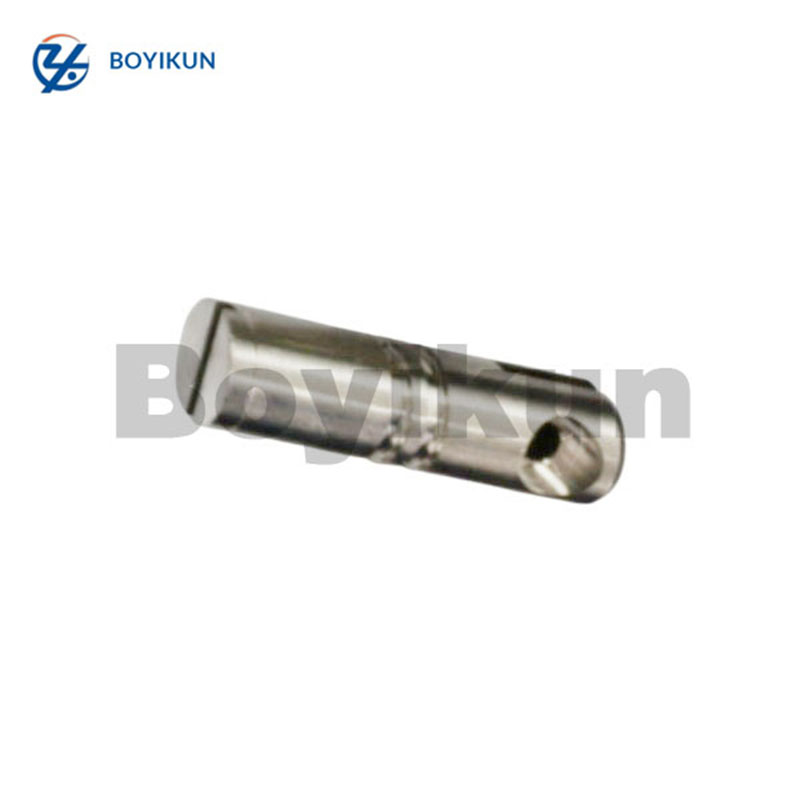
Every CNC part leaving our facility passes through a layered inspection process that catches subtle deviations before they ever reach a shipping box. We measure critical dimensions against the original CAD file, check surface finish under controlled lighting, and verify material hardness on a sample basis. If a part doesn’t match the print exactly, it gets reworked or scrapped — not packaged.
The confidence comes from years of machining complex geometries for industries where failure isn’t an option. Our team reads drawings the way machinists should: looking for potential tolerance stack-ups, thin-wall deflection, or tool access problems before the first chip is cut. That early planning means the part you receive is the part you expected.
Shipping is simply the last step in a process built around repeatability. We use custom foam inserts for fragile features, preserve threads with protective caps, and include a dimensional report when requested. No surprises, no “close enough” — just CNC parts that arrive ready to install.
Worldwide Delivery, Zero Compromise on Precision
When you ship a component across hemispheres, the margin for error doesn’t scale with distance—it stays fixed. Our logistics network operates on that principle, routing instruments and precision parts through hubs that treat every handoff as a calibration checkpoint.
From customs paperwork to final-mile handling, we’ve engineered redundancy into each step so that temperature, vibration, and alignment tolerances survive the journey intact. No matter where your order lands, the tolerance stack you signed off on is the same one that arrives at your dock.
That isn’t a promise we make lightly; it’s built into the way we pack, label, and track each shipment with inspection-grade care. Global reach, without the usual drift.
Export-Ready Machined Components
Every component leaves the floor with dimensional reports, material certs, and surface finish data attached—so customs and your incoming inspection team see exactly what they're getting before the crate is opened. We machine to ISO 2768-mK as standard, with tighter tolerances available on request, and use export-grade VCI packaging plus reinforced crates sized for container loading.
The difference shows in handling. Threads are protected with caps or plugs, sharp edges are chamfered, and moisture-sensitive surfaces get a thin-film rust preventive that strips cleanly with solvent. Each shipment includes a photo inventory and sequential packing list tied to the pallet layout, which cuts unloading time at your end.
We also coordinate the paperwork: commercial invoice, packing list, certificate of origin, and any bilateral trade forms your broker requires. Because the documents match the physical load exactly, your goods spend less time in bonded storage and more time moving to the line.
The CNC Partner Behind Global Builds
When a robotics team in Stuttgart needs a batch of mirror-finish aluminum brackets by Thursday, or a medical device startup in Boston is stuck on a titanium housing with a 0.002-inch true position callout, the conversation usually starts the same way: ‘Can you look at this drawing?’ That’s the daily reality for the CNC partner behind global builds. It’s not about running machines; it’s about running interference—reading between the lines of a CAD file, catching a draft angle that would scrap a mold, and suggesting a slight radius change that saves two weeks of lead time. The work happens before chips fly, in the quiet back-and-forth that tightens a design until it can be made reliably anywhere in the world.
The real test comes when a project spans three time zones and five revisions in a single week. A good CNC partner doesn’t just ship parts; they absorb the chaos. They keep a shared drive updated with first-article photos at 2 a.m. their time, flag a surface finish spec that conflicts with the chosen alloy, and hold tolerances across a 500-piece run even after the anodizing bath shifts color by half a shade. That consistency is what lets a construction firm in Dubai trust that the stainless steel mounting plates arriving next month will match the prototypes they tested last quarter. It’s not magic—just a stubborn refusal to let details slip when nobody’s watching.
Materials tell the rest of the story. The partner behind global builds stocks more than just 6061 aluminum and 304 stainless. They keep 17-4 PH, PEEK, Inconel 718, and even copper-tungsten on the shelf because they know one bad heat treat can shut down a wind turbine project or delay a satellite launch. Finishing options aren’t an afterthought, either: bead blasting for a matte grip, electropolishing for cleanroom compatibility, or a black oxide dip that has to be exactly uniform across 2,000 small pins. When the spec says ‘per print’ and the print has no notes, that’s when experience shows up—and why global builders keep coming back to the same shop, even when cheaper quotes land in their inbox.
Custom Machining, Global Footprint
Our clients rarely bring us standard parts. They come with tight tolerances, unusual alloys, and deadlines that would make most shops wince. That's where custom machining stops being a brochure phrase and starts being a daily routine. From one-off prototypes to low-volume production runs, our engineers work directly with your team to refine geometries, adjust for material behavior, and catch potential tooling conflicts before metal ever meets spindle. The result isn't just a machined component—it's a part that fits your assembly, your timeline, and your performance requirements without forcing you to redesign around someone else's limitations.
But capability in a single facility only matters if that facility is close enough to matter. Our manufacturing network spans three continents, with machining centers located near major industrial corridors in North America, Europe, and Southeast Asia. That footprint does more than shorten shipping lanes—it changes how we schedule work. A job quoted in Ohio can be mirrored in our Czech facility to balance capacity, or shifted to our Malaysian plant when regional raw material costs drop. For customers managing multi-site assembly operations, this means consistent part quality from a single source, even when their own production footprint shifts with market demand.
The honest challenge in custom machining isn't making the first part right—it's making the five hundredth part identical to the first, three thousand miles away, using a different operator and a different machine tool. We've spent years building calibration protocols, shared inspection standards, and real-time tool wear tracking across all locations. When a customer asks for a repeat order with tighter flatness callouts, the change doesn't live in an email thread; it goes into a shared process database that every facility updates against. That's the quiet advantage of a global footprint: not the ability to claim worldwide reach, but the discipline to make 'identical' mean the same thing in Singapore as it does in Stuttgart.
FAQ
We produce turned, milled, and multi-axis components such as shafts, housings, brackets, gears, and custom assemblies. Our export range covers everything from single prototypes to production runs of 50,000+ pieces.
We work with aluminum alloys, stainless steel, titanium, brass, copper, engineering plastics like PEEK and Delrin, and some exotic alloys. If you have a specific grade in mind, we can source it or match an equivalent.
Every machine is calibrated daily, and we use in-process probing on 5-axis centers. Critical dimensions are verified on a CMM, and we provide inspection reports with each shipment. Typical tolerances range from ±0.01 mm to ±0.005 mm depending on the feature.
Yes, just send drawings, CAD files, or even a sample part. Our engineers review manufacturability and suggest changes if needed. We can reverse engineer from physical samples using 3D scanning when drawings are unavailable.
Prototypes usually ship within 7 to 10 days. Production orders depend on quantity and complexity, but most export batches leave our facility in 3 to 5 weeks. We can arrange air or sea freight based on your deadline.
We handle anodizing, powder coating, passivation, bead blasting, electropolishing, and heat treating. Assembly, laser marking, and thread inserts are also available so you receive parts ready for use.
Our parts go into medical devices, aerospace tooling, robotics, automotive prototypes, electronics, and industrial automation. Export clients range from small design studios to multinational manufacturers across Europe, North America, and Asia.
Each component is cleaned, oiled if needed, and wrapped in VCI paper or foam. We use custom foam inserts and double-wall export cartons or wooden crates. All shipments are labeled with handling instructions and include a packing list inside.
Conclusion
Precision doesn't sit still when a box crosses an ocean. Some shops treat export as an afterthought, but when you're regularly sending CNC parts from one continent to another, the real challenge isn't just hitting a tolerance—it's making sure that tolerance survives docks, customs, and a few time zones. Tight tolerance work and long-distance logistics rarely get mentioned in the same sentence, yet that's exactly what daily shipments demand. Every part we machine leaves the floor ready for the trip, not just ready for inspection. Export documentation, protective packaging, and carrier handoffs are treated with the same care as a 0.005 mm bore. That consistency is why buyers on three continents keep reordering without hovering over tracking numbers.
Global delivery doesn't mean loosening the standard. The parts still have to drop into an assembly in Hamburg, Singapore, or Houston without a rework note. So the workflow stays stubbornly simple: machine it right, verify it twice, pack it like the destination matters. Custom orders—odd threads, mixed batches, rush revisions—don't get pushed aside just because they're crossing a border. We've become the quiet machining partner behind builders who can't afford a late or sloppy component. A global footprint isn't about having offices everywhere; it's about making distance boring, so the only thing that grabs attention is the part itself.
Contact Us
Contact Person: Xianchen Hu
Email: [email protected]
Tel/WhatsApp: 86-13248645200
Website: https://www.hexnb.com/