

CNC Milling Machine Company: How Precision Engineering Drives Innovation
2026-07-20
In the competitive landscape of modern manufacturing, precision engineering is more than a technical requirement—it's the catalyst for groundbreaking innovation. At the heart of this evolution are CNC milling machines, transforming raw materials into intricate components that power industries from aerospace to medical devices. Yet, not all machine tools are created equal. A select few companies push the boundaries of what’s possible, and WINNRUI CNC stands out as one of them. But what truly sets a manufacturer apart when micron-level accuracy defines success? In this article, we’ll explore how true innovation is forged through relentless precision—and why the right partner can redefine your production capabilities.
The Art of Micron-Level Precision in Modern Machining
Achieving micron-level precision today isn't merely a matter of tighter tolerances—it's an entirely different way of thinking about material interaction. Machine tools must compensate for thermal expansion in real time, adjusting spindle growth and component drift while maintaining cutting forces that barely disturb the workpiece's crystalline structure. This shift has transformed machining from a subtractive process into a controlled dialogue between tool geometry and material behavior, where every micron removed is intentional and accounted for.
The real art lies in anticipating error before it manifests. Modern CNC systems integrate sub-micron linear encoders, hydrostatic guideways, and in-process probing that maps deviations mid-operation, correcting tool paths without human intervention. Yet no sensor can replace the intangible skill of selecting the right damping strategy for a particular cavity depth or knowing when a 0.5-second dwell at the bottom of a bore will settle residual stresses. These decisions come from experience, not algorithms, and they define the boundary between accurate and genuinely precise work.
Holding a finished part under inspection often reveals the subtle signatures of those choices. Under white-light interferometry, surface finishes can read Ra 0.05 µm or better, with lay patterns so uniform they seem almost fluid. This level of refinement doesn't come from a spec sheet; it emerges from balancing spindle speeds, coolant chemistry, and tool coatings until the process becomes almost silent—both acoustically and mechanically. In those rare moments, machining transcends manufacturing and enters the realm of applied physics.
From Blueprint to Reality: How Advanced CNC Milling Transforms Ideas
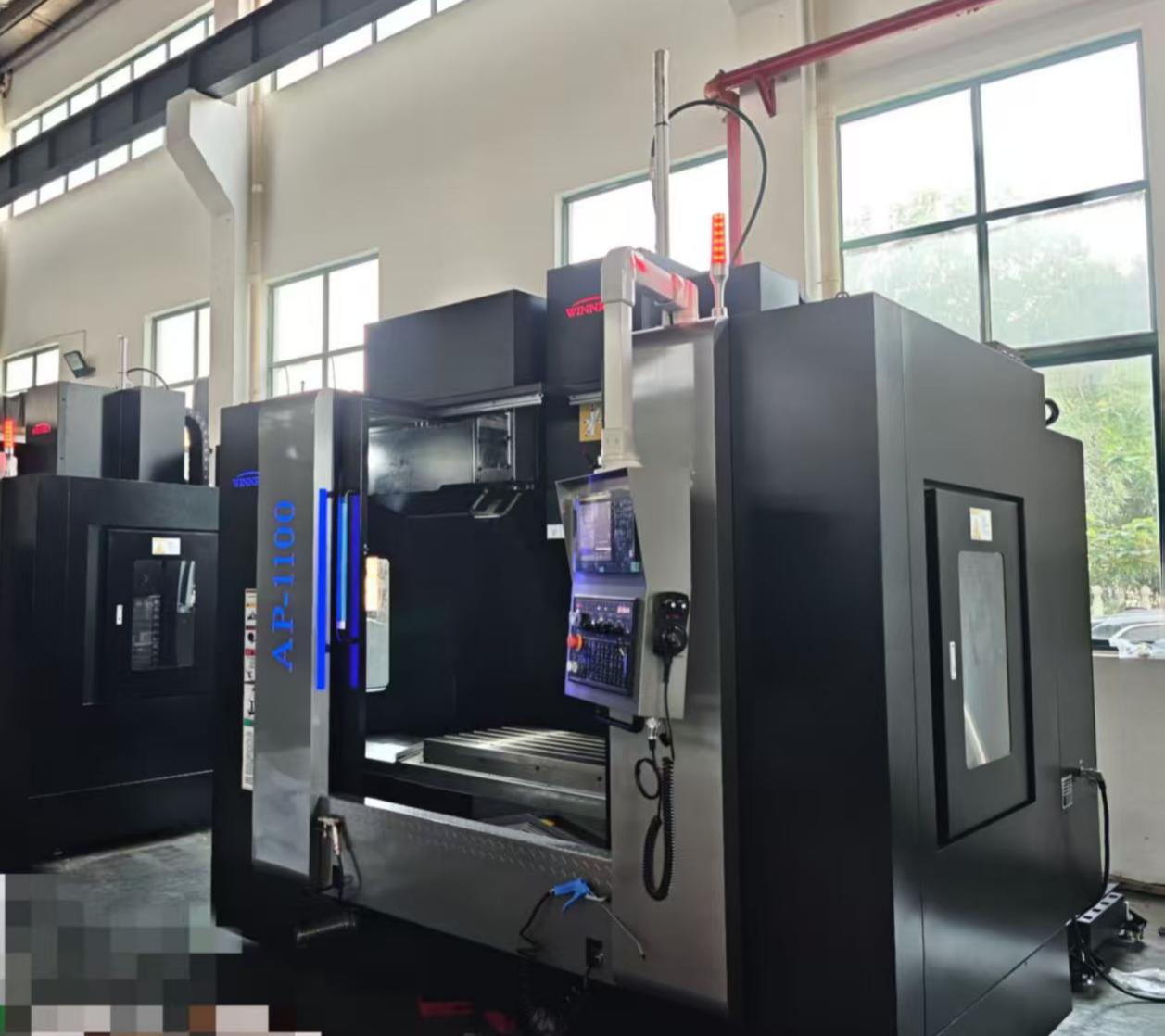
Advanced CNC milling is more than just cutting metal—it’s a process that bridges the gap between a designer’s vision and a tangible, precise part. When a blueprint lands on the machine operator’s desk, it’s often just a starting point. The real magic happens when the mill’s high-speed spindles and multi-axis movements interpret complex geometries, turning raw stock into components that match the original idea down to the micron. This isn’t automated guesswork; it’s a dance between software, tooling, and material behavior that requires both engineering insight and hands-on experience.
What truly transforms ideas into reality is the mill’s ability to iterate rapidly. Prototypes that once took weeks can now be machined overnight, allowing engineers to test, tweak, and perfect designs in real time. Complex organic shapes, intricate internal channels, and tight-tolerance features are no longer limited to what’s feasible by hand—they’re limited only by imagination. The result is a streamlined path from concept to functional product, where the final piece often exceeds the original sketch in both accuracy and performance.
Pushing Boundaries: Complex Geometries Made Possible with 5-Axis Technology
Traditional machining methods often stumble when faced with intricate, free-form surfaces or internal cavities that seem to defy logic. With 5-axis technology, those daunting shapes become not only achievable but routine. The ability to tilt and rotate the cutting tool along two additional axes allows it to reach undercuts, sweep across compound curves, and machine deep pockets from angles that would otherwise require complex fixturing or multiple setups. This opens the door to designs once confined to the imagination—blades with twisted airfoil profiles, medical implants mimicking organic bone structures, and aerospace components with weight-saving lattice features.
The real leap isn’t just about adding two axes; it’s about how the machine maintains continuous tool-to-part contact through synchronized motion. Unlike 3-axis systems that must step through facets, a 5-axis head can flow along a surface in one smooth pass, dramatically improving surface finish and dimensional accuracy. This eliminates the subtle stair-step marks left by indexed approaches, producing parts that need minimal hand finishing. For industries where every micron matters, this seamless integration of motion transforms a subtractive process into something akin to digital sculpting—removing material where it’s not needed, while preserving the exact contours the designer envisioned.
Perhaps the most understated advantage of 5-axis machining is how it redefines what’s considered ‘impossible.’ Engineers can now consolidate assemblies into single monolithic parts, reducing weight and eliminating potential failure points at joints. Complex heat exchangers with internal spiraling channels, or turbine housings with integrated cooling pathways, emerge from a single billet without the need for brazing or welding. This consolidation not only streamlines production but also pushes performance boundaries in fields where reliability is non-negotiable. By removing the constraints of tool access, 5-axis technology encourages a mindset where the only limit is the material itself.
Smart Manufacturing: Integrating Automation and Real-Time Quality Control
In modern production environments, the fusion of automated machinery with real-time quality monitoring is reshaping how factories operate. Instead of relying on post-production inspections, sensors and intelligent software now track every stage of the process, catching deviations instantly. This tight coupling means adjustments happen on the fly, reducing waste and keeping output consistent without manual intervention.
The real gain comes from the ability to correlate live quality data with machine performance. If a subtle drift in a cutting tool's temperature starts affecting dimensional tolerances, the system can automatically recalibrate or pause the line. This kind of responsiveness turns quality control from a gatekeeping task into an active, integral part of production, shortening feedback loops and eliminating the lag that once led to entire batches being scrapped.
Material Mastery: Optimizing Performance Across Metals, Plastics, and Composites
Choosing the right material isn’t a matter of simple substitution. Metals offer strength and fatigue resistance that polymers struggle to match, while plastics bring weight savings and design freedom impossible with most alloys. Composites, built from disparate phases, occupy a middle ground where stiffness and toughness can be dialed in through fiber orientation and matrix chemistry. Understanding these fundamental trade-offs is the starting point for any team aiming to push performance boundaries without overbuilding or overspending.
Optimization rarely follows a straight line. For metals, grain refinement and heat treatment cycles open pathways to higher yield strengths, but can introduce residual stresses that lead to distortion. With injection-molded plastics, balancing crystallinity and orientation means wrestling with mold temperatures and shear rates—too slow and you lose impact resistance, too fast and you risk warpage. In composite layups, automated fiber placement and tailored interleaves allow engineers to suppress delamination, but only when the cure cycle is precisely matched to the resin’s reaction kinetics. Real mastery comes from iterating between simulation and physical trials, often using techniques like digital image correlation to validate that the predicted strain fields actually materialize.
The payoff is visible in products that wouldn’t exist otherwise. Consider a drone arm that blends carbon-fiber skins with a thermoplastic core, yielding a structure that damps vibration like a polymer but withstands bending like a metal. Or a medical implant whose porous titanium surface encourages bone ingrowth while the solid core carries load—an outcome of refining powder-bed fusion parameters until the gradient material behaves as designed. When manufacturers move past generic datasheets and start treating material behavior as a variable to be engineered, they unlock combinations of lightness, durability, and cost-effectiveness that are difficult to replicate with off-the-shelf thinking.
Sustainable Precision: Reducing Waste and Energy in High-Accuracy Production
Achieving high precision in manufacturing has long been associated with increased waste and energy consumption. The relentless pursuit of micron-level accuracy often demands excessive material removal, frequent tool replacements, and extended machine runtimes. However, a growing focus on sustainable precision is shifting this paradigm. By integrating smart process control and real-time monitoring, manufacturers can now detect deviations early, adjust parameters on the fly, and avoid scrapping parts that only marginally miss tolerance. This approach not only conserves raw materials but also curtails the energy-intensive cycles required to remake defective components, turning the old trade-off between accuracy and efficiency into a complementary relationship.
Digital tools play a pivotal role in this transformation. Advanced simulation software allows engineers to predict tool paths and material behavior before physical production starts, minimizing trial cuts and wasted stock. In parallel, closed-loop systems that capture and reuse cutting fluids, coolants, and metal chips reduce chemical contamination and lower disposal volumes. These methods are particularly valuable in industries such as aerospace and medical devices, where complex, expensive alloys and strict regulations make waste reduction both an economic and environmental imperative. The result is a leaner operation where every gram of material and every joule of energy is accounted for, without compromising the integrity of the final product.
The human element remains essential, though it takes on a new form in the sustainable precision workspace. Instead of manually tweaking knobs based on intuition, operators now interpret data from sensors and analytics platforms, making informed decisions that preempt quality issues. Training programs increasingly emphasize resource stewardship alongside technical skills, cultivating a workforce that sees waste not as an inevitable byproduct but as a design flaw. When a whole organization aligns around the principle that the most accurate cut is also the one that uses the least material and power, sustainable precision ceases to be a niche ideal and becomes standard operating practice.
FAQ
Precision engineering is at the heart of every breakthrough in CNC milling. By pushing the boundaries of accuracy and repeatability, it allows the creation of complex geometries that were once impossible, directly enabling faster, more reliable production and opening doors to new design possibilities.
We rely on a combination of state-of-the-art multi-axis machines, climate-controlled environments, and real-time metrology feedback. Every job is monitored with in-process probing, and our tooling is regularly calibrated to eliminate even the slightest deviations.
Our work spans aerospace, medical devices, automotive prototyping, and energy sectors. Any field where failure isn't an option—think surgical instruments or turbine components—needs the level of precision we deliver daily.
We recently integrated adaptive machining algorithms that adjust cutting parameters in microseconds based on sensor data. This has drastically reduced tool wear and improved surface finishes on titanium parts, something that used to take extensive post-processing.
Exotic alloys and composites behave unpredictably under stress, so we've developed proprietary toolpath strategies and coolant delivery systems. Precision engineering isn't just about the machine; it's about understanding how Inconel or carbon fiber reacts and compensating before errors occur.
Beyond standard CMM inspections, we use laser scanning and white-light interferometry for sub-micron verification. Every batch includes a full dimensional report, and we track historical data to predict and prevent drift long before it affects output.
When you machine it right the first time, you eliminate rework and scrap. Precision engineering also means we can often consolidate multiple parts into a single complex component, cutting assembly time and material waste significantly.
We're currently piloting hybrid manufacturing cells that combine additive and subtractive processes in one setup. This fusion allows us to build near-net shapes and then precision-mill them, slashing lead times and enabling features that traditional methods can't touch.
Conclusion
At the heart of modern manufacturing, precision is no longer just a specification—it becomes a language that CNC milling machines speak fluently, translating the most intricate design concepts into tangible reality. Achieving micron-level accuracy demands a fusion of art and engineering, where machine dynamics, thermal stability, and cutting-edge toolpath algorithms converge. Every project, whether it starts as a rough sketch or a detailed digital blueprint, undergoes a transformation guided by deep material knowledge and advanced machining strategies. Complex geometries that once lived only in theoretical models are now brought to life with 5-axis simultaneous motion, carving undercuts, freeform surfaces, and hollow structures with a fluidity that redefines what’s possible.
Yet true innovation extends beyond the cut. A forward-thinking milling company embeds intelligence directly into the production flow—automation that adapts in real time, in-process metrology that catches deviations before they become scrap, and closed-loop controls that self-correct tool wear. This seamlessly meshes with a thorough command of materials, from hardened steels and titanium to engineering plastics and carbon-reinforced composites, each demanding its own choreography of speeds, feeds, and cooling. Sustainability threads through all these layers: optimized tool paths that minimize energy consumption, near-net shaping that reduces raw material waste, and coolant recycling systems that shrink the environmental footprint. Together, these elements form an ecosystem where precision engineering drives not just better parts, but a more agile, responsible, and boundary-pushing manufacturing landscape.
Contact Us
Contact Person: Tim
Email: [email protected]
Tel/WhatsApp: +86 15522553731
Website: https://www.winnrui-cnc.com/