

CNC Machining Supplier How to Choose the Right Partner for Your Project
2026-11-02
Selecting a CNC machining supplier isn’t just about comparing quotes—it’s about finding a partner who can handle tight tolerances, material quirks, and delivery deadlines without drama. One wrong choice can stall your entire project. In this guide, we’ll walk through what actually matters when vetting a supplier, so you can avoid costly mistakes. At Peak Fasten, we’ve seen firsthand how the right partnership accelerates production, and we’re sharing the criteria we use ourselves.
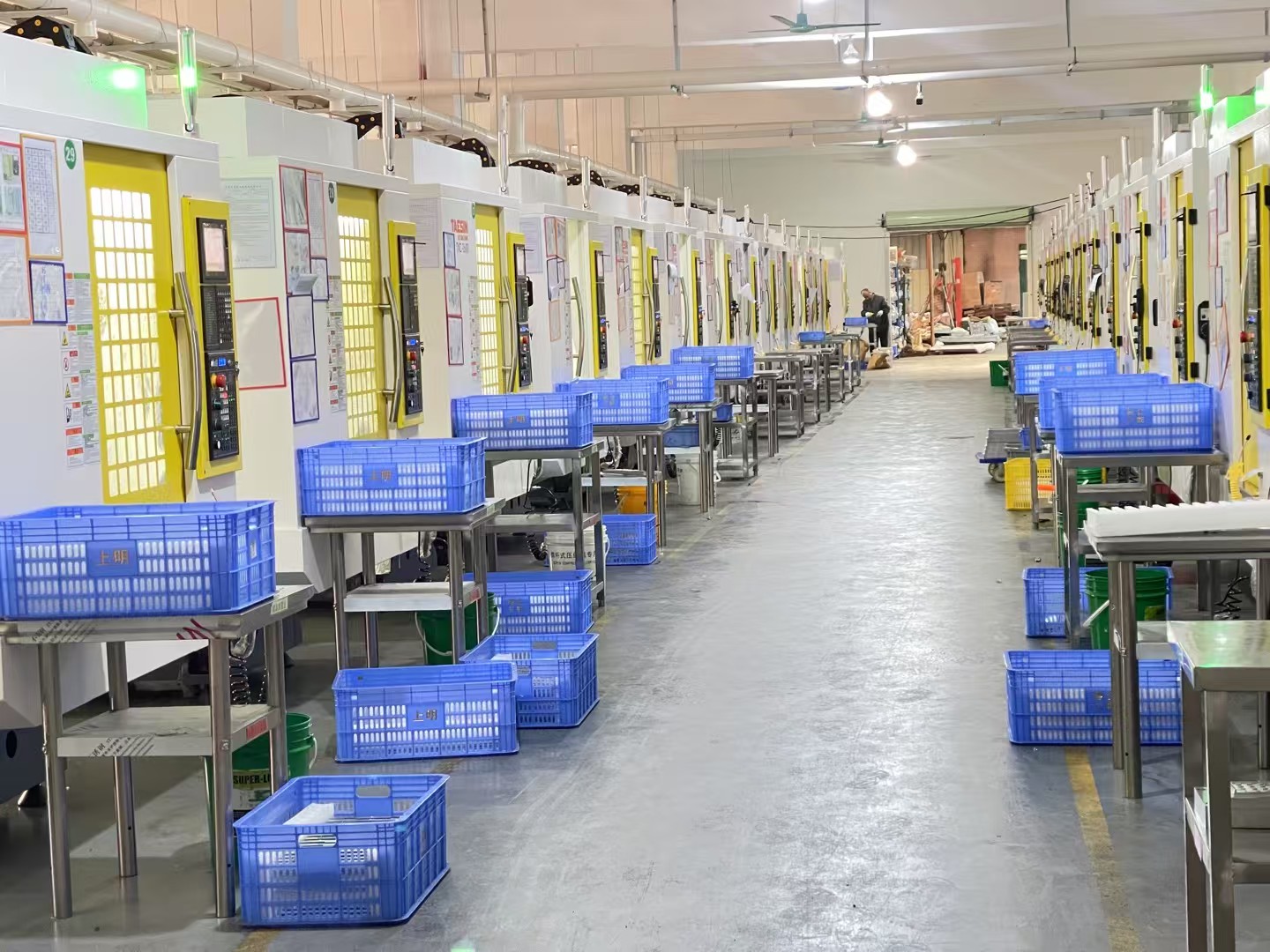
Read Their Shop Floor Before You Read the Quote
A quote is just paper until you stand where the work happens. Walk the floor before you read the numbers. Watch how materials move, how tools are stored, how long a setup actually takes. That tells you more about real cost than any line item ever will.
Look for the clutter nobody puts in a proposal: the second shift reworking first shift's mistakes, the machine that breaks every third job, the guy who has to walk across the building for a single bolt. Those hidden minutes are what separate a cheap quote from an honest one.
If the shop floor looks like it respects the process, the quote will respect your deadline. If it doesn't, the price doesn't matter.
Ask Which Materials They’ve Actually Machined This Month
Most shops have a long list of materials they say they can cut, but that list often includes jobs they haven't touched in years. Ask for the materials they've run in the last 30 days—not just what's on their website. A shop doing mostly aluminum and mild steel right now won't magically be dialed in for Inconel or PEEK even if they did a small job back in 2019.
You'll get more useful answers if you pin them down on specifics. Instead of "yes we machine stainless," ask which grades. 303 and 304 behave differently than 316 or 17-4, and a shop that's only cut 303 won't necessarily handle 17-4's hardness well. Same goes for plastics—ask about the exact types they've run recently, whether acetal, nylon, or UHMW, and at what batch sizes.
This question also reveals honesty. A shop that can't name any recent jobs in a material you need is either rusty or bluffing. Either way, that's a risk you'd rather catch before sending over a drawing. Keep the question casual, but listen carefully to the answer.
Look for Tolerance Claims Backed by Inspection Reports
In precision manufacturing, a stated tolerance is only as credible as the data behind it. Suppliers often advertise tight dimensional limits, but without documented inspection results, those claims remain unverified. A tolerance backed by a thorough inspection report demonstrates that the supplier not only understands the requirement but has also proven their capability on actual parts. This shifts the evaluation from theoretical promises to measurable evidence.
Requesting inspection reports for critical tolerances helps separate reliable partners from those who simply repeat standard specifications. A detailed report typically includes measurement methodology, equipment used, and the actual values obtained from a sample of produced parts. When a supplier is willing to share this level of detail, it indicates confidence in their processes and a commitment to transparency. Conversely, hesitation or vague responses may signal that the claimed tolerance is aspirational rather than routinely achieved.
Integrating this verification step into supplier selection reduces the risk of receiving parts that fail during assembly or in the field. It also encourages a culture of accountability, where tolerance claims are treated as testable statements rather than marketing copy. Over time, consistently backed claims become a hallmark of a trustworthy supply chain, saving both time and cost associated with rework or late-stage quality failures.
Measure Response Time, Not Just Price
A low sticker price can hide a costly delay. When a supplier takes three days to answer a simple question, your project timeline stretches, and those lost hours often translate into real money. Price tags are easy to compare side by side; response times are not, yet they quietly shape whether a deal feels smooth or like a constant uphill push.
Start by tracking how long it takes a vendor to acknowledge a request, then how long until the actual resolution lands in your inbox. Don't stop at the sales pitch — ask current customers about their average wait after signing the contract. A provider who replies in minutes during the trial but vanishes once the invoice is paid is far more expensive than the numbers suggest.
Choosing speed over a slightly lower rate can protect your own deadlines and reduce the mental load of chasing updates. In practice, a supplier who responds within an hour often prevents small issues from becoming full-blown emergencies, saving you the cost of late deliveries, idle teams, and last-minute panic buying.
Test Their Prototype-to-Production Handoff
A prototype often hides shortcuts that only surface when code moves beyond a demo. Watch how someone describes the path from that working mockup to a deployable service. Do they talk about retry logic for third-party calls, schema migrations that won't lock a table, or how secrets get injected without living in the repo? These details reveal whether they've carried real traffic before or just assembled components for a pitch.
Push for a dry run of the release steps, not a slide deck. Ask what would break if the new endpoint received ten times the expected load, or what happens when the feature flag is flipped off mid-rollout. Strong teams tend to mention pinned dependencies, backward-compatible API changes, and a rollback path that doesn't require restoring a database from a week-old backup. Weaker handoffs usually skip straight to deployment and hope nothing fails.
One useful test is to interrupt the handoff with a contrived incident: the payment provider returns malformed data, or a required environment variable is missing in staging. The response tells you more than any architecture diagram. People who have managed production systems will trace the failure through logging and metrics, then adjust the runbook before the next attempt. Those who haven't will focus on getting the demo working again rather than hardening the boundary between prototype and live traffic.
Find Out Who Runs Your Job When the Main Machine Goes Down
When your primary server hiccups or goes completely dark, the real question isn't just whether the job will restart—it's who or what steps in. In many modern setups, that role falls to a secondary node, often paired through heartbeat protocols or cluster managers like Pacemaker or Kubernetes controllers. But the less glamorous truth is that sometimes it's a human on call, bleary-eyed at 2 a.m., manually triggering a failover script someone wrote three years ago and hoped never to use.
To find out for sure, check your process supervisor configuration. Systemd units, monit rules, or even a simple cron watchdog might be silently ready to promote a standby. Look for terms like `OnFailure=`, `restart=always`, or quorum-based election logic. If you don't see any of that, the answer might be nobody—meaning your job simply waits until someone notices the gap in the logs.
A practical test is to block the primary's network interface for ten seconds and watch what happens. If a backup takes over seamlessly, you'll see the service stay alive. If nothing does, you've just discovered your real single point of failure. That discovery, uncomfortable as it is, beats finding out during a peak load at 3 p.m. on a Tuesday.
FAQ
Pay attention to how they communicate before you even send a drawing. A good shop will ask about the part's function, expected quantities, and surface finish needs. Check if they offer design-for-manufacturing feedback without being prompted, and whether they document their inspection process. The way they handle a simple quote request often tells you more than their equipment list.
Ask for a capability study or a sample part that matches your tightest tolerance. You can also request a first article inspection report from a previous job with similar geometry. Some shops will run a small trial batch at a reduced rate if you commit to a larger order later. Look for evidence of CMM reports, calibration records, and their approach to tool wear compensation.
It depends on what you value most. Local shops often give you faster turnaround, easier communication, and simpler logistics, but unit costs can be higher. Offshore options may cut piece price significantly, yet you will face longer lead times, time zone delays, and potential quality control gaps. If your design is still changing or requires frequent revisions, stay local. For stable, high-volume parts, offshore might work.
A trustworthy supplier will offer material certificates that trace back to the mill, showing heat numbers and chemical composition. For critical parts, ask for full traceability from raw stock to finished piece. They should also be willing to discuss how they store and label different alloys to avoid mix-ups. If they hesitate to share this paperwork, treat that as a warning sign.
Do not just ask if they offer these services. Dig into their process: do they do finishing in-house or outsource it, and how do they inspect the result? A good partner will know the exact masking requirements, thickness tolerances, and potential dimensional changes caused by plating or coating. Ask for sample parts with the same finish, and check for consistent color, edge coverage, and surface roughness.
Watch out for quotes that are suspiciously low or arrive within minutes with no questions. A real machinist will often point out impossible features, suggest alternative tolerances, or ask about material availability. Red flags include vague line items, no mention of setup fees, unrealistic lead times, and refusal to provide a breakdown. Also be wary of any supplier who demands full payment upfront for a first order.
Some can, but many cannot do both well. A prototype shop is optimized for speed and flexibility, often using manual setups and quick turnarounds. Production requires process stability, automated inspection, and tight cost control. Ask about their capacity for repeat orders, whether they use dedicated fixtures, and how they track process capability over thousands of parts. If they only talk about making one or two pieces nicely, that is a clue.
Ask for their ISO or AS9100 certification status, but do not stop there. Request a recent internal audit summary, ask about their non-conformance rate, and have them explain how they handle a rejected batch. A video walkthrough of their inspection area or a live call showing a CMM run can reveal a lot. Client references from a similar industry are also valuable, especially if you can ask about repeat order consistency.
Conclusion
Choosing a CNC machining supplier goes far beyond comparing unit prices. Start by looking at the shop floor itself, not just the quote. A clean, well-organized workspace with clear material staging, tool management, and machines that aren’t all idle tells you more about reliability than any brochure. Ask the shop which materials they actually machined this month, not what they list on a capabilities sheet. A supplier who just ran 316 stainless, PEEK, and 7075 aluminum for real orders will understand the quirks of each far better than one working from generic data sheets. When tolerances matter, don’t accept a simple “we hold ±0.005 mm” claim. Request recent inspection reports, CMM data, or SPC charts that show how consistently they hit those numbers across a batch, not just on a first article.
Supplier responsiveness often predicts how problems get solved later. Measure how quickly they return quotes, answer technical questions, and flag design risks. A slightly higher price from a shop that responds in hours can save weeks downstream. Also test the prototype-to-production handoff before you commit. Ask how they transfer a proven fixture, toolpath, and quality plan from a five-piece prototype run to a 500-piece production run. Finally, find out who takes over your job when the main machine breaks down. The right partner will have cross-trained operators, backup machines, or a clear contingency plan, so your delivery date doesn’t depend on a single spindle staying healthy.
Contact Us
Contact Person: Mason Lv
Email: [email protected]
Tel/WhatsApp: +86 13027998452
Website: https://www.peakfastentech.com