

Choosing the Right OEM Swiss-Type Machine Company for High-Volume Precision Parts
2026-07-15
Navigating the world of high-volume precision parts can feel like a maze. You need a partner who does more than just cut metal—someone who understands your exact specifications and delivers consistency under tight deadlines. That’s where WINNRUI CNC comes into play. As a seasoned OEM Swiss-type machine company, they bring the kind of speed and precision that today’s demanding projects require. But not all Swiss machining specialists are created equal. In this post, we’ll unpack what truly matters when selecting a manufacturing ally, so you can avoid costly missteps and secure reliable, high-quality output from the start.
The Overlooked Factor That Derails High-Volume Swiss Machining Projects
In high-volume Swiss machining, chip control rarely gets the attention it deserves until it's too late. Operators and engineers often focus on speeds, feeds, and tool life, overlooking how stringy or tangled chips can bring production to a standstill. Unlike conventional turning centers, Swiss machines have extremely confined cutting zones, where even small chip accumulations can cause tool breakage, surface finish defects, or damage to the guide bushing. The moment chips start wrapping around a tool or clogging the chip conveyor, cycle times balloon and unattended shifts become impossible. Addressing this early—through high-pressure coolant, pecking cycles, or specialized chip breakers—can transform a temperamental job into a light-out success.
It’s not just about picking the right insert geometry; the entire setup must be tuned for chip evacuation. Barstock material variations, coolant concentration, and even the orientation of the machine’s chip pan play a role. Many shops find that chips from a new batch of 316 stainless will behave differently than the previous lot, yet they rarely adjust parameters to compensate. A proactive approach means monitoring chip formation during first-off inspections and being willing to tweak tool paths on the fly. Tiny changes to depth of cut or dwell times can break a continuous ribbon into manageable fragments without sacrificing output. Once teams start treating chip management as a primary process variable rather than an afterthought, they see dramatic gains in spindle uptime and part consistency.
What makes this factor so dangerous is its invisibility in planning stages. Quoting engineers look at cycle times and material costs, but they seldom account for the minutes lost to clearing cobwebs of swarf between parts. Over a million-piece run, those seconds accumulate into days of downtime. Integrating high-performance coolant delivery systems and chip conveyors designed for fine, needle-like chips isn’t cheap, but it’s far less expensive than scrapped components or a missed delivery deadline. The shops that thrive in competitive Swiss machining markets are the ones that have learned to respect the humble chip—and keep it firmly under control.
Decoding Precision: What 'Tight Tolerances' Actually Demand from a Shop
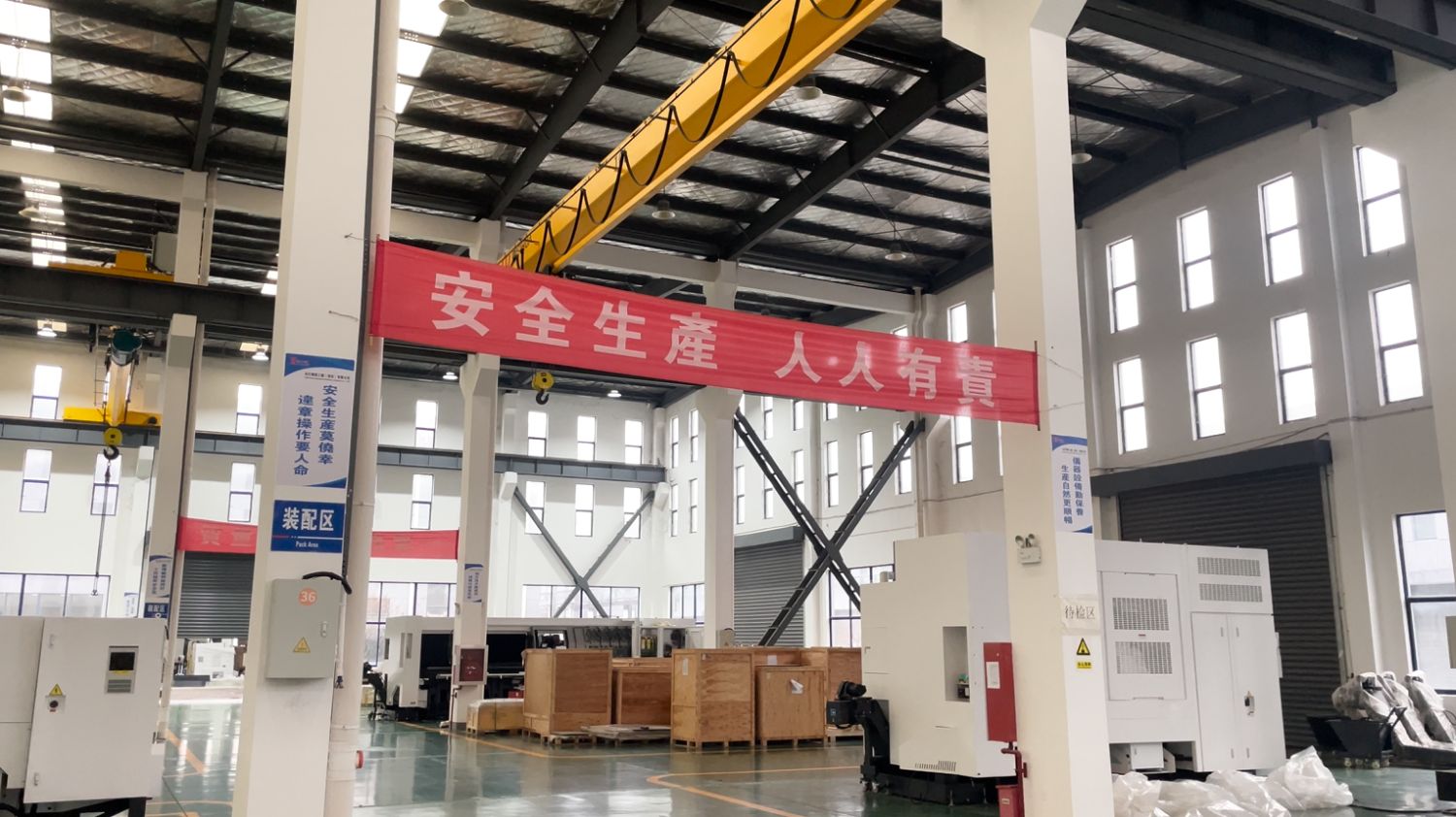
Hitting tight tolerances isn't just about owning a high-end machine tool. It demands a relentless obsession with environmental control – think temperature swings of a few degrees throwing off microns, or floor vibrations from a nearby press turning a precision bore into scrap. The shop itself becomes a metrology lab: air handling, thermal stability, and even the placement of lights matter more than most realize. Without this foundation, even the finest spindle won’t save you.
But the real challenge goes deeper than climate. It’s about process discipline that borders on ritual. Tool wear must be tracked and compensated for not in hours, but in minutes of use. Fixturing isn’t just holding a part; it’s about managing clamping forces that can spring a workpiece by tenths. Every operator becomes an applied physicist, constantly balancing material behavior, cutting dynamics, and metrology feedback. One missed temperature soak cycle or a hurried probe routine, and the tolerance band shrinks to nothing.
Then there’s the hidden cost: inspection becomes a parallel manufacturing process. When you’re holding a true position of a few thousandths, the CMM isn’t a final checker – it’s a constant companion, guiding in-process adjustments. The paperwork trail swells, but not for vanity; it’s the only proof that the part wasn’t a fluke. In shops that thrive on tight tolerances, the entire culture shifts from “making parts” to “orchestrating certainty.”
Capacity Claims vs. Reality: Avoiding Bottlenecks Before They Start
Providers often roll out impressive capacity figures that look bulletproof in a brochure, but the moment real traffic patterns hit, those numbers can crumble. It’s not just about raw bandwidth or server count—peering arrangements, upstream congestion, and even the age of hardware play huge roles that shiny spec sheets conveniently omit. When a single upstream provider gets saturated, even a 10 Gbps port can suddenly feel like dial-up, and that’s exactly the kind of reality check that topples services during a surge.
What makes this even trickier is how differently workloads behave from the synthetic tests used for marketing. A claim of “100,000 IOPS” means little if your application generates a spikey, write-heavy pattern that saturates the storage controller’s queue before reaching half that number. We’ve seen it repeatedly: a platform that benchmarks fine under a steady load buckles under bursty, real-world conditions because the backend wasn’t designed for the actual access profile, not the idealized one.
Catching these mismatches early calls for proactive modeling that digs into failure domains and shared resources. Instead of trusting a data sheet, map out exactly how traffic flows through your provider’s infrastructure, identify the nondisclosure points like oversubscription ratios or shared SAN links, and stress-test those paths with production-like chaos. A simple “what happens if this router fails or this CDN node goes dark” scenario often reveals hidden choke points long before they become emergency calls at 3 a.m.
Material Matters: Why Your Supplier’s Alloy Experience Changes Everything
When a project calls for demanding performance, the raw material itself often becomes the quiet hero. You can have the most advanced design on paper, but if the alloy forming your components isn't up to the challenge, everything collapses. It's not just about marking a grade on a spec sheet—seasoned suppliers understand that two ingots of the same nominal alloy can behave like distant cousins depending on melt practice, trace elements, and solidification history. That's why the real difference lives in the hands of someone who has seen a 300-series stainless crack unexpectedly under chloride stress, or watched a tool steel lose its edge because of a tight but overlooked grain boundary precipitate.
Deep alloy experience means your supplier anticipates failure before you ever test a part. They know that the nickel superalloy that worked beautifully in a turbine spinner may creep too much if you copy it over to a furnace fixture—even if the temperature rating seems fine on the datasheet. Mature metallurgical judgement guides raw stock selection, forging temperature windows, and post-processing that can't be captured by a generic standard. Instead of trusting that a certificate of analysis is the full story, they probe for what's not on the cert: the distribution of inclusions, the residual stresses from straightening, or the subtle decarburization layer that will ruin fatigue life.
Ultimately, it boils down to risk. An inexperienced supply chain buys an alloy name; a seasoned one buys a behavior. When your supplier's team has spent decades puzzling over fractured parts and misunderstood heat treat cycles, they protect you from hidden traps that slip past textbook knowledge. They help you choose a slightly modified composition that nobody markets but that solves your corrosion-fatigue problem, or they insist on a specific hot-working schedule that keeps grain size in check. That kind of instinct doesn't appear on a quote comparison. It's the difference between a component that merely meets the drawing and one that thrives in the real world long after others have quietly cracked apart.
Beyond the Machine: Where Process Control Makes or Breaks Consistency
Even the most advanced equipment is only as reliable as the systems that govern its operation. When we talk about consistency in production, the conversation quickly shifts from hardware specifications to the subtle, often undervalued layer of process control. It’s the difference between a machine running and a machine running right—every cycle, every shift. Without rigorous control strategies, identical inputs can yield wildly different outputs, eroding trust in the very technology meant to guarantee uniformity.
True process control isn’t about setting parameters and hoping for the best. It demands continuous feedback loops, adaptive adjustments, and an intimate understanding of the material behaviors that no data sheet can fully capture. Here, the human element meets sensor precision: operators who interpret tiny shifts in viscosity or temperature, and automated systems that course-correct faster than any individual could. When these layers work in harmony, consistency becomes a built-in feature rather than a constant battle.
The failures, though, are instructive. A slight drift in a PID controller, a delayed calibration, or a sensor that’s slowly fouling—these aren’t dramatic breakdowns, but they chip away at quality just the same. The real art lies in anticipating those drifts, designing control logic that is resilient to minor disruptions, and recognizing that the machine is never independent of the process that surrounds it. In the end, consistency is less about the nameplate on the equipment and more about the invisible, disciplined choreography of control.
The Partnership Litmus Test: Signals a Swiss Shop Is Built for Your Scale
When a Swiss agency starts asking about your five-year roadmap instead of just your next campaign, pay close attention. The best partners probe whether your internal team can absorb the strategies they’ll leave behind. They’ll want to understand not just your growth targets but the scars from previous agency relationships—what fell apart, when, and why. This isn’t idle curiosity; it’s them checking if they can truly intertwine with your operations rather than just shipping deliverables.
Budget conversations become a surprisingly reliable signal. A partner ready for your scale will push back if you’re allocating too little to data infrastructure, even if that means a smaller creative retainer for them. They’ll propose milestone-based scoping that evolves quarterly, not rigid annual contracts that trap both sides in outdated assumptions. Watch for how they handle the unexpected—when a competitor disrupts your category, do they send a reactive pitch deck or do they resurface a pre-agreed crisis protocol you co-authored months ago?
The litmus test often hides in the talent bench. Ask to meet not the rainmakers, but the practitioners who’d work on your account daily. Can they articulate the last time they killed a beloved idea because it didn’t serve your specific growth model? A shop that’s scaled successfully before will have specialized roles—a relationship architect, a knowledge transfer lead—that sound made up until you realize they prevent the slow decay most partnerships suffer after the honeymoon phase.
FAQ
Beyond basic cost-per-part, you want to dig into their machinery lineup and how it aligns with your component’s geometry. A partner running newer Swiss-type lathes with live tooling, sub-spindles, and high-pressure coolant is better equipped to consolidate operations and reduce cycle times. Equally important is their process engineering team—do they proactively suggest design for manufacturability tweaks that cut waste without compromising function? You should also examine their track record with high-mix or dedicated high-volume runs, because the floor layout and material flow for 100,000 pieces a month is different from a job shop setup. Ask about their cutting tool management strategy and how they handle chip evacuation on long-running jobs—these are the real indicators of whether a supplier truly understands high-volume Swiss production.
Request specific case studies where they held tolerances under ±5 microns over a large batch. But more telling than static Cpk data is how they compensate for tool wear in real time—do they use in-machine probing or post-process gauging with automatic offset updates? For complex geometries like cross-drilled holes or milled hexes, ask about their sub-spindle and tool zone arrangement. A capable shop will discuss how they balance work to avoid bottlenecks across main and sub-spindle operations. See if they regularly run difficult materials like Inconel or titanium, because that calls for vibration-dampened setups and specialized toolpaths. If they can show you a portfolio of multi-axis parts with true position requirements under 0.02 mm, you’re likely dealing with a shop that knows the limits of their machines and how to stay within them.
Material behavior under high-pressure cutting varies enormously, and a partner with deep experience in your specific alloy or plastic will have dialed-in feeds, speeds, and tool coatings that prevent surprises like built-up edge or surface tearing. For instance, a shop accustomed to 304 stainless may struggle with 17-4PH’s work-hardening nature if they lack the right low-friction tool coatings. In high-volume settings, even barstock surface finish and temper uniformity affect consistency across thousands of parts. The best suppliers work with trusted mills and maintain traceability from heat lot to finished batch, so if a quality drift appears, they can isolate the material cause quickly. They should also be versed in your required post-process treatments—like passivation or electropolishing—and how material chemistry influences those outcomes.
ISO 9001 or 13485 certificates are a baseline; you need to see how they live those standards day-to-day. Request a walkthrough of their inspection room, paying attention to whether they have non-contact measurement systems like vision and profilometry for tiny features, or only legacy CMMs. In high-volume Swiss work, in-process verification is critical—look for automated laser micrometers or air gauges on the machine that flag tolerance drift immediately. Ask about their sampling plan: a defensible approach might be first piece plus every nth piece, with tool-change checks triggered by count rather than time. Check how they handle nonconforming parts—do they have a closed-loop corrective action process that feeds back into setup sheets? Finally, verify that they maintain calibration records and perform gage R&R studies on key measurement systems.
In just-in-time supply chains, a supplier delivering 10,000 parts a day late is as bad as a batch failure because it halts your assembly line. Real reliability comes from capacity buffering and schedule visibility, not optimistic quotes. Ask for their on-time delivery data over the last 12 months for similar volume programs—not just a generic metric. Evaluate their supply chain resilience: do they have multiple sources for carbide blanks and barstock, or does a single vendor hold them hostage? Look for a partner that offers a production dashboard or EDI integration so you can see work-in-progress and raw material inventory in near real-time. Crucially, assess how they handle disruptions—a company with cross-trained operators and spare spindles can absorb a breakdown without catastrophic delay.
The minute a Swiss machine’s chip tray is emptied, the clock starts on operations like degreasing, deburring, heat treating, or plating. Consolidating these under one roof eliminates shipping risk and schedule gaps. A forward-thinking OEM partner will have thermal deburring or electrochemical edge finishing to remove micro-burrs from cross-drilled intersections without affecting tolerances. If your part requires anodizing or coating, ask if they manage that process through captive lines or tightly audited partners—either way, they must own the quality outcome. Other extras like laser marking, assembly, or custom packaging can reduce touch points at your facility. The real value add, though, is when their engineering team suggests a finish that improves part life or a cleaning process that exceeds your cleanliness spec, proving they think beyond the blueprint.
A supplier running at 85% utilization on Swiss machines today might seem efficient, but leaves no room for your volume ramp-up. You need to understand their expansion philosophy—do they invest in additional spindles ahead of demand, or wait for a signed PO? Scalability also hinges on floor space and workforce. A shop with a structured apprenticeship program is more likely to have trained operators ready when new machines arrive. Ask about their track record of absorbing sudden demand spikes: how fast did they add a second shift, and what yield impact occurred? For years-long programs, a partner should present a capacity roadmap showing how they’ll replicate your dedicated cell, including any planned maintenance windows that reduce output. Technology scaling matters too—over five years, newer machine models with faster control systems can boost throughput, and your contract should ideally capture those gains.
Transparency starts before the quote: a detailed proposal breaks down tooling, material, and labor costs rather than presenting a single blurry number. Look for a partner willing to share open-book costing with agreed-upon margins, so you both understand what drives price changes. Contract flexibility is key—can you adjust delivery schedules without penalty if your demand fluctuates by 20 %? A trustworthy partner will propose a mutual risk-sharing clause around raw material price swings instead of a rigid surcharge. On the communication side, they should assign a dedicated program manager with the authority to resolve issues fast, not a sales rep who forwards emails. Regular touchpoints with a structured agenda—covering quality metrics, upcoming tooling needs, and process improvements—demonstrate they’re invested in the program’s ongoing health, not just the next shipment.
Conclusion
Selecting a Swiss machining partner for high-volume precision parts isn't just a spec-sheet showdown. The real differentiator lives in how a shop manages the subtle, often overlooked factors that can derail long runs. Take tolerances: holding ±0.0002" on a single part is one thing; delivering that across 50,000 pieces without drift is another challenge entirely. Material expertise is equally pivotal—whether it's titanium's tool-wrecking tendencies or the chip-curl headaches of 316 stainless, a supplier's deep alloy know-how directly shapes cycle times, scrap rates, and your bottom line. Then there's the capacity illusion. Rows of idle Swiss machines look impressive, but if scheduling isn't bulletproof, you'll face bottlenecks the moment demand spikes. The shops worth trusting will show you how they balance loads, not just count spindles.
Beyond the hardware, process control separates consistent output from a batch of surprises. Look for shops that treat coolant concentration, tool wear monitoring, and in-process inspection as obsessive rituals—these are the invisible threads holding repeatability together. Finally, put the partnership to the test. A Swiss shop built for your scale won't just quote and ship; they'll flag design tweaks for manufacturability, share live production metrics, and act like a natural extension of your team. That kind of proactive transparency signals they're in it for the long haul, not just the next order.
Contact Us
Contact Person: Tim
Email: [email protected]
Tel/WhatsApp: +86 15522553731
Website: https://www.winnrui-cnc.com/