

China Oil in Water Emulsifier Supplier Meets Your Formulation Needs
2026-10-06
Finding the right oil-in-water emulsifier supplier in China often feels like navigating a maze of generic promises. But when your formulation demands stability, clarity, and cost-efficiency, the choice matters more than you think. MingYa approaches this challenge differently—not with recycled spec sheets, but with a deep understanding of how emulsifiers behave in real-world conditions. Whether you're fine-tuning a light lotion or scaling up a heavy-duty industrial fluid, the right partner turns a formulation headache into a competitive edge. Here's what to look for before you commit.
Why Emulsion Stability Starts with Supplier Choice
Emulsion stability isn't merely a formulation puzzle; it hinges on what arrives at the loading dock. A supplier with loose specs or inconsistent sourcing can shift particle size distributions just enough to break a product that performed perfectly in the lab. That variability often shows up weeks later as creaming, phase separation, or color drift—long after the batch has shipped.
Choosing a supplier means auditing more than price. It means verifying how they handle incoming oils, how tightly they control moisture in surfactants, and whether their lot-to-lot rheology data actually matches your process window. A reliable partner will share those records before you ask, and flag changes in feedstock origin before they become your quality problem.
The strongest emulsion teams treat supplier selection as part of the formulation itself. They don't just buy ingredients; they build a narrow supply chain with defined critical quality attributes. When a new surfactant or oil arrives, it shouldn't require reformulation heroics—it should drop into the existing process with the same interfacial behavior as the sample that earned approval.
Getting the HLB Right Without Trial and Error
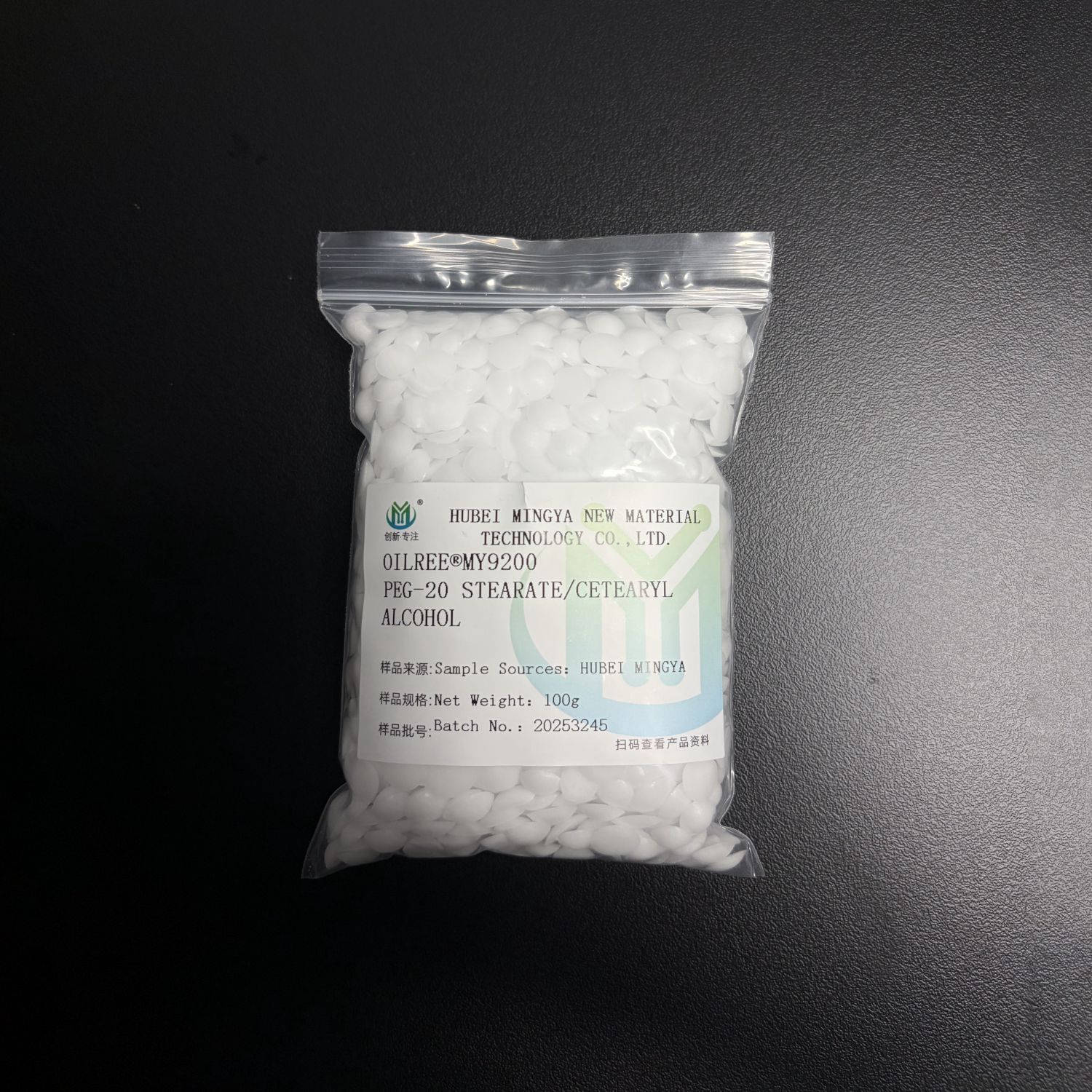
Formulators often assume that matching a surfactant blend to an oil's required HLB must involve a tedious series of emulsion tests, but the necessary value can be pinned down more directly by consulting published HLB requirement tables for common oils and waxes. These tables list experimentally determined required HLB ranges for stable o/w or w/o emulsions, allowing you to select a starting point without running a single batch. When a new or modified oil is involved, additive group contribution methods—such as those derived from Davies' scale—can estimate the required HLB from the molecular structure of the oil phase, accounting for functional groups like esters, alcohols, and ethoxylate chains.
A more reliable shortcut is to use instrumental screening, such as turbidity or conductivity measurements during surfactant titration, to identify the phase inversion point, which corresponds closely to the optimal HLB for that oil-water system. Rather than relying on trial and error, you can plot conductivity against increasing HLB and read the sharp change that marks inversion, giving a reproducible target for the formulation. This approach reduces material waste and shortens development time, particularly when dealing with complex natural oils or mixed emollients whose required HLB is not readily available in reference data.
How a Chinese Supplier Handles Variable Oil Phases
In practice, a Chinese supplier rarely expects a single consistent grade. Crude arriving from different fields can swing between light, waxy, and heavy phases within the same week. Instead of forcing one processing recipe, the operations team keeps multiple storage tanks in rotation and uses inline density and viscosity meters to route each batch. That way a high-pour-point cargo never sits in an unheated line long enough to gel.
When a shipment shifts from a light, low-sulfur phase to a heavier, high-acid one, the supplier adjusts de-emulsifier dosing at the inlet manifold rather than downstream. Operators watch live BS&W trends and alter heat exchanger bypass valves to keep the separation train stable. It is less about a fixed procedure and more about reading the phase behavior early.
For customers, the supplier often blends variable phases into a narrower export spec. A small side-stream of heavy crude can be mixed with a lighter phase to hit the agreed viscosity, but only after lab tests confirm asphaltene compatibility. If the blend risks sludge, the supplier isolates the tank and sells it as a separate grade, protecting the main cargo quality.
What to Expect from a Formulation-Focused Partner
A formulation-focused partner should treat your molecule as a set of physical and chemical constraints rather than a generic fill-and-finish job. Early conversations should dig into the target product profile, patient population, and manufacturing site realities before any excipient screen begins. You can expect them to raise uncomfortable questions about solubility, permeability, and solid-state stability because those issues shape every downstream choice.
Beyond benchtop success, they should design for scale from the first batch. That means selecting granulation or blending parameters with an eye on equipment differences, not just what works in a lab mixer. When a candidate formulation fails a stress study or shows a new polymorph, the partner should come back with data and a revised plan, not a delay. Their value shows in how they connect material properties to tablet hardness, dissolution, and shelf life.
Transparency is the underrated part. Expect raw stability data, out-of-spec observations, and honest timelines instead of polished slide decks. A good formulation partner will adjust the plan as results come in and keep your analytical and regulatory colleagues involved before the formulation is locked, which prevents costly backtracking later.
Keeping Batch Quality Steady as You Scale
Scaling production often feels like a straightforward numbers game until you notice the subtle drift in your finished product. Batch quality starts to wobble when raw material lots vary, machine calibration shifts under heavier load, or line operators develop their own shortcuts. Instead of chasing consistency after the fact, build small checkpoints into each stage of the process. A five-minute density test or a visual color swatch comparison can catch deviations early, way before they snowball into a rejected batch.
Real-time feedback beats end-of-line inspection every time. When you scale, the gap between making an adjustment and seeing the result gets longer, which means you need tighter control loops at critical steps. Install simple sensors or schedule frequent grab samples at the mixer, the filler, and the packaging station. The goal is not to automate everything overnight, but to create a rhythm where each shift can see the current state of quality and react without waiting for a weekly lab report.
Write down every adjustment you make, including the ones that did not work. A scaled-up line has more variables than any single person can hold in their head, so a living log of process tweaks becomes your best scaling tool. When the next raw material change hits or a new operator joins, that log tells you what to avoid and what to reinforce. Keeping quality steady as you grow is less about heroics and more about making your hard-won knowledge visible to the whole team.
When Customization Matters More Than Off-the-Shelf
There's a quiet frustration in forcing a ready-made solution to fit a workflow it was never designed for. Off-the-shelf options promise quick wins, but they often come with hidden friction: extra steps, workarounds, clunky integrations. Customization starts with the actual problem, not the vendor's assumptions about it. It means every button, field, and report reflects how your team already thinks and operates. That kind of alignment isn't a luxury; for many teams, it's the difference between a tool people avoid and one they reach for without being told.
The real test usually arrives weeks or months after launch. A generic product might solve the obvious 80 percent, but the remaining 20 percent is where the daily friction lives. Those small gaps—an approval step missing, a data field labeled wrong, an export format that doesn't match—compound quickly. Custom-built or deeply configured solutions let you absorb those edge cases instead of documenting them as 'known limitations.' Over time, that reduces the need for manual patches and makes the tool feel invisible in the best way.
It's not that off-the-shelf never fits. It's that when a process is central to your operations or differentiates how you serve customers, borrowing someone else's default is a quiet risk. Customization carries a higher upfront cost, but it pays for itself in fewer support tickets, fewer detours, and less mental overhead. The choice isn't really between buying and building; it's between adapting your workflow to a product and adapting a product to your workflow.
FAQ
Beyond unit price, look at batch-to-batch consistency, whether they can adjust HLB values to match your oil phase, and if they offer technical support during scale-up. A reliable partner will share stability data and be transparent about raw material sourcing.
Start with the required HLB of your oil phase and the emulsion's intended viscosity and pH range. Then talk to the supplier about whether a single emulsifier or a synergistic blend works better. Many formulators overlook how the emulsifier interacts with preservatives or active ingredients.
We routinely supply formulators in personal care, agrochemicals, metalworking fluids, and emulsion polymerization. Each sector has different demands, so we keep a broad portfolio including ethoxylates, polymeric emulsifiers, and naturally derived options.
Yes. If a standard product doesn't meet your stability or sensory targets, we can adjust the surfactant ratio, recommend a co-emulsifier, or develop a tailored blend. We usually request a sample of your oil phase and target specifications to start.
You receive a certificate of analysis, material safety data sheet, and if requested, a statement of composition for regulatory filings. We also keep retain samples for two years so any quality question can be traced back.
We control key parameters like acid value, hydroxyl value, cloud point, and residual raw material levels. Our production team runs a reference test against your approved sample before release, so your formulation doesn't shift over time.
Beyond lower cost, the advantage is responsiveness. We can adjust production schedules quickly, ship smaller trial batches without long lead times, and provide direct access to our chemists. That flexibility often matters more than price when a formulation deadline is tight.
Conclusion
Sourcing an oil-in-water emulsifier from a Chinese supplier becomes a strategic move once you realize how much emulsion stability hinges on the supplier's technical depth rather than just price. A dependable partner removes the guesswork from HLB selection, drawing on accumulated data across hundreds of formulations instead of forcing you into trial-and-error loops. That expertise proves especially valuable when your oil phase shifts between paraffinic, naphthenic, or ester-based fluids; the right supplier adjusts the emulsifier package not by swapping generic grades, but by fine-tuning the hydrophilic-lipophilic balance and the surfactant blend's molecular weight distribution to match each feedstock's polarity.
Beyond initial matches, a formulation-focused partner keeps batch quality steady as you move from pilot to production, because small differences in reactor shear or cooling rates can quietly break an emulsion that worked in the lab. Customization matters most here: off-the-shelf products rarely survive those transitions without adjustment. That's why a Chinese supplier with in-house synthesis and application labs can tweak the emulsifier's acid number, ethylene oxide content, or co-surfactant ratio to fit your exact process window. The result is not just a stable emulsion on day one, but a supply arrangement that adapts as your base oils and performance targets evolve.
Contact Us
Contact Person: Miss Pei
Email: [email protected]
Tel/WhatsApp: 8618620409116
Website: https://www.mingyachemicals.com/