

China Metal Barware Sourcing: A Practical Guide for Global Buyers
2026-08-24
Sourcing metal barware from China can feel like navigating a maze of endless suppliers—some promising premium stainless steel, others cutting corners on finish and durability. For global buyers, the stakes are high: a single flawed shipment can stall your brand's reputation overnight. That's where a focused, on-the-ground approach makes all the difference. In this guide, we break down the practical steps to vet factories, verify material grades, and negotiate terms that protect your margins. And if you're looking for a partner that already understands the nuances of quality control and timely delivery, APEXAL has been quietly setting the standard for reliable metal barware production. Let's dive in.
Why Chinese Metal Barware Deserves a Second Look
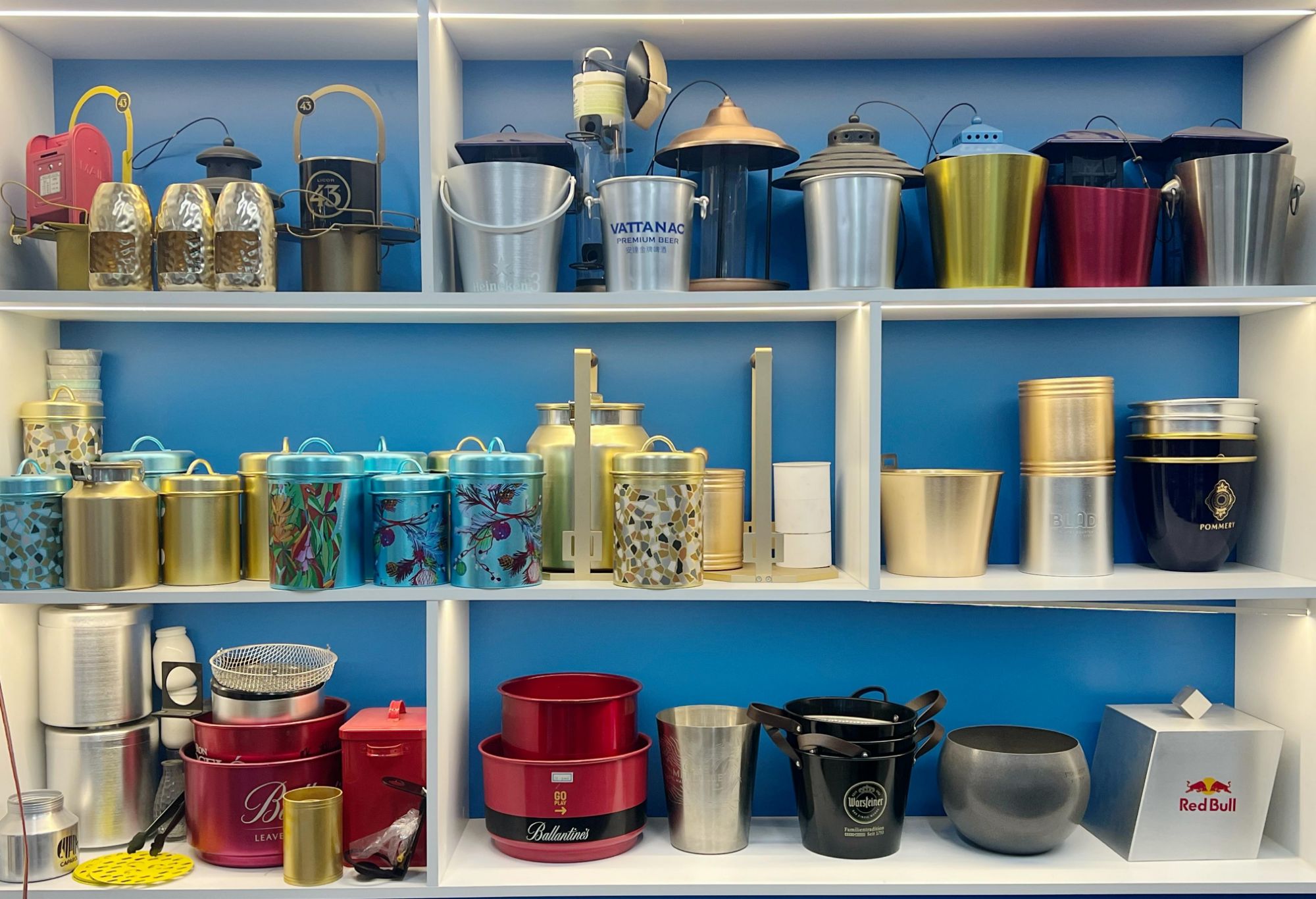
Many people see Chinese metal barware and immediately think of old brass kettles or tin pots, but that image is far behind the current reality. A new wave of designers is pairing centuries-old casting methods with stark, minimal silhouettes, and the result feels both unfamiliar and instantly at home on a modern bar cart. Hand-hammered copper shakers, for instance, skip the dead polish of mass-produced pieces and instead carry subtle ripples that deepen as the metal oxidizes from use.
Price is another point worth noting. European brands often charge a premium for what is essentially the same turning and welding precision that Chinese workshops have honed while producing for international labels. Now that some of those factories and independent artisans are releasing their own lines, buyers get that exacting quality without the markup. A few regional studios still use lost-wax casting, turning out cocktail jiggers and cups with intricate relief patterns that no automated line can replicate.
Mapping the Real Production Hubs (It's Not Just Guangdong)
Ask most people where Chinese manufacturing happens and they will point to Guangdong without hesitation. The Pearl River Delta does carry enormous weight, but treating it as the whole story misses how production has branched out over the past decade. Zhejiang and Jiangsu have long been serious players in textiles, machinery, and precision components, while Shandong anchors heavy equipment and chemicals. Each of these coastal provinces has developed a distinct industrial personality that competes with—and sometimes outperforms—Guangdong in specific niches.
The more interesting shift is inland. Sichuan now builds a large share of the world's laptops and tablets, with Chengdu and Chongqing hosting massive electronics assembly parks. Henan became a smartphone manufacturing heavyweight almost overnight, driven by Zhengzhou's sprawling Foxconn campus. Hubei has turned Wuhan into an optoelectronics and automotive electronics hub. These are not small satellite operations; many employ hundreds of thousands of workers and have pulled entire supply chains westward.
Cost pressure explains part of the move, but so does deliberate infrastructure investment. High-speed rail, expanded airports, and new cargo routes have made inland logistics far more practical than they were a generation ago. Local governments have also been aggressive with land, tax incentives, and worker training programs. Guangdong remains the top destination for components and rapid prototyping, yet the final assembly map now stretches well beyond its borders—and that distribution is only getting more pronounced.
What Your Quality Checklist Is Probably Missing
Most checklists stop at the obvious failure points—wrong dimensions, missing fasteners, tolerance drift. What they rarely include is a line asking who owns the fix when a defect shows up three weeks after release. That gap between detection and ownership is where small issues quietly become warranty claims, and it usually goes unmeasured until a customer brings it back.
A second blind spot is the checklist's own shelf life. Teams treat a signed-off checklist as finished, but materials change, suppliers shift, and a step that once caught a real problem can become ritual. Adding a quarterly review of the checklist itself—what caught something, what never fires, what should be added from recent escapes—keeps it from aging into paperwork.
Finally, there's the habit of checking only what can be seen in the moment. Surface finish, part numbers, torque marks all get attention; the pressure to ship means anything requiring a short functional test under load, or a quick thermal cycle, gets pencil-whipped or skipped. If the checklist doesn't force a few time-based or condition-based checks, it's really a visual inspection that feels like quality control.
Pricing Traps and How to Avoid Them
Most people assume a high original price means a better deal, but that anchor is often invented. Retailers set a “was” price that never actually existed, then slash it to make the discount look irresistible. To avoid this trap, ignore the percentage off and ask what the item is worth to you right now. Check price history on a couple of independent sites or simply wait a day—impulse fades, and so does the illusion of urgency.
Drip pricing is another sneaky pattern: the base price looks low, but mandatory fees, shipping, taxes, or “processing” charges appear only at checkout. Airlines, hotels, and event ticketers lean on this because once you’ve invested time filling forms, you’re less likely to abandon the cart. The fix is to compare final totals, not starting prices. Before you commit, open a second tab and run the same booking to the last step; the gap between advertised and actual cost will reveal who’s playing games.
Subscription traps combine inertia with tiny recurring charges. A free trial converts to a paid plan silently, or a monthly fee hides in an annual contract you forgot to cancel. To protect yourself, set a calendar reminder the day before any trial ends and use a virtual card with a spending limit if your bank offers one. Also review your statements every quarter—small charges are easy to miss and even easier to stop once you call them out.
Building a Supplier Relationship That Survives Peak Season
Most buyers wait until August to start calling suppliers about holiday inventory, and by then they're just another voice in a crowded inbox. The relationships that hold up under pressure are the ones where you've been sending small, steady orders all year and paying them within terms, even when nothing urgent was on the line. That kind of quiet consistency buys you more goodwill than any last-minute promise of future volume.
When the crunch hits, the instinct is to demand more, faster, at the same price. But suppliers have their own bottlenecks, and pretending otherwise just breeds resentment. Instead, share your real forecasts early, even the messy ones, and ask where they see constraints. Sometimes a simple shift in packaging or accepting a partial shipment by a certain date keeps everyone's lines running. After the season ends, take fifteen minutes to send a note about what worked and what didn't—not as a complaint, but as a way to make the next cycle less chaotic for both sides.
The Compliance Details That Save You from Customs Nightmares
Most importers learn the hard way that a missing tariff code or an incorrect country-of-origin declaration can hold a shipment for weeks. One overlooked detail—like failing to match the invoice value with the packing list—turns a routine clearance into a detention that eats your margin. Start by checking the Harmonized System code against the actual product, not what you sold it as, because customs officers compare descriptions physically, not just on paper.
Another common trap is incomplete documentation for free trade agreements. If you claim preferential duty under USMCA or a similar pact, the certificate of origin must list the specific rule of origin met, not just a blanket statement. Keep a master file for each product that includes the material breakdown, manufacturing process, and supplier affidavits—this single habit saves you from frantic back-and-forth emails when the broker asks for proof.
Finally, always declare the correct value based on the transaction, including assists like tooling or molds you provided to the factory. Undervaluing to save duty is a false economy; customs can seize the goods and audit your past entries. A clean, consistent paper trail—from the commercial invoice to the bill of lading—is not overkill, it is the difference between a predictable delivery date and a storage bill that arrives before your cargo does.
FAQ
Ask for their export license, recent third-party audit reports, and a list of current overseas clients. If they hesitate on documentation or can't provide samples within two weeks, treat that as a red flag.
Request mill test certificates for each batch and pay for independent spectro analysis on pre-production samples. A reputable factory will agree to both without charging extra for the certificate.
Edge smoothness, weld polishing, and interior coating evenness are common weak spots. Specify that every rim must pass a cotton-glove snag test and that no sharp burrs are acceptable before shipment.
Yangjiang in Guangdong is the go-to for stainless steel bar tools, while Yongkang in Zhejiang handles more budget-friendly stamped items. For copper or brass pieces, look at factories around Foshan.
Yes, especially if you accept standard shapes and only customize laser engraving. Expect factories to drop from 1,000 units to 300-500 if you pay a 10-15% upcharge or use their existing molds.
Most offer inline inspection at no cost, but you should hire a third-party QC firm for pre-shipment checks. Focus on weight consistency, leak testing for shakers, and pull-force tests on bottle openers.
Start with FOB Shenzhen or Guangzhou so you control freight and avoid hidden inland charges. Once you trust the supplier's logistics chain, switch to DDP for smaller restocking orders.
Conclusion
Many buyers still associate Chinese metal barware with cheap, inconsistent workmanship, but the reality has shifted enough that a second look is warranted. Production isn't confined to Guangdong; Zhejiang's Yongkang area has become a serious hub for stainless steel shakers and strainers, while Shandong offers solid options for zinc alloy and iron pieces. Quality checklists often miss the details that actually cause failures: internal weld smoothness, plating adhesion after repeated dishwasher cycles, and whether the rim of a jigger is rolled rather than sharp-cut. These are the things your customers will notice first, and they rarely show up in a standard AQL report.
Pricing traps usually start with an attractive unit cost that quietly excludes surface treatment, logo engraving, or even proper packaging. Always ask for a line-item breakdown and clarify what happens when material prices fluctuate mid-order. Building a supplier relationship that survives peak season means moving beyond transaction-only emails; share your sales forecasts early, agree on buffer stock for fast-moving SKUs, and visit the factory floor before you commit to large volumes. On compliance, don't wait until the container is already at sea to request FDA, LFGB, or REACH documentation. Many customs delays trace back to missing test reports for coating materials or incorrect country-of-origin markings, which are far cheaper to fix at the factory than at the port.
Contact Us
Contact Person: Milo
Email: [email protected]
Tel/WhatsApp: +86 18621923991
Website: https://www.dgbaide.com