
China LED Therapy: A Practical Guide to Light-Based Skin and Pain Treatment
2026-08-18
What if the same soft glow that helps fade dark spots could also ease the ache in your lower back? That's the promise of LED therapy—a field that has moved far beyond novelty masks and into practical, at-home devices backed by growing research. In this guide, we look at how light-based treatments are being used for skin conditions and pain relief, with a focus on the innovations coming out of China's medical and beauty tech sector. One name worth watching is GUANG TAI, a manufacturer turning clinical concepts into user-friendly tools for everyday wellness.
Light Waves That Work Harder Than Your Moisturizer
Your moisturizer sits on the surface, patching dryness with a layer of hydration that fades by midday. Light waves, on the other hand, work beneath the skin, triggering your own cellular repair systems. Red and near-infrared wavelengths penetrate deep enough to reach fibroblasts—the cells responsible for collagen production—and give them a gentle wake-up call. This isn't a temporary plumping effect; it's a shift in how your skin behaves, one that builds over weeks rather than hours.
Think of your moisturizer as a bandage and light therapy as physical training. One protects the skin from losing what it already has, while the other teaches it to produce more of what's been declining with age. Studies on photobiomodulation show that consistent exposure to specific wavelengths can increase collagen density and reduce inflammation, leaving skin firmer and calmer than any topical alone. The real difference? Your moisturizer stops working the moment you wash it off. Light waves keep your cells working long after the session ends.
Blue, Red, or Near-Infrared? A No-Nonsense Match for Every Skin Issue
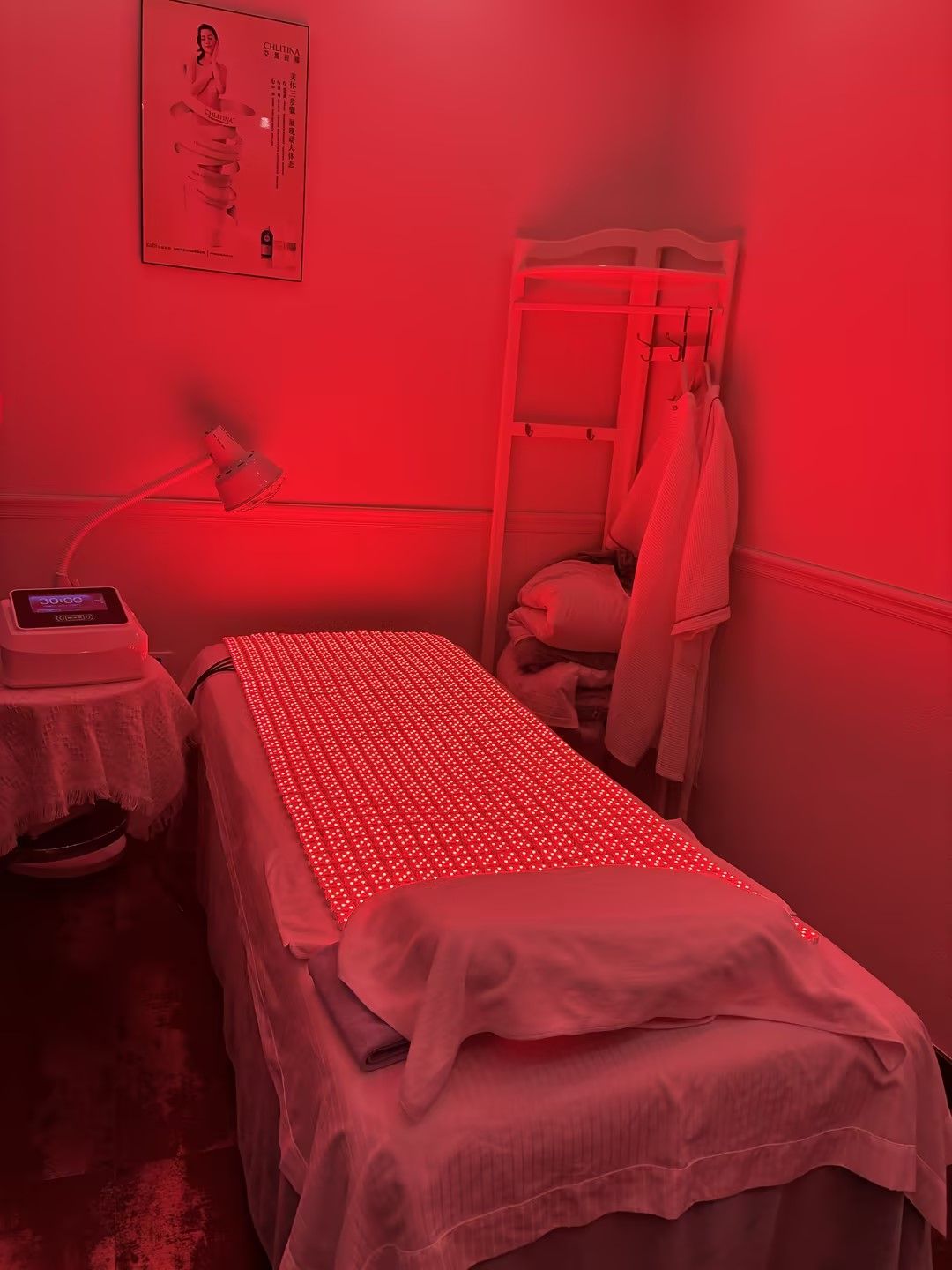
Skip the guesswork. Blue light hammers the bacteria behind breakouts, making it the go-to for active acne and oily congestion. Red light calms irritation and nudges collagen production, so it suits redness, post-inflammatory marks, and early fine lines. Near-infrared goes deeper still, reaching muscle and fascia, which helps with stubborn scar remodeling and deep tissue recovery.
If your main complaint is a sudden breakout or constant shine, start with blue. For a flushed, sensitive face or the first signs of sagging, red delivers the most visible payoff. Save near-infrared for when you're dealing with old pitted scars, deep cystic remnants, or slow-healing areas that topicals can't touch.
You don't need to pick just one. Many devices combine red and near-infrared, but blue is often better as a separate step because it targets bacteria without overloading the skin. Rotate based on what's actually happening on your face each week—not what a marketing chart tells you.
When Your Knee Keeps Aching, This Light-Based Trick Deserves a Try
That dull, nagging ache behind the kneecap has a way of turning stairs into an obstacle course and evening walks into a negotiation. While rest and ice have their place, a growing number of people are turning to a small, handheld device that bathes the joint in red and near-infrared light. The idea sounds almost too simple: sit still for ten minutes while the light penetrates the skin, but the science points to increased blood flow and a quieting of inflammatory signals in the tissues that keep the knee moving.
What makes this approach worth a try is how easy it is to fit into an ordinary evening. You can prop your leg up, press the light against the sore spot, and let the warmth—though it is not a heating pad—do its work while you read or watch something. It does not demand a gym membership, a prescription, or a strict schedule. Over a few weeks, many people notice that the stiffness that used to greet them in the morning has softened, and the knee feels less like a rusty hinge. It will not rebuild cartilage overnight, but for aching knees that just need a nudge in the right direction, light therapy is a low-effort habit with surprisingly steady returns.
From Shenzhen to Your Shelf: What Makes a Chinese LED Panel Worth Trusting
The journey of an LED panel from a Shenzhen factory to your shelf is rarely a straight line. But what separates a panel you can rely on from one that fails in six months isn't just the brand name on the box—it's the quiet discipline behind the scenes. Trust starts with the components you can't see: the quality of the LED chips, the thickness of the aluminum substrate, the consistency of the solder joints. A reputable Shenzhen manufacturer doesn't just assemble parts; they test every batch under heat, humidity, and voltage stress that exceeds real-world conditions. If a panel is going to flicker or dim prematurely, it will do so on the test bench, not in your living room.
Another factor worth paying attention to is traceability. Many overseas buyers assume that all Shenzhen LED panels are the same because they look identical from the outside. But a trustworthy panel comes with a paper trail: which diode supplier was used, what driver IC is on board, and whether the factory follows a recognized quality standard like ISO 9001 or has passed certification for your region. Without this transparency, you're gambling on a black box. The best factories will happily share their test reports, even if you're a small buyer—because they know their product can stand up to scrutiny.
Finally, trust is earned through consistency over time. A single good batch means little if the next order arrives with a different color temperature or lower brightness. A reliable Shenzhen manufacturer invests in automated optical inspection and maintains strict process controls, so the hundredth panel off the line matches the first one you approved. Before you place that large order, ask for samples from a current production run, not a cherry-picked one. A supplier who refuses or hesitates is telling you something important. The panels worth trusting are the ones that arrive with the same glow, the same heat behavior, and the same lifespan you were promised—every single time.
Common Mistakes That Can Turn Light Therapy into a Waste of Time
Many people assume that shining any bright light at your face will deliver the promised benefits, but light therapy is far more precise than that. One of the most frequent errors is using a device with the wrong wavelength or intensity. If the light doesn't emit the clinically studied spectrum for your specific concern—whether that's skin rejuvenation, pain relief, or mood regulation—you're essentially just sitting in front of a glorified lamp. The result is wasted sessions, frustrated expectations, and sometimes even skin irritation from an ill-suited output.
Another common pitfall is inconsistent or improperly timed use. Light therapy often relies on cumulative exposure and circadian rhythm alignment, so sporadic sessions or using the device at random hours can nullify the effect. For example, if you're using light for sleep or seasonal affective disorder, a midday blast might do little more than keep you awake. Skipping days, shortening sessions below the recommended duration, or holding the device too far from the target area are all quiet efficiency killers that turn a potentially powerful tool into a mere ritual.
Finally, ignoring skin preparation and device maintenance can sabotage even the best equipment. Oils, makeup, or heavy moisturizers create a barrier that scatters or absorbs the light before it reaches the deeper layers where it works. Dusty lenses, expired bulbs, or using a device designed for one body area on another can also drastically reduce output. If you don't clean the surface, check the lamp life, and start with bare, dry skin, you might as well be waving a flashlight around.
A Realistic 30-Day Plan for Face and Body Results Without Overdoing It
Most people wreck a 30-day challenge by doing too much on day one and then quitting by day ten. A gentler approach is to pick one face treatment and one body habit per week, then stick with those before adding anything else. For the first week, that might be a mild exfoliating cleanser at night and a ten-minute walk after dinner. The goal isn't visible transformation in seven days; it's building the kind of routine your skin and muscles can actually recover from.
For the face, alternate active ingredients instead of layering them. Use a low-percentage retinoid or salicylic acid on Monday, Wednesday, and Friday nights, and on the other evenings just cleanse, moisturize, and sleep. On weekend mornings, give yourself a short facial massage with a basic oil or moisturizer to reduce puffiness, but skip extra devices or harsh scrubs. For the body, two strength sessions and two low-impact cardio sessions weekly are enough. Add a five-minute stretch before bed, and keep your showers lukewarm so your skin barrier doesn't dry out.
By the third and fourth weeks, you can add one small upgrade, like a weekly clay mask or an extra set of squats, but only if your skin feels calm and your joints aren't sore. Skip the mirror inspections every morning; take a photo on day one and day thirty in the same light instead. That comparison will show more than daily staring ever could. The whole point is to finish the month feeling better, not burnt out.
FAQ
LED therapy uses specific wavelengths of light that penetrate the skin and are absorbed by cells, triggering processes like increased collagen production, reduced inflammation, and faster tissue repair. For pain, the light helps improve circulation and calm overactive nerve signals, which can ease muscle soreness and joint discomfort.
Most are safe if you pick a device with proper safety certifications such as CE, FDA, or China's NMPA mark. Check that the wavelength is in the therapeutic range (usually 600 to 900 nanometers) and that the device has built-in eye protection or comes with goggles. Avoid extremely cheap units that lack clear specs, as their output may be inconsistent.
Red light (around 630 to 660 nm) is best for skin rejuvenation, fine lines, and wound healing. Blue light (around 415 nm) targets acne-causing bacteria. Near-infrared (around 800 to 850 nm) goes deeper and is more useful for muscle pain, joint stiffness, and deeper tissue recovery. Many Chinese LED panels combine all three, which is handy if you want a single device for multiple concerns.
There is solid research showing that near-infrared and red light can reduce pain and inflammation in conditions like osteoarthritis, back pain, and muscle injuries. Results are not instant and you usually need sessions three to five times a week for several weeks. It is not a miracle cure, but many people find it a useful addition to physical therapy or medication.
Chinese devices often offer more LEDs, higher irradiance, and extra features like pulsing modes or app control at a lower price. The main difference is quality control: some budget models have exaggerated specs or weaker power supplies. If you compare actual irradiance values (mW/cm²) and user reviews, you can get excellent value, but do not assume every cheap panel performs like a premium one.
For anti-aging, start with three sessions per week, each 10 to 20 minutes, and keep the device about 6 to 12 inches from your face. After a month, you can drop to two or three sessions weekly for maintenance. Consistency matters more than long single sessions, and overuse can dry out the skin.
LED therapy is generally very gentle, but some people may notice temporary redness, dryness, or eye strain if they skip protective goggles. Avoid it if you take medications that make you photosensitive, or if you have an active eye condition. Pregnant women and people with epilepsy should consult a doctor before starting.
Yes, but do it carefully. Use LED on clean skin before applying strong actives, or separate them by a few hours. If your skin is already irritated from retinoids or chemical exfoliants, skip the LED session until the irritation calms down. Combining blue light with benzoyl peroxide is fine, but red light and strong retinoids can sometimes increase sensitivity.
Conclusion
LED therapy does something your moisturizer can't: it sends specific wavelengths into the skin to shift how cells behave. Blue light clears acne by killing the bacteria behind breakouts, red light soothes inflammation and nudges collagen production, and near-infrared goes deeper to calm a cranky knee or tight shoulder. Matching the right wave to your actual issue feels less like guesswork once you see how each band works.
The label 'Made in China' doesn't automatically mean reliable, but Shenzhen's LED panel industry has matured enough that you can find solid devices if you check irradiance, wavelength specs, and safety certifications instead of falling for marketing gloss. Many people waste weeks by holding the panel too far, doing ten-minute sessions once every blue moon, or ignoring that more is not better. A realistic 30-day plan means three or four sessions a week, start with a single concern, and keep a simple photo or pain log. That kind of steady, boring consistency usually beats any elaborate routine.
Contact Us
Contact Person: Leon Yi
Email: [email protected]
Tel/WhatsApp: +86 17363316873
Website: https://zzgt.en.alibaba.com/