

Bulk Yellow Beeswax Supplier Tips for Finding Pure Unrefined Wax
2026-11-02
Let’s be honest: “pure beeswax” gets tossed around a lot, but not all yellow wax is created equal. If you’re buying in bulk, the difference between genuine unrefined beeswax and a waxy imposter can hit your bottom line hard. Below, we break down exactly what to look for in a bulk yellow beeswax supplier—and why XUSHI keeps showing up on the shortlist of buyers who do their homework.
What “Pure” Actually Means When You’re Buying in Bulk
When a bulk bin label says "pure," it rarely refers to a single, government-regulated standard. Instead, it usually signals that the product contains no added fillers, anti-caking agents, or artificial preservatives — but that claim can vary wildly between suppliers. A bag of "pure" whey protein, for instance, might still contain naturally occurring lactose and minerals, while "pure" sea salt may have trace minerals from its source. The word is often used to reassure shoppers, but it doesn't guarantee the item has undergone extra testing or that it's completely free of cross-contact with other bulk ingredients.
In a bulk retail setting, purity also depends heavily on handling. Scoops, bins, and storage conditions introduce the possibility of accidental mixing, dust, or residue from previously stored items. Even if a product arrives from the manufacturer as a single ingredient, the self-serve environment can compromise that purity before it reaches your container. Asking staff about cleaning schedules, dedicated scoops, and whether the bin is lined with a fresh bag can tell you more than the word "pure" ever will.
For ingredients like grains, legumes, or dried fruit, "pure" often means the item hasn't been blended with lower-cost alternatives — think 100% maple sugar versus a maple-flavored blend. It may also point to a lack of processing aids, such as flowing agents in powdered spices. But because the term is not tightly regulated, one brand's "pure" oats might be steam-treated while another's are raw. In practice, the most reliable approach is to check the ingredient list, ask about the supplier's specification sheet, and compare texture or aroma across different bulk sources. Purity, in bulk buying, is less a certificate and more a question worth asking.
Questions Worth Asking Before You Commit to a Supplier
Before you sign anything, dig into the supplier's actual production capacity. Ask for a realistic lead time on your exact product—not a generic answer. If they're running at 90% capacity, a sudden order spike could push your delivery weeks out. Ask how they prioritize existing clients versus new ones, and whether they have backup lines or secondary facilities. A supplier who hesitates to share this is already telling you something.
Quality control is where many deals fall apart quietly. Don't just ask if they have QC—ask to see the last month's inspection reports, their defect rate, and what happens when a batch fails. Who pays for the rework or replacement? How fast do they communicate a problem? These details reveal whether they see you as a partner or just a purchase order.
Finally, test their responsiveness before you're locked in. Send an email on a Friday evening and see when you get a reply. Ask for a reference from a client who had a shipping delay or a quality dispute—not just the happy ones. If the supplier only wants to talk about successes and avoids past problems, that's a red flag. You need someone who owns mistakes and fixes them quickly, not someone who argues about whose fault it is.
Spotting Unrefined Wax Without Relying on Labels Alone
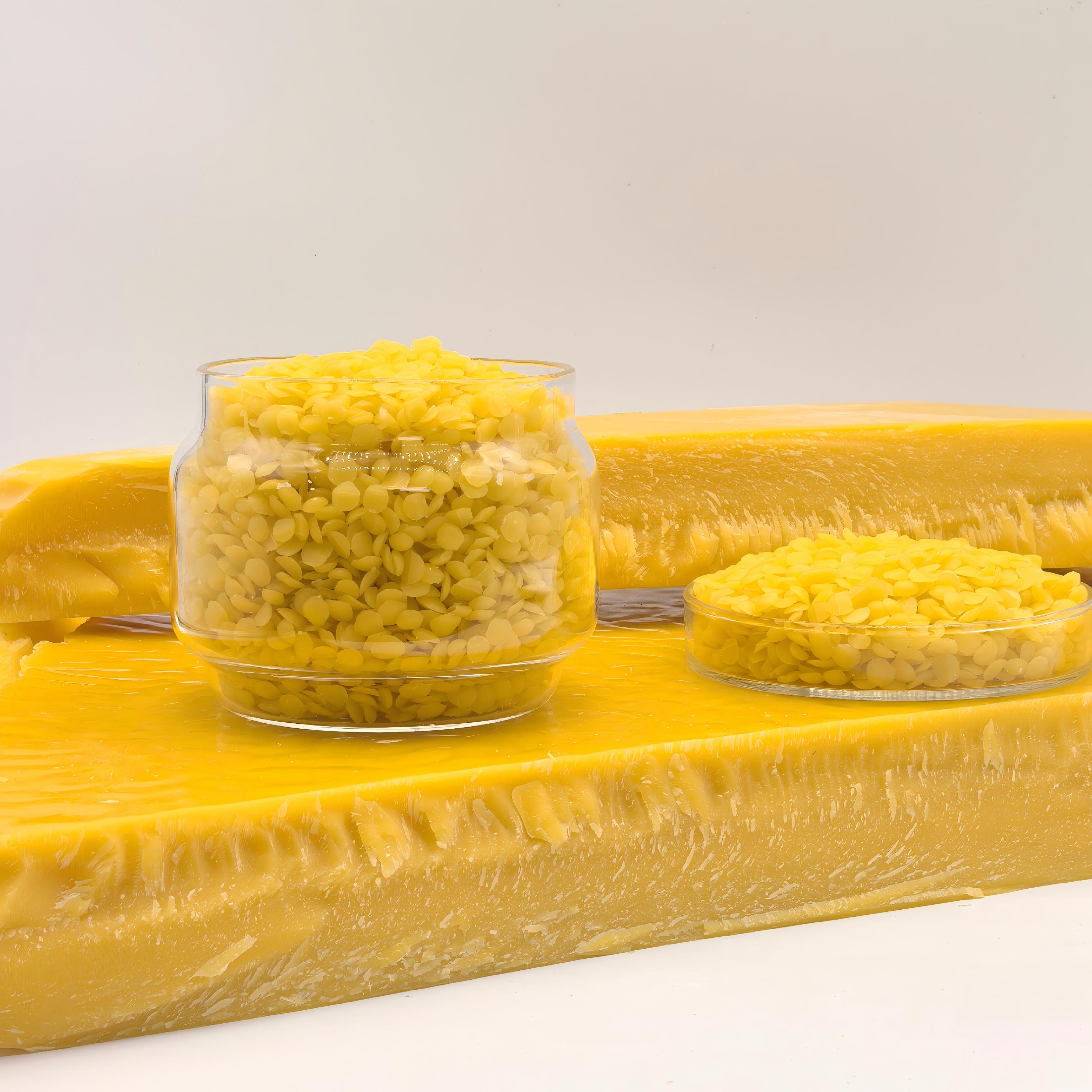
Hold a chunk of wax up to natural light—really look at it. Unrefined wax rarely has that uniform, snow-white purity you see in grocery store blocks. Instead, you’ll notice a warm, honey-tinged hue, sometimes with faint streaks of brown or even tiny flecks of plant debris trapped inside. This isn’t dirt; it’s evidence that the wax hasn’t been bleached or heavily filtered. Run your thumb over the surface too. Refined wax feels slick and almost plastic-smooth, while the unrefined kind has a subtle graininess, like very fine sandpaper, and it may leave a slightly oily residue on your skin.
Your nose is another dead giveaway. Break off a small piece and warm it between your palms for a few seconds. If it’s truly unrefined, you’ll catch a faint, sweet, almost honey-like or beeswax aroma—sometimes with a grassy or smoky undertone depending on the source. Highly processed wax, by contrast, smells like nothing at all or has a faint chemical note from bleaching agents. Even the way it melts tells a story: drop a shaving into a spoon over a candle flame. Unrefined wax will turn a deeper amber as it liquifies and may throw off a touch of sediment, while refined wax melts clear and stays pale.
Finally, watch how it behaves when you try to mold or bend it. Unrefined wax tends to be more brittle when cold—give it a sharp twist and it might crack rather than flex. But once warmed, it becomes surprisingly pliable and sticky, clinging to your fingers like taffy. That stickiness, along with the color, scent, and texture, is a reliable fingerprint. You don’t need a label to know you’re holding the real, unprocessed stuff—just pay attention to what the wax itself is telling you.
Why Color and Aroma Tell You More Than a Spec Sheet
A spec sheet will list the percentage of cocoa solids or the origin of the beans, but it can't capture the way a bar's surface catches light — slightly matte, with a faint bloom that whispers of careful tempering rather than careless storage. Run your thumb across it and you'll feel the difference between a rushed melt and a slow conch. The color itself is a quiet biography: a deep mahogany often hints at longer roasting, while lighter reddish-browns suggest a gentler hand on the drum. No lab printout will tell you that.
Aroma is even more honest. Break a piece and hold it close: you might catch dried cherry, toasted almond, or a whiff of damp earth after rain. These volatile compounds are fragile and impossible to fully quantify in a data table. They arrive before taste, priming your palate and revealing whether the cacao was fermented with patience or rushed through a industrial cycle. A spec sheet says 'fine flavor,' but your nose knows if it's truly alive.
Numbers give you coordinates; color and aroma hand you the landscape. One is static, the other unfolds. The next time you compare two bars with identical percentages, close your eyes and breathe in. That moment — before sweetness, before bitterness — is the difference between reading about a place and actually standing in it.
Red Flags That Save You From a Costly Mistake
Most expensive mistakes don't start with a bang. They begin as a quiet unease you talk yourself out of. A contractor who dodges written estimates, a vendor whose only references are screenshots, a deal that demands urgency but won't survive a night's sleep. Learning to name that unease early is half the battle.
The costliest red flags are the ones that feel flattering: being told you're getting special treatment, being rushed past details, being asked to skip the paperwork because "we trust each other." Real professionals don't need to bypass process to prove their worth. If a step feels designed to keep you from asking questions, that's not a shortcut—it's a trap door.
Building a Supply Chain You Don’t Have to Second-Guess
When every shipment feels like a gamble, the real problem is rarely a single broken link. It's the accumulated weight of assumptions—about lead times, supplier capacity, and inventory buffers—that nobody has checked in months. Building a supply chain you don’t have to second-guess starts with replacing those assumptions with visible, current data. Pick the five variables that cause the most last-minute scrambling, and give them a weekly review cadence. That simple ritual often does more than a stack of forecasting models.
Second-guessing usually peaks where handoffs happen. Internal teams, freight forwarders, and overseas factories each have their own version of the truth, and none of them match. The fix is not more meetings; it’s a shared, boringly consistent operating picture. Even a basic dashboard that shows order status, actual lead times, and exception flags can stop small delays from turning into expensive surprises. When everyone sees the same numbers, the need to second-guess fades.
Finally, build slack where it matters, not where it’s easy. Holding extra inventory of every SKU is expensive and hides problems. Instead, map your critical paths and test them with small, deliberate disruptions—a late container, a supplier quality miss, a port closure. The goal is to know exactly which buffer protects you and which one just collects dust. That kind of clarity turns supply chain confidence from a slogan into a daily habit.
FAQ
Rub a small piece between your fingers; genuine unrefined beeswax softens with warmth and has a tacky feel. Paraffin tends to stay slippery and harder. You can also place a sliver in warm water—real beeswax floats and doesn't leave an oily sheen, while many synthetic blends release a petroleum-like film.
A trustworthy supplier should be able to tell you the region where the hives are kept, how the wax is rendered, and whether it’s from cappings or older comb. If they hesitate to describe the filtration level or mixing practices, that’s a warning sign. Ask about the beekeepers they buy from and whether the wax is batch-tested for contaminants.
The yellow hue comes from pollen, propolis, and natural resins the bees collect, so it shifts depending on the flowers and region. Unrefined wax can range from pale lemon to deep amber. A uniform, bright yellow across every batch often suggests added colorants, so expect natural variation instead of a perfect match.
Burn a small piece and watch the flame—clean beeswax burns steadily with a mild honey scent, while contaminated wax may crackle or give off dark smoke. Also melt it in a double boiler: pure wax melts evenly around 144–149°F and resolidifies with a fine, matte surface rather than a greasy shine.
Ask for a certificate of analysis that shows purity levels, pesticide residues, and paraffin adulteration tests. A good supplier will also provide batch numbers and storage recommendations. If they only offer a generic invoice without any lab results, treat that as insufficient for unrefined wax.
Some suppliers blend in paraffin, stearic acid, or even microcrystalline wax to lower the price. To spot this, check the break: pure beeswax has a granular, almost crumbly fracture when cold, while adulterated wax bends or snaps cleanly. You can also dissolve a bit in turpentine—pure wax dissolves completely, leaving no cloudy residue.
Keep it away from direct sunlight and strong odors because beeswax absorbs surrounding smells easily. Store in cool, dry conditions, preferably wrapped in food-grade paper or sealed in airtight containers. Never leave it in a hot car or near heat vents, as repeated melting and cooling can alter the texture and encourage bloom.
Extremely low prices often indicate adulteration, old wax that has been re-melted with filtration, or imported blends with unknown additives. Genuine unrefined wax requires labor-intensive hive management and gentle rendering, which sets a realistic floor. If a quote seems too good, request a small sample and run the burn and melt tests before buying large volume.
Conclusion
When you're sourcing yellow beeswax in bulk, the word 'pure' gets thrown around far too loosely. A lot of suppliers rely on spec sheets and certifications, but those documents won't tell you how the wax was filtered, whether heat damaged the natural esters, or if paraffin sneaked into the batch. Instead of taking labels at face value, ask pointed questions: Where was the wax rendered? How many times was it strained? Does the supplier track apiary sources or mix wax from dozens of unknown origins? A trustworthy supplier should be able to explain their process without hesitation. Real unrefined wax often shows slight cloudiness or surface bloom, and it carries a warm, honey-like scent that synthetic blends can't imitate. If every block looks identical and smells faintly of candle fragrance, that's a red flag.
Color is another honest signal. Pure yellow beeswax ranges from pale lemon to deep amber depending on the bees' forage and the age of the comb, so a uniform, bright yellow across an entire pallet usually indicates added colorants or heavy processing. You want variation, not perfection. Watch for common traps: suspiciously low prices, vague answers about filtration, reluctance to provide a small test batch, or batch numbers that don't match. Building a supply chain you don't have to second-guess means starting with a sample order, comparing melt behavior and residue, and only scaling up once a supplier proves they can deliver consistent, unadulterated wax. Keep a short list of approved sources and re-test periodically—cheap shortcuts in beeswax usually show up in your final product long before they appear on a certificate.
Contact Us
Contact Person: Alan Zhu
Email: [email protected]
Tel/WhatsApp: 8613931838766
Website: https://www.cnxushibeeswax.com