

Best Roller Walkers for Seniors Seeking Stability and Independence
2026-09-18
For many seniors, staying mobile isn't just about getting from one room to another—it's the foundation of independence. Yet finding a roller walker that offers true stability without feeling bulky or awkward can be surprisingly difficult. That's where Suncare comes in, with designs that prioritize both safety and everyday comfort. In this guide, we'll explore the top roller walkers that help you or your loved one move with confidence, so every step feels secure and natural.
Why Some Roller Walkers Wobble on Pavement Cracks (and How to Avoid Them)
Most roller walkers come with small, hard wheels that are fine on smooth indoor floors but struggle outdoors. When a wheel hits a pavement crack, the abrupt edge catches the wheel and transfers a jolt through the frame. Because the walker's base is relatively narrow — often just a foot or so wide — that jolt easily tips the whole unit sideways. Add in the user's forward momentum, and the result is a wobbly, unsteady lurch that can feel alarming, especially for anyone relying on the walker for balance.
Another factor is wheel size and material. The standard 6-inch wheels found on many budget models simply cannot roll over uneven gaps larger than a quarter of an inch without losing contact with the ground. Plastic wheels make this worse because they lack grip and flex. When one front wheel drops into a crack while the other stays on the pavement, the walker twists. This twisting motion forces the user to correct with their arms and core, which is nearly impossible for someone with reduced strength or coordination.
To avoid the wobble, look for a roller walker with at least 8-inch wheels, preferably pneumatic or solid foam-filled ones. Wide-set front wheels and a low center of gravity also help keep the frame stable when crossing cracks. When you do approach a pavement seam, slow down slightly and steer one wheel at a time over the edge rather than hitting it straight on. If cracks are unavoidable on your regular route, consider a model with a suspension system or adjustable wheelbase, as these features absorb much of the impact before it reaches your hands.
The Handlebar Height Mistake That Makes Seniors Feel Unsteady
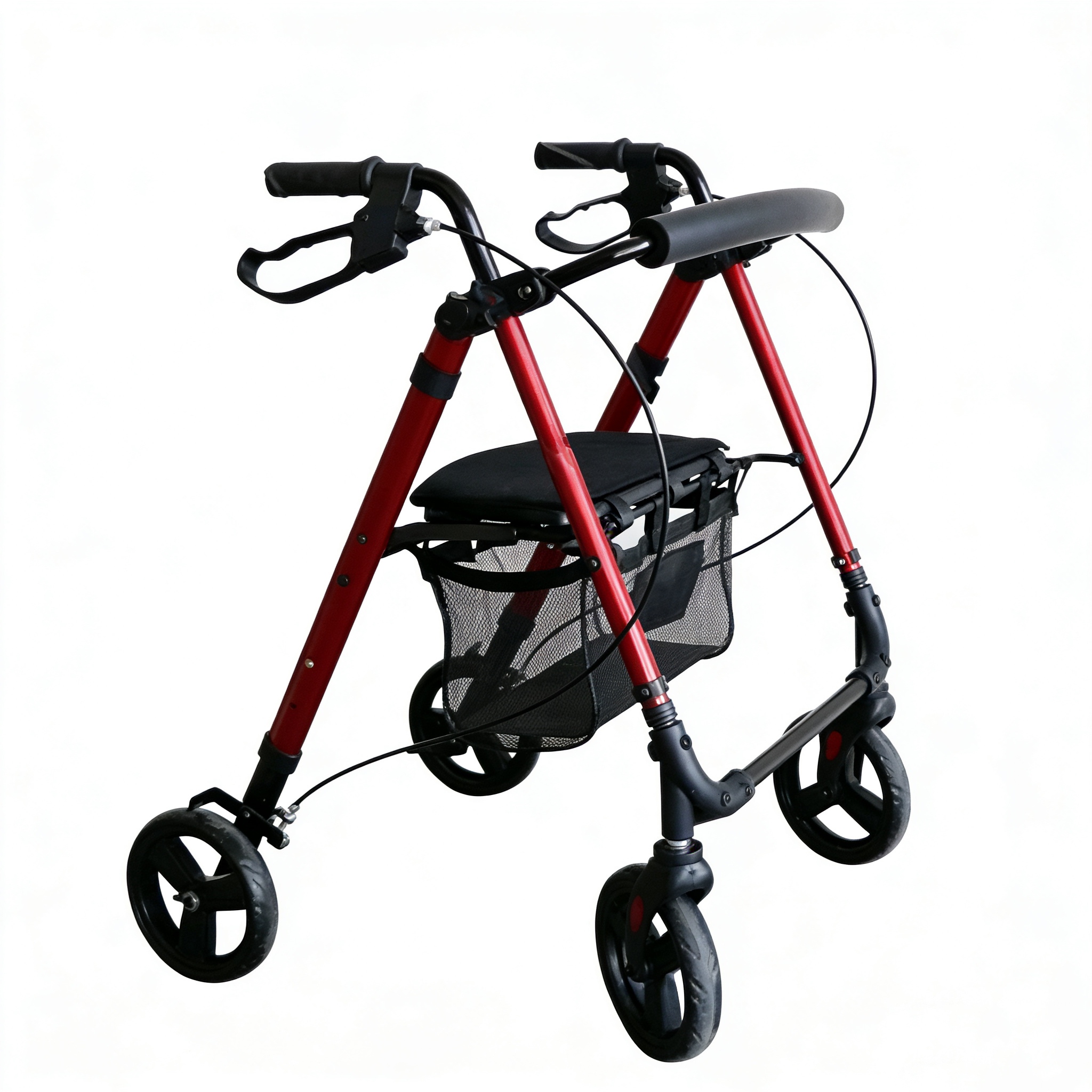
Many seniors assume a higher handlebar equals a more upright, stable ride, but the opposite often holds true. When the bars sit too tall, the rider's arms lock into a near-straight position, shifting weight off the feet and onto the saddle. That reduces the ability to brace with the legs during stops or slow maneuvers, leaving the upper body to compensate—and that's when the wobbles start. A simple fix is to lower the handlebar slightly so the elbows keep a soft bend, allowing the legs to act as shock absorbers instead of passive passengers.
Another overlooked culprit is handlebar width. Bars that are too wide for a senior's shoulder span force the arms outward, stretching the chest and reducing fine motor control at the grips. This unnatural posture makes minor steering corrections feel clumsy, especially at low speeds where balance matters most. Try narrowing the bars or angling the grips inward a few degrees—you'll notice an immediate improvement in how smoothly the bike tracks without constant micro-adjustments.
Finally, don't ignore the stem reach. A handlebar positioned too far forward drags the torso down and over the front wheel, making it harder to lift the head and scan for hazards. Seniors who feel like they're leaning into every turn are likely fighting an overly long cockpit. Swapping to a shorter stem brings the controls closer, encouraging a neutral spine and a more confident, grounded feel. Small changes here can transform a nerve-wracking ride into a relaxed one.
Light but Not Flimsy: Picking a Frame That Doesn't Flex
A frame that flexes under load steals your power and dulls the ride. The trick is finding one that stays planted without turning into a brick — light enough to climb, stiff enough to sprint. Most riders never notice the difference until they swap to a properly rigid frame and suddenly feel every watt reach the rear wheel.
The bench test rarely tells the whole story. Grab the bottom bracket and push sideways, then watch how the rear triangle reacts. A good frame resists twisting immediately, no delayed wobble. But don't mistake harshness for stiffness — a well-built light frame damps road buzz yet stays composed when you yank the bars.
Tube shape matters more than material alone. Oversized chainstays and a tapered head tube do the heavy lifting, while thin-walled top tubes save grams where flex won't hurt. The best frames hide their rigidity in the details, never advertising it with extra weight.
Brake Levers That Don't Hurt Arthritic Hands
Most standard brake levers demand a tight grip and a long pull that can send sharp pain through already sensitive finger joints. For arthritic hands, the difference comes down to leverage and shape. Levers with a broad, slightly curved blade spread pressure across the whole hand instead of concentrating it on the first knuckle. A shorter reach is equally important: when the lever sits closer to the bar, you don’t have to stretch your fingers into an awkward open position just to rest them.
Look for models that let you fine-tune the reach with a small screw or dial—this single adjustment often does more for comfort than any fancy material. Pairing the lever with a caliper or drum brake that uses a softer return spring reduces the force needed at the fingertips. Some riders also swap in compressionless housing or lubricate the cable path, which makes the pull feel noticeably smoother and lighter on stiff mornings.
Don’t ignore the grip itself. A fatter, foam or gel-wrapped bar pairs well with an ergonomic lever, keeping the wrist in a more neutral line and taking strain off the thumb base. If your hands swell during a ride, choose a lever with a textured but not tacky surface—something that stays secure even when your grip strength fades. Small changes like these add up to a setup that lets you brake confidently without wincing.
How a Simple Under-Seat Basket Changes Daily Independence
The first time I clipped a small basket beneath the seat of my rollator, I didn’t expect much. But within a week, it had quietly rewired my mornings. A book, a water bottle, a bag of tomatoes from the corner shop—they all slip into that modest space. No more asking a neighbor to carry something, no more balancing a grocery bag on the seat and hoping it doesn’t slide off at a curb cut. The basket turns a few errands into something I can manage on my own schedule, not someone else's.
That independence shows up in small, ordinary ways. I can bring a packed lunch to the park without wearing a backpack that throws off my balance. I can pick up a prescription and tuck it under the seat without fishing for a bag that dangles from the handlebar. It’s not about carrying more; it’s about carrying just enough to feel like the day belongs to me again. The under-seat basket doesn’t look like much, but it quietly hands back the kind of freedom that’s easy to lose when mobility gets harder.
Matching Wheel Size to Your Most Common Walking Surfaces
The size of your walker wheels has a direct impact on how smoothly you move across different ground conditions. Smaller wheels, typically around 5 to 6 inches, work well on smooth indoor floors like tile, hardwood, or low-pile carpet. They keep the walker lightweight and easy to maneuver in tight spaces, but they can catch on uneven thresholds or thick rugs.
For outdoor use or mixed terrain, larger wheels—usually 8 inches or more—make a noticeable difference. They roll over cracks, gravel, grass, and uneven pavement with less effort, reducing the jarring feeling in your hands and wrists. If you frequently walk on sidewalks with bumps or enjoy time in the garden, choosing a walker with bigger wheels will feel more stable and require fewer stops to reposition.
Consider your daily routine honestly: do you spend most of your time indoors on flat surfaces, or do you regularly venture outside? Many people benefit from a compromise, such as a walker with 6-inch wheels that can handle occasional outdoor strolls while still fitting easily through doorways. Matching the wheel size to your real-world walking surfaces prevents frustration and helps you keep moving with confidence.
FAQ
A wide base and low center of gravity make a big difference. Large wheels, at least eight inches, handle uneven ground better. Look for adjustable handles so the walker fits your height without making you hunch. Brakes need to be easy to squeeze and lock firmly. Frame material matters too: aluminum is lighter, but steel often feels more planted.
Roller walkers roll continuously instead of needing to be lifted with each step. That alone saves energy and reduces strain on arms, shoulders, and back. Many models include a seat and a storage pouch, so you can pause whenever you need a break or carry small essentials. This combination encourages seniors to get out on their own more often.
Comfortable grips and smooth-rolling wheels top the list. Height adjustment should be simple, and the folding mechanism needs to work without pinching fingers. A padded seat is useful for longer outings. Solid wheels require no maintenance, while air-filled tires absorb bumps better. Storage options, like an under-seat bag, make daily errands easier.
Yes, focus on models with mid-sized wheels around eight inches and tires that have a gentle tread. Indoors you need good turning radius, while outdoors you need to handle cracks and small obstacles. Some walkers let you lock the front wheels straight for indoor use and unlock them for more maneuverability outside.
Always lock the brakes before sitting down. When going uphill, lean slightly forward; when going downhill, keep the walker a little ahead of you. Check the brakes and wheel wear regularly. Wear non-slip shoes. Avoid hanging heavy bags on the handles because that can shift the center of balance and make the walker tip.
Most standard roller walkers support between 250 and 300 pounds. Heavy-duty versions are available that handle 350 to 500 pounds. Consider the user's weight plus anything they might carry, and leave a margin. A walker that is too close to its weight limit may feel less stable and wear out faster.
It can, mainly by providing continuous support and a steady rhythm. For people with balance issues, not having to lift the walker with every step removes a common cause of stumbling. Proper height adjustment and regular maintenance are crucial, but used correctly, a roller walker often gives more confidence than a cane or standard walker.
Conclusion
Finding a roller walker that actually keeps you steady starts with how it handles real-world terrain. Many models wobble when the front wheels hit pavement cracks because the fork or frame has too much play; look for reinforced forks and a slightly wider wheelbase, or choose larger front wheels that roll over gaps instead of dropping into them. Equally important is getting the handlebar height right—if it’s too low or too high, you end up leaning forward or shrugging your shoulders, which throws off your center of gravity. A good rule is to stand relaxed with arms hanging down and set the grips at wrist height. And don’t assume a heavy walker is more stable; the best frames use thick-walled aluminum or steel tubing that resists twisting without adding unnecessary weight. A light but rigid frame lets you lift it into a car or over a doorstep without that flexy, uncertain feeling under your hands.
Beyond stability, small design choices make a huge difference in daily independence. Brake levers with a soft, rounded shape and a lighter pull force are essential if you have arthritis or reduced grip strength—test them before buying, because some are surprisingly stiff. A built-in under-seat basket, even a shallow one, means you can carry a water bottle, mail, or a small bag of groceries without hanging bags off the handles, which can pull the walker sideways. Finally, match the wheel size to where you actually walk: smaller wheels are fine for smooth indoor floors, but if you regularly cross driveways, park paths, or textured sidewalks, go for at least 8-inch wheels. For mixed use, a model with larger rear wheels and smaller front swivel wheels often gives the best balance of maneuverability and smooth rolling.
Contact Us
Contact Person: Frank Chan
Email: [email protected]
Tel/WhatsApp: 0086-13924529088
Website: https://www.suncare-medical.com