

Advanced Package Printing Die Making Equipments and Their Role in Packaging Production
2026-11-02
Every crisp fold, every vibrant print on a package starts with a precision die. Yet in high-volume packaging production, the unsung hero is often the cutting and creasing equipment behind it. ADEWO has redefined this space with advanced die-making machinery that doesn't just keep pace with modern packaging demands—it anticipates them. From corrugated cartons to luxury rigid boxes, the right tools turn good designs into flawless, repeatable results on the factory floor. But what exactly makes these systems indispensable, and how do they fit into today's fast-moving packaging workflows? Let's peel back the layers.
Beyond the Blades: How Advanced Die Equipment Shapes Every Package You Ship
When a carton blank hits the cutting station, the die does far more than separate paperboard. Modern die-cutting systems apply precise, repeatable pressure across thousands of micro-serrated rules, kissing just deep enough to slice through facing stock without bruising the liner underneath. That controlled depth is what lets a folding carton pop into a crisp, square shape on the packing line instead of fighting the operator with ragged edges or weak hinges. It also makes room for intricate locking tabs and tear-away panels that survive rough parcel handling.
On high-speed lines, advanced die equipment pairs servo-driven stripping tools with in-line sensors that flag misregistration before a single bad blank reaches the gluer. This isn't just about catching defects; it's about tuning the kiss-cut pressure on the fly when humidity changes how recycled board fibers relax. The result is a pack that folds flat for storage, then snaps open with uniform creases, so every unit a customer receives looks intentional rather than like it barely survived the trip.
For e-commerce, the dies now shape more than structure—they shape the unboxing moment. Reverse-cut scores, soft-touch coatings, and tension-controlled perforations let a shipper use less void fill because the insert stays put without glue. Advanced tooling can also switch between thin corrugated and rigid paperboard within the same run, letting brands ship lighter boxes that still protect fragile items while cutting dimensional weight charges.
The Tooling Behind Flawless Creases and Clean Cuts on Shelf-Ready Boxes
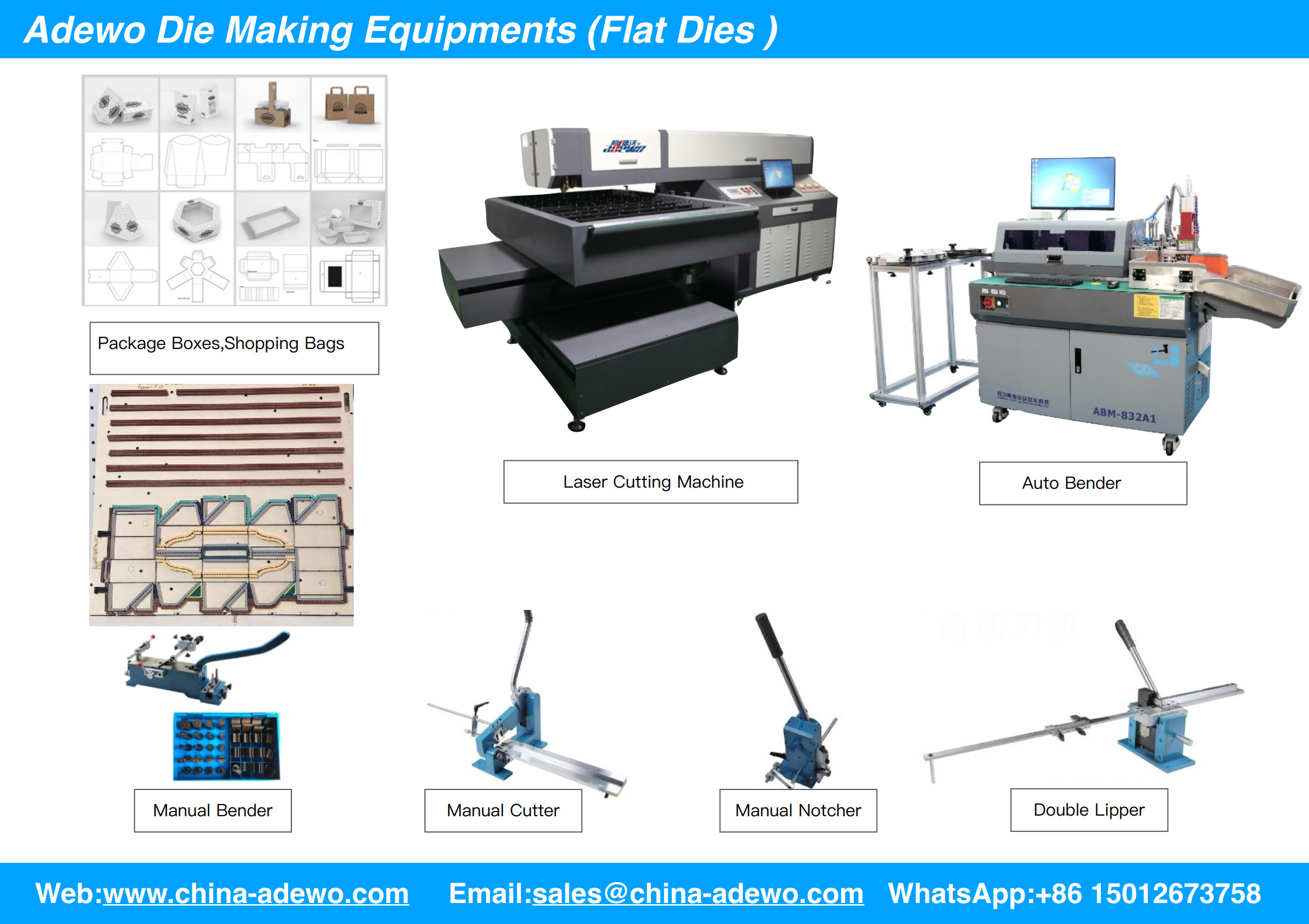
Getting a shelf-ready box to fold along a crisp line without cracking starts well before the press run. The creasing tool itself—often a hardened steel rule paired with a softer matrix strip—has to be matched to the caliper and fiber direction of the board. If the matrix channel is too narrow, the fold will fight back; too wide and the crease wanders off the intended axis. Experienced operators will shim the matrix or swap the creasing rule to fine-tune the depth instead of relying on machine pressure alone.
For the cutting side, the difference between a clean edge and a fuzzy tear usually comes down to the bevel and the condition of the die blade. High-volume lines tend to use carbide-tipped or through-hardened steel rules that hold an edge longer than standard stock. But even the best blade will drag fibers if the ejection rubber has lost its spring or if the die board is no longer flat. A quick check with a dial indicator on the cutting plate often reveals the real culprit behind patchy cuts.
None of this matters much if the tooling drifts during a long run. Thermal expansion, worn chase bolts, and paper dust buildup can shift a die by a fraction of a millimeter—enough to turn a perfect score into a torn flap. That's why shops that run shelf-ready packaging daily tend to log blade changes and creasing-rule replacements by linear meters, not by calendar days. They also keep a few pre-shimmed matrix strips at the press, ready to swap in when the board supplier changes caliper mid-order.
When Packaging Speed Depends on Die Precision, Not Just Press Horsepower
On a high-volume packaging line, press tonnage often gets the credit for throughput, but the real bottleneck frequently hides in the die set. A stamping press can cycle at blistering speeds, yet if the die's cutting edges are dull or its guide pins have even a fraction of a millimeter of play, material jams and misfeeds become a constant interruption. Operators end up spending more time clearing scrap and resetting the feed than actually producing finished packages. Precision-ground dies, on the other hand, hold their clearance across hundreds of thousands of cycles, letting each blank drop cleanly and keeping the line moving without those costly micro-stops.
Many packaging engineers assume that upgrading to a bigger press will solve their speed problem. But brute force without matching die accuracy often makes things worse. A higher-tonnage press delivers more vibration and side load into the tooling, so any existing misalignment in the die gets amplified. Punches chip, strippers bind, and the extra horsepower translates into more downtime, not more output. The real gains come from tightening die tolerances, improving surface finishes on wear plates, and fine-tuning the punch-to-die clearance for the specific film or foil being cut.
Thin-gauge materials make this relationship even more visible. Take a flexible packaging line running laminated foil lids: at 300 strokes per minute, a die with a clearance error of just 0.02 mm can cause the foil to tear instead of shear, leaving ragged edges that jam the sealing station. A precision die built to exact clearance, with polished cutting faces and proper alignment, allows the same press to run at full speed with reject rates under 0.1%. In that scenario, the die's precision isn't just a quality detail; it's the factor that determines whether the packaging line meets its rated speed or limps along at half capacity.
From CAD Files to Steel Rule: The New Anatomy of Packaging Die Making
The shift from hand-drawn layouts to CAD-driven workflows has quietly redrawn the entire skeleton of packaging die making. A design file no longer just sits on a screen; it feeds directly into laser cutters that carve the die board with tolerances once impossible to achieve by eye. This digital backbone removes the guesswork from transferring fold lines and cut paths, turning what used to be a craft of tracing and re-tracing into a precise, repeatable sequence.
Beyond the board itself, the anatomy extends to how steel rules are bent, notched, and seated. Automated rule processors read the same CAD data to shape each blade for complex curves or sharp corners without manual hammering. Even the placement of ejection rubber and creasing matrix follows the file’s logic, meaning a packaging diemaker can now assemble a die in hours rather than days, while holding every dimension to fractions of a millimeter.
What emerges is a new kind of tool: less a static object and more a physical extension of the original 3D package design. The steel rule no longer dictates what shapes are possible; instead, the CAD file constantly expands the vocabulary of packaging formats, pushing die makers to rethink everything from micro-flute corrugated to intricate folding cartons. This revised anatomy favors speed without sacrificing the tactile judgment that only an experienced hand can bring to the final fitting.
Why Smart Die Cutters Are Closing the Gap Between Design and Production
For years, the journey from a polished screen mockup to a finished cut piece was full of friction. Designers worked in one world, production teams in another, and the translation between them often meant lost details, manual corrections, and a pile of test cuts that never quite matched the original vision. Smart die cutters are changing that rhythm by narrowing the gap with tools that read design intent more directly. Instead of relying on static templates or hand-adjusted coordinates, these machines accept the same vector files used in the design stage, preserving curves, offsets, and layer information without forcing a rigid conversion step. The result is a flow where what you see in the layout is what the blade actually follows, reducing the back-and-forth that used to eat up hours.
A big part of the shift comes from sensing and feedback that older cutters simply lacked. Smart models adjust cutting depth and pressure on the fly, responding to material thickness, density, or even slight inconsistencies in a sheet. That means a designer no longer has to oversimplify a shape out of fear that the production floor won’t handle it. Complex perforations, tight radii, and mixed material stacks can be handled with the same file that was approved on screen. The machine becomes less of a separate production hurdle and more of an extension of the design canvas, closing the loop between intent and output.
Perhaps the most noticeable change is in iteration speed. When a cut file can be sent, tested, and adjusted without leaving the same digital ecosystem, small design tweaks stop being costly interruptions. Teams can run a quick sample in the afternoon, refine a corner radius or a fold line, and have the updated piece ready the next morning. That kind of responsiveness used to be reserved for in-house prototyping labs, but smart die cutters are making it available on regular production floors. Design stops being a fixed handoff and becomes a continuous conversation with the material itself.
Packaging’s Unsung Machinery: What Die Makers Do Before the First Print
Long before ink touches substrate, die makers are already translating brand promises into physical tolerances. They read the dieline not as a set of lines but as a folding, creasing, and cutting sequence that has to survive high-speed converting. A flap that looks fine on screen can jam a folder if the crease depth is off by a fraction of a millimeter, so they adjust angles, add relief nicks, and test strip widths before any plate is burned.
Most of the work happens on a bench, not in a pressroom. Die makers hand-bend rule, miter corners, and punch ejection rubber into place, all while keeping the sheet flat and registration stable. They care about things designers rarely see: grain direction, score-to-cut distance, and the way board springs back after creasing. That silent tuning is what lets a carton pop open on the filling line without cracking at the fold.
FAQ
It turns printed sheets into functional packaging components by cutting, creasing, perforating, or embossing them. Think of it as the bridge between a flat printed design and a box that can be folded, filled, and shipped.
Older methods rely heavily on manual adjustment and physical dies that wear out. Advanced systems often use servo-driven controls, laser positioning, and automatic stripping. This means tighter tolerances, faster job changeovers, and less scrap from misregistered cuts.
Lasers eliminate the need for physical steel rule dies entirely for many short-run jobs. You can go from a digital file to finished cut pieces in minutes, which is ideal for prototypes, personalized packaging, or regional variations without the cost and storage of traditional dies.
Automation handles repetitive tasks like sheet feeding, die locking, waste stripping, and even quality inspection. It lets operators run multiple jobs with minimal intervention and keeps output consistent across long shifts, which is hard to achieve manually.
Folding cartons for cosmetics, pharmaceuticals, and specialty foods demand very clean creases and exact dimensions. Corrugated packaging for e-commerce also benefits when designs include complex locking tabs or die-cut handles that need to align perfectly after printing.
Don't wait for obvious wear. Keep a log of cutting pressure, check stripper pins and rubber ejection profiles weekly, and recalibrate laser or camera registration whenever you change substrate thickness. Small adjustments early prevent mis-cuts and extend die life significantly.
Yes, especially with digital finishing systems that skip physical dies altogether. You can produce 50 or 500 pieces with the same tooling cost, which used to be impossible. The trade-off is slower linear speed compared to high-volume rotary or flatbed die cutters, but setup time drops from hours to minutes.
Conclusion
Modern packaging rarely gets made without a quiet army of die-making machinery doing the heavy lifting before ink ever touches board. Laser cutters, CNC bending machines, and automated rule processors turn CAD geometry into steel rule with tolerances measured in microns. This precision is what keeps shelf-ready boxes crisp at the crease and clean at the cut, even when converters push corrugated through at speeds that would shred sloppy tooling. The difference between a carton that snaps open in a retail aisle and one that falls apart in transit often comes down to how accurately those tools were shaped, not how fast the press ran.
Smart die cutters now close the gap between what designers imagine and what production actually delivers. Instead of waiting for hand-adjusted knives and trial runs, operators rely on digitally driven systems that verify tool geometry, compensate for material thickness, and reduce make-ready from hours to minutes. That shift matters because packaging lines increasingly run shorter orders with tighter deadlines. Die makers working upstream, long before the first print, are the ones ensuring every panel folds where it should and every perforation tears without resistance. Without that groundwork, even the most sophisticated printing press is just decorating a box that cannot be built.
Contact Us
Contact Person: KAELYN LEE
Email: [email protected]
Tel/WhatsApp: +86 15012673758
Website: https://www.china-adewo.com